




The group representing Traditional Owners of the Argyle diamond mine in Western Australia's East Kimberley says handing back the site remains a long way off, as international attention on the controversial mine's pink diamonds shines a spotlight on Rio Tinto's closure obligations.
The comments from the Gelganyem Group follow controversy over British singer Ellie Goulding wearing Argyle pink diamonds at the opening of jeweller Boodles' new flagship store in London earlier this month, before apologising and saying she would not wear diamonds from the mine again.
Kia Dowell, a Gija woman from Warmun in Western Australia's East Kimberley, is chair of the Gelganyem Group. Established under the Argyle Participation Agreement, Gelganyem represents seven Gija and Miriwoong Traditional Owner family groups connected to the Barramundi Dreaming.
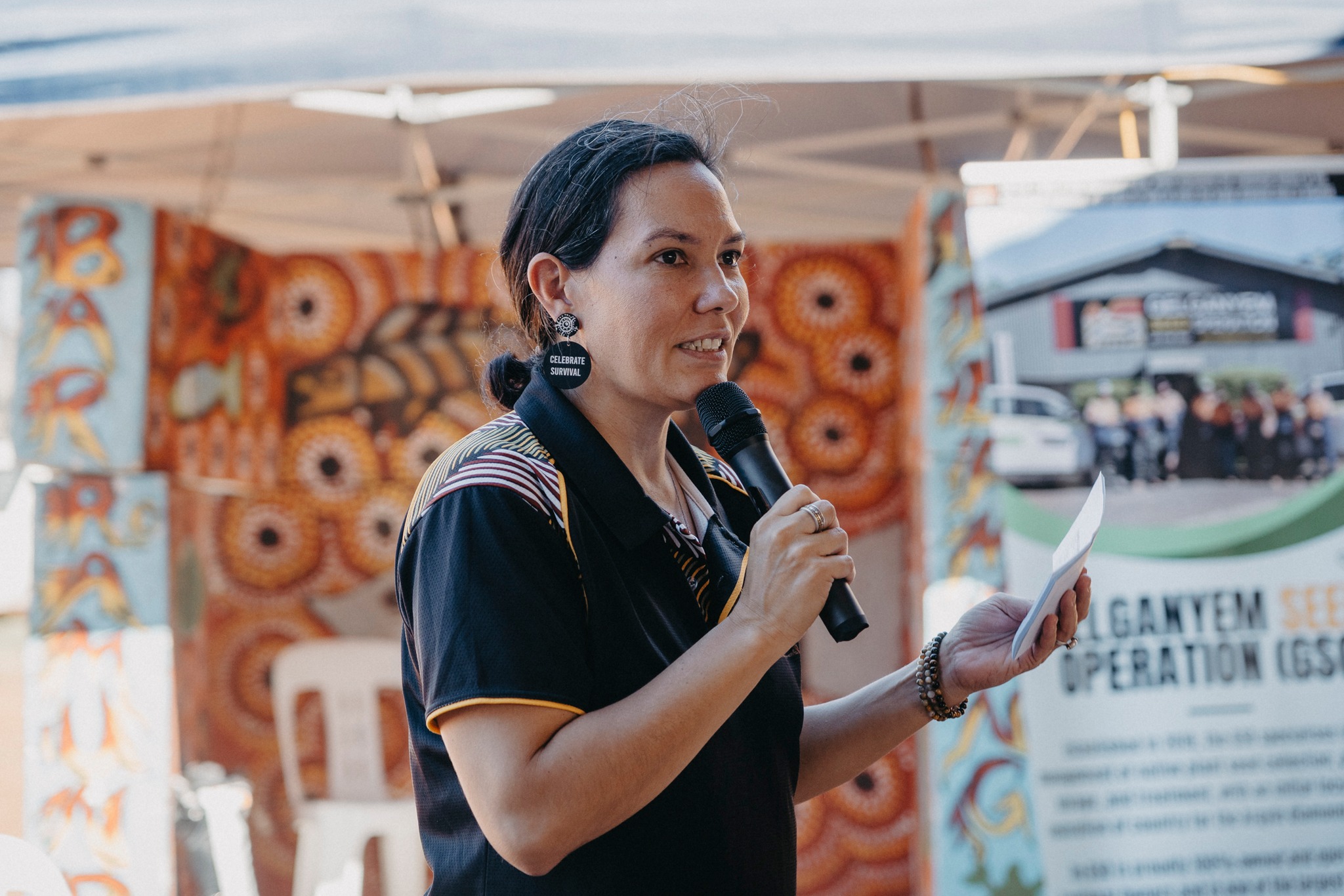
The organisation works across cultural heritage protection, governance, land access and economic participation, and now has a central role in the mine's closure process.
Ms Dowell said the issue was not about the singer personally, but about the legacy behind the diamonds.
"Our reaction was not about Ellie Goulding as an individual," she said.
"The Argyle mine generated significant wealth and recognition through its rare pink diamonds, but that story cannot be separated from the ongoing responsibility to rehabilitate Country, honour commitments, and address the concerns of Traditional Owners."
Ms Dowell said the incident highlighted the importance of transparency in global supply chains.
"The lesson we hope people take from this is that luxury products have a story behind them," she said.
"Consumers, brands and public figures increasingly want assurance that environmental obligations have been met, that Indigenous rights have been respected, and that commitments are being honoured. Those questions should not end when mining operations cease."
Handback remains a long-term prospect
Mining at Argyle ended in 2020 after 37 years.
Rio Tinto have said major closure works are well advanced, with the 2026-27 timeframe referring to completion of major works rather than a planned handback.
But Gelganyem Group chief executive officer Dominique Reeves said the priority was ensuring closure outcomes were safe and sustainable over the long term.
"For Traditional Owners and Gelganyem, the most important issue is not meeting a date on a calendar, but ensuring that the closure outcomes are safe, stable and appropriate for Country over the long term," she said.
Ms Reeves said work was still needed to improve confidence in landform stability, water management, monitoring and the return of healthy ecosystems.
Traditional Owners considered relinquishment "a long way down the track", she said.
"It should only occur when there is clear data-driven evidence that closure objectives have been achieved and when all rights holders can have confidence in the outcomes."
Rio Tinto says work is progressing
A Rio Tinto spokesperson told National Indigenous Times major closure work, including dismantling and removing operational infrastructure, was well advanced, although smaller-scale work continued.
The company said ongoing and long-term monitoring and maintenance would assess rehabilitation performance.
"We will continue to share results and progress with Traditional Owners and the regulator through this longer term period," the spokesperson said.
Rio Tinto acknowledged Traditional Owners as custodians of Country and said it continued to engage with Gelganyem about closure, including per- and polyfluoroalkyl substances (PFAS).
"PFAS-containing firefighting foams were historically widely used across many industries worldwide, including at Argyle," the spokesperson said.
"We continue to assess and manage legacy environmental impacts associated with this historical use."
The company said its priority was a "safe, stable and culturally respectful closure".
Trust remains a key issue
Ms Dowell said past experiences had affected Traditional Owners' confidence in their relationship with Rio Tinto.
"Trust is built through actions rather than statements," she said.
She said meaningful change required concerns to be heard early, cultural authority respected and commitments honoured.
"Ultimately, the measure of progress will be outcomes, not intentions," she said.
Ms Dowell said the Goulding controversy could be useful if it encouraged greater scrutiny of mine closure and environmental performance.
"The real issues are not about a celebrity endorsement," she said.
"They are about ensuring that rehabilitation is effective, that environmental risks are properly managed, that Traditional Owners are respectfully and meaningfully engaged, and that future generations inherit Country that is healthy and culturally strong."
Ms Reeves said Gelganyem was working with Traditional Owners to monitor rehabilitation, advocate for cultural and environmental values and ensure Indigenous knowledge remained central to future management.
"Our objective is not simply to respond to the legacy of mining, but to help create a future where Country is healthier, cultural connections are stronger, and Traditional Owners are empowered to lead the stewardship of their lands for generations to come," she said.



