


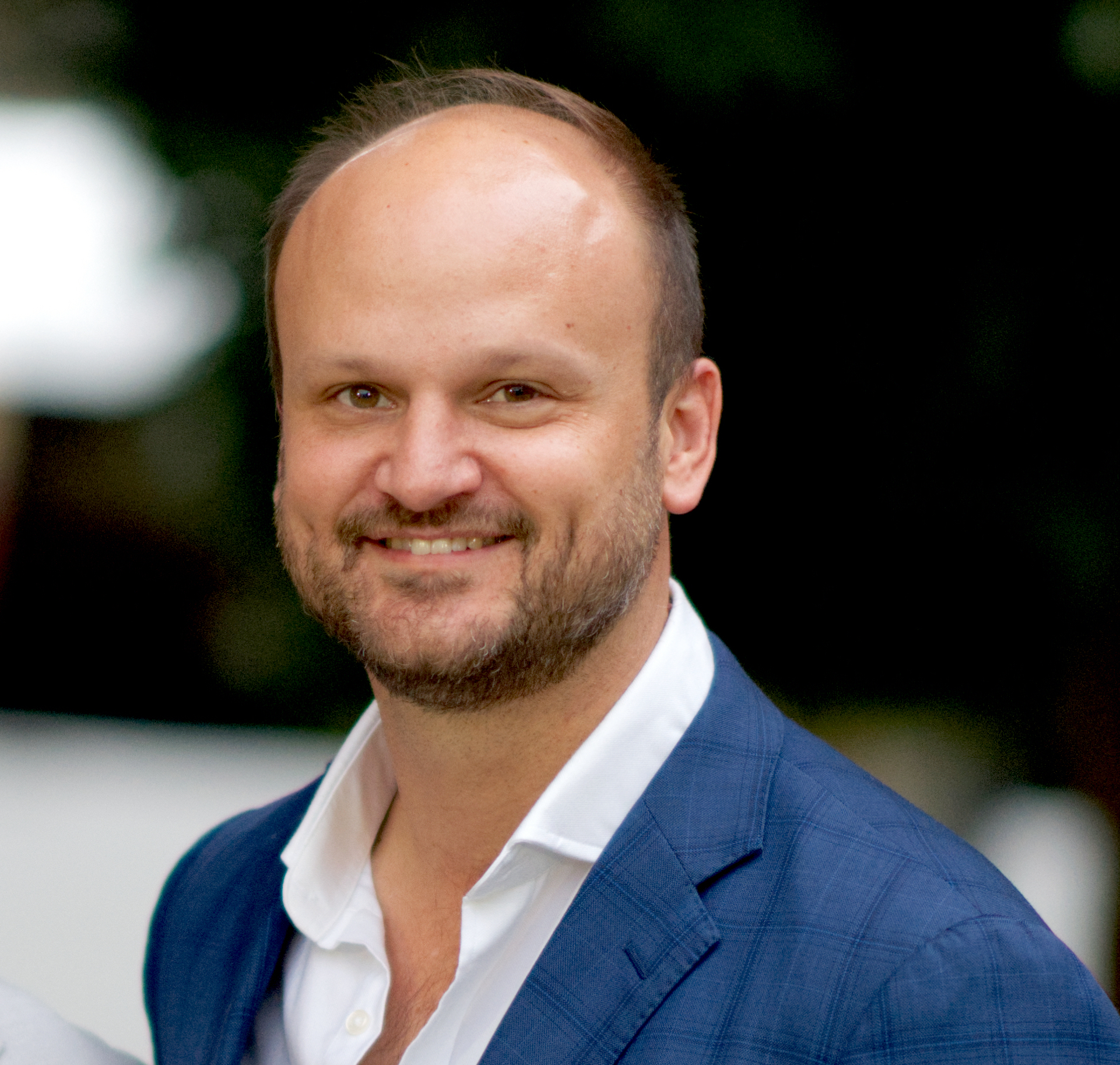

Chris Stedman is growing a second-generation Indigenous construction business by combining remote capability, local employment and careful expansion.
At 33, Chris Stedman is leading a 42-person construction and engineering business from one of the most challenging operating environments in Australia.
Stedman's Construction and Engineering, founded by his father in Maningrida in 1989, has grown from a remote family business into a significant Indigenous-owned contractor working across West Arnhem Land and, increasingly, Darwin.
The company's work remains heavily concentrated in Arnhem Land, including Maningrida, Warruwi on South Goulburn Island, Minjilang on Croker Island and Smith Point on the Cobourg Peninsula. But Stedman's has recently expanded into Darwin, bought a warehouse in Humpty Doo and begun taking on more work in the Top End's capital.
"I think we're up to around 42 staff members now, and we're still sitting around that, sort of 45 to 50 per cent Indigenous," Stedman says.
"It's something that we're really proud of and something that I strive to always have at the heart of the company, working alongside our local Indigenous guys in community."
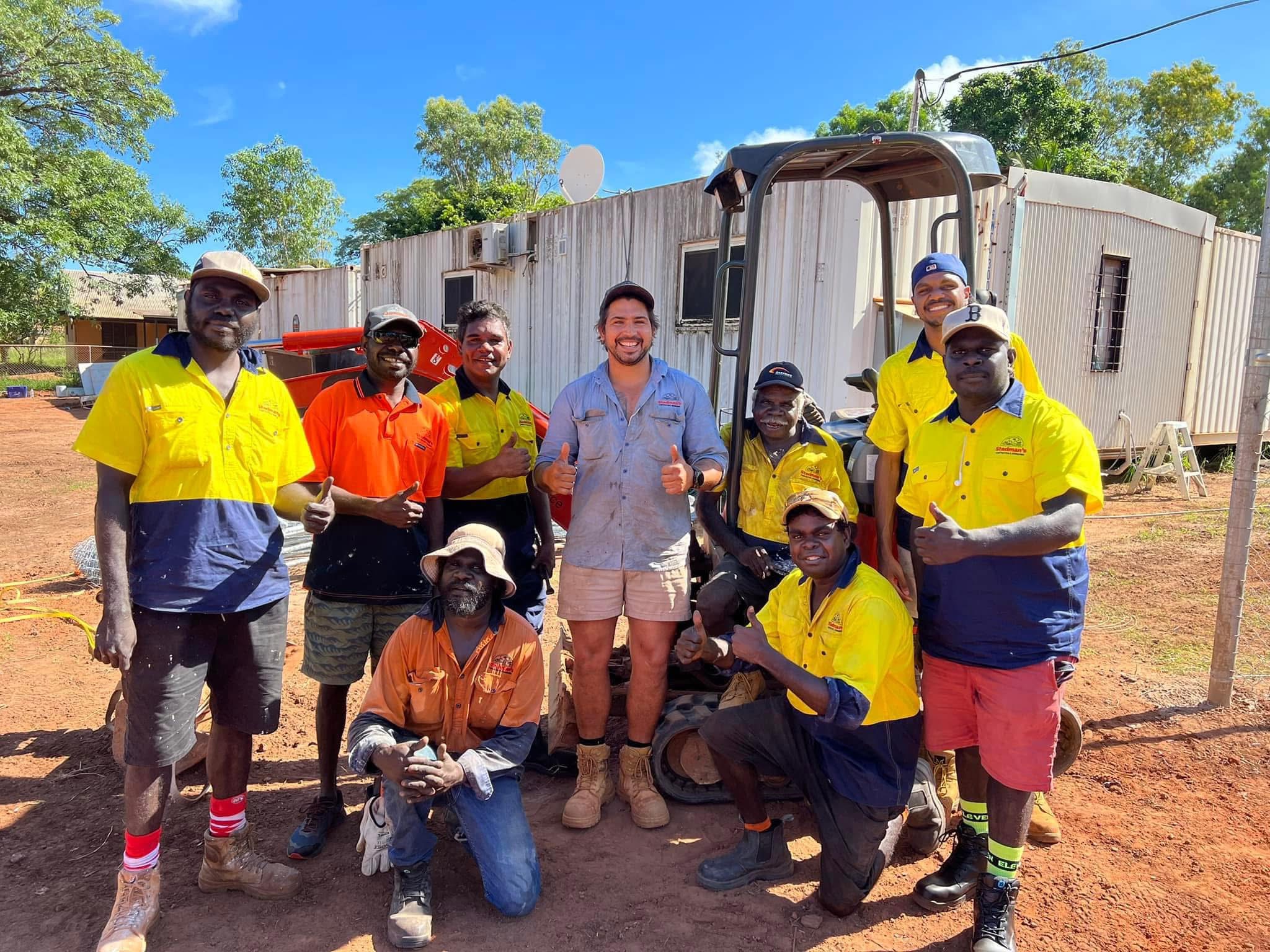
The story of Stedman's is not simply one of business growth. It is an example of how Indigenous-owned contractors in remote Australia can build capability, keep employment local and turn recurring work into a platform for longer-term expansion.
For Stedman, that started with the business his father built.
"My dad started the company back when I wasn't around, and he's laid the foundations of what we are today and we are still working together every day," he says.
"Dad is still heavily involved on the tools and in the background of the company."
Stedman worked in the business during school holidays and started his apprenticeship with his father when he was 16.
"I worked with him on and off for about 17 years," he says.
About five or six years ago, Stedman took on majority control of the business.
"We're picking up a lot of government contracts and winning a lot of work and expanding and sort of getting bigger and bigger by the day," he says.
The transition was not without pressure. Stedman was young, and many of the people around the business had worked under his father.
"Me being a younger fellow, telling guys double my age sometimes what to do and what their role was, that was a bit daunting at the start," he says.
"But once everybody sort of understood that this young fellow knows what he's talking about and knows what we all need to be doing, that helped."
Before returning to the family business, Stedman worked on larger industrial projects, including the INPEX gas plant and with GEMCO on Groote Eylandt. Those roles gave him exposure to large-scale systems, project discipline and corporate work environments.
"I saw how things are run and saw every aspect of it," he says.
"I think that really helped when I did come back to the company, shaping where I wanted the company to go and how I wanted it to be shaped and run."
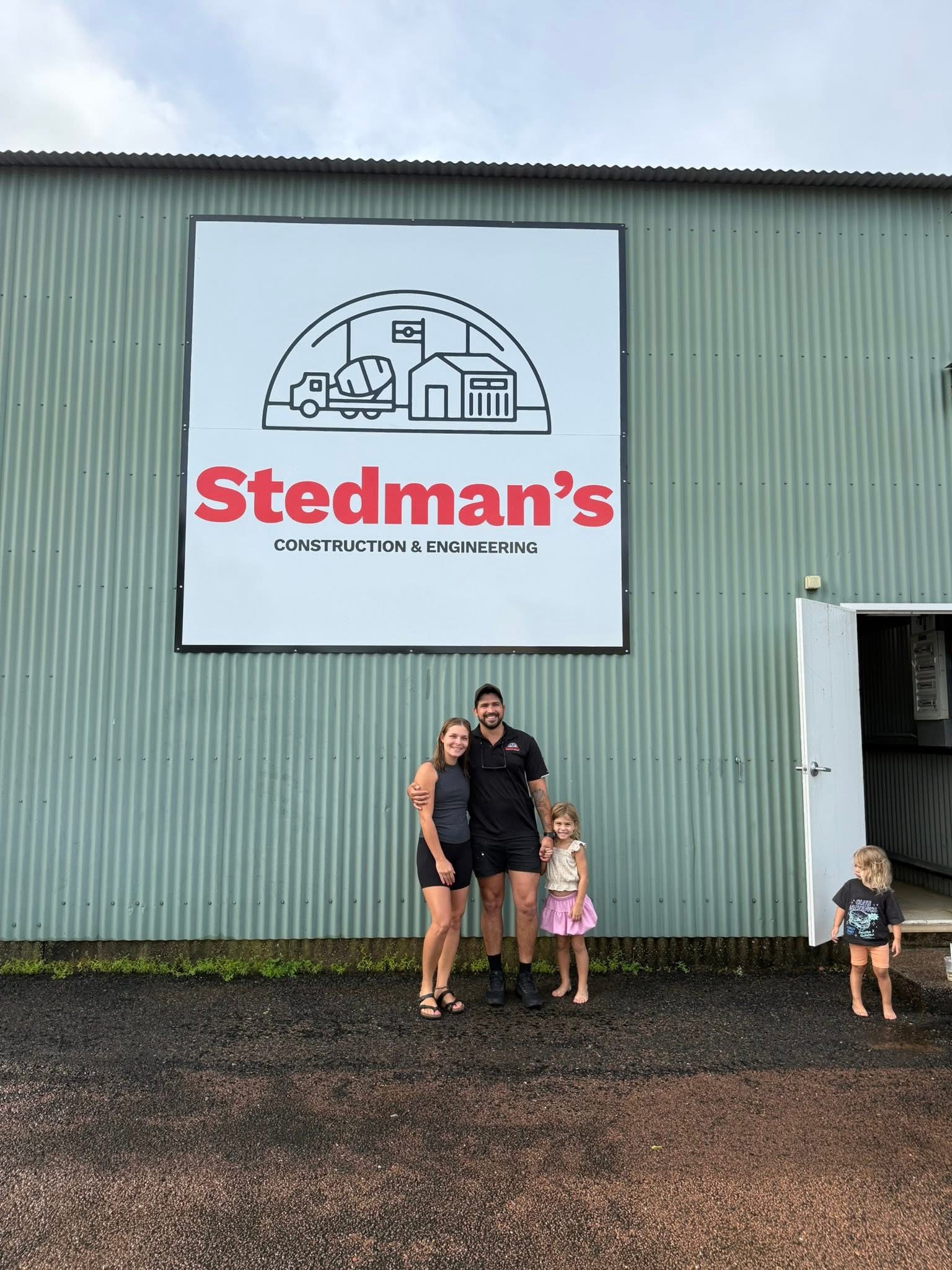
Today, the business is built on a mix of maintenance and project work. Stedman estimates the split is about 40 per cent maintenance and 60 per cent project work.
In remote construction, project work can be episodic. Maintenance contracts are different. They provide recurring work, workforce stability and a reason to keep skilled people based in community.
For Stedman's, government housing maintenance has become a commercial anchor. The company holds maintenance work covering Maningrida, Warruwi and Minjilang, including government employee housing, school housing and remote Indigenous housing.
"The maintenance is an ongoing thing," Stedman says.
"It's never going to finish. The contracts will, but we're always looking at going for those contracts again. So, we've always got that stability within the community to employ our local Aboriginal community members."
That stability gives Stedman's the ability to employ and train people from the communities where it operates.
"At the end of the day, if I can train up local guys and bring them up through the ranks and teach them the trades and get them qualified, it's better for the community," Stedman says.
"Money's going back into the community. I'm not having to pay for flights to bring people in."
For Stedman, it is also personal. He grew up in Maningrida and says many of the men now working for the company are people he knew as a young person.
"A lot of the guys now that I grew up with, they're working for us now," he says.
"Just having that connection, that value, where we're supporting local and we're not really going anywhere, I think that makes it a lot easier for local community members to approach us and ask us for employment."
Recruitment is often direct. Someone already working for Stedman's may have a younger brother looking for a start. A young person may call or walk in and ask for work.
"All it takes is a phone call or for them to come and see us at work," Stedman says.
"We pretty much sign them up then and there on the spot. We get them some boots and uniforms and get the paperwork filled out. Then they can pretty much start the next day."
He says the company tries to remove barriers rather than create them.
"We understand in community how hard things can be and we just want to be a company that doesn't add to that stress and hardship," he says.
"We just want to be a company that makes it easy. If you'd like a job and you're willing to work, come and chuck the boots on and jump in with us."
One example has stayed with him.
Stedman recalls an Indigenous worker who worked through the wet season, then went to Darwin at the start of the dry. When Stedman rang to ask when he was coming back, the worker told him he would be in the next day.
"He rocks up to work in a brand-new car," Stedman says.
"He worked all that wet season and saved up enough money. He was proud as punch. He couldn't take the smile off his face. He earned that money himself and he went and bought a car."
For Stedman, maintenance work is not simply about fixing houses. It also requires judgement, communication and a willingness to engage with the people living in them.
"We do try to do a lot of education while we're in the communities and talking to the local family members," he says.
"It's not just going there and repairing it and not engaging with the family members."
He encourages staff to speak with residents and understand their circumstances.
"One of the biggest things that I enforce on the guys is that we're all going into these houses, we're doing the maintenance, but just have a chat with whoever's living in there," he says.
The challenge is often more basic: distance, access and materials.
Maningrida is about 560 kilometres from Darwin. In the dry season, the drive can take six or seven hours. During the wet season, the road is cut off and access is by plane. A weekly barge supplies the whole community, including shops, health clinics, schools and building contractors.
Stedman says the company refers internally to the work as involving "logistical nightmares".
"Some of the biggest logistical nightmares," he says, are "making sure that we're on top of all our materials" and "making sure that we don't run out."
"You've got to make sure you've got enough stock in community so that when we do get an emergency job, we can go there and we know we've got all the right stock on hand to complete the job, keep the tenants safe and keep everyone happy."
In that environment, logistics become part of the product. A contractor with materials, vehicles, plant and local knowledge already in place has an advantage over one trying to mobilise from outside.
That has shaped Stedman's investment in plant and equipment. The company now has trucks, trailers, road trains, concrete batching capacity, loaders, excavators and other machinery.
Stedman describes a conservative growth model: win the work, complete the job, reinvest in capability, then take on the next stage.
"We've been able to do the contracts and be rewarded and been able to go out and buy the machines that we need," he says.
"We sort of just tend to do the projects and then purchase what we need for the next projects, or whatever we need to add to the fleet."
Asked what he would change to make it easier for remote businesses, Stedman's answer is practical.
"I'd like to say that probably 80 per cent of them would probably say the same answer," he says, pointing to "road access" and "road conditions".
"It takes a lot of wear and tear on our heavy machinery and our vehicles," he says.
Better-maintained roads, he says, would reduce "breakdowns and delays" in getting materials out to remote worksites.
Stedman's project work has also grown. In Maningrida, the company recently completed the community's changerooms and football grandstand, a project Stedman says had visible local impact.
"That was a massive community event," he says.
"We finished it and then the Sydney Swans came out for one of the openings. It brought a lot of people together, especially because I had a lot of local Indigenous guys working on that project with us."
For those local workers, the project was visible in a way many construction jobs are not.
"For them to be working there, pretty much in the centre of town, and for their family members to be walking past and seeing them," Stedman says, there was pride in being able to say, "I'm helping build this."
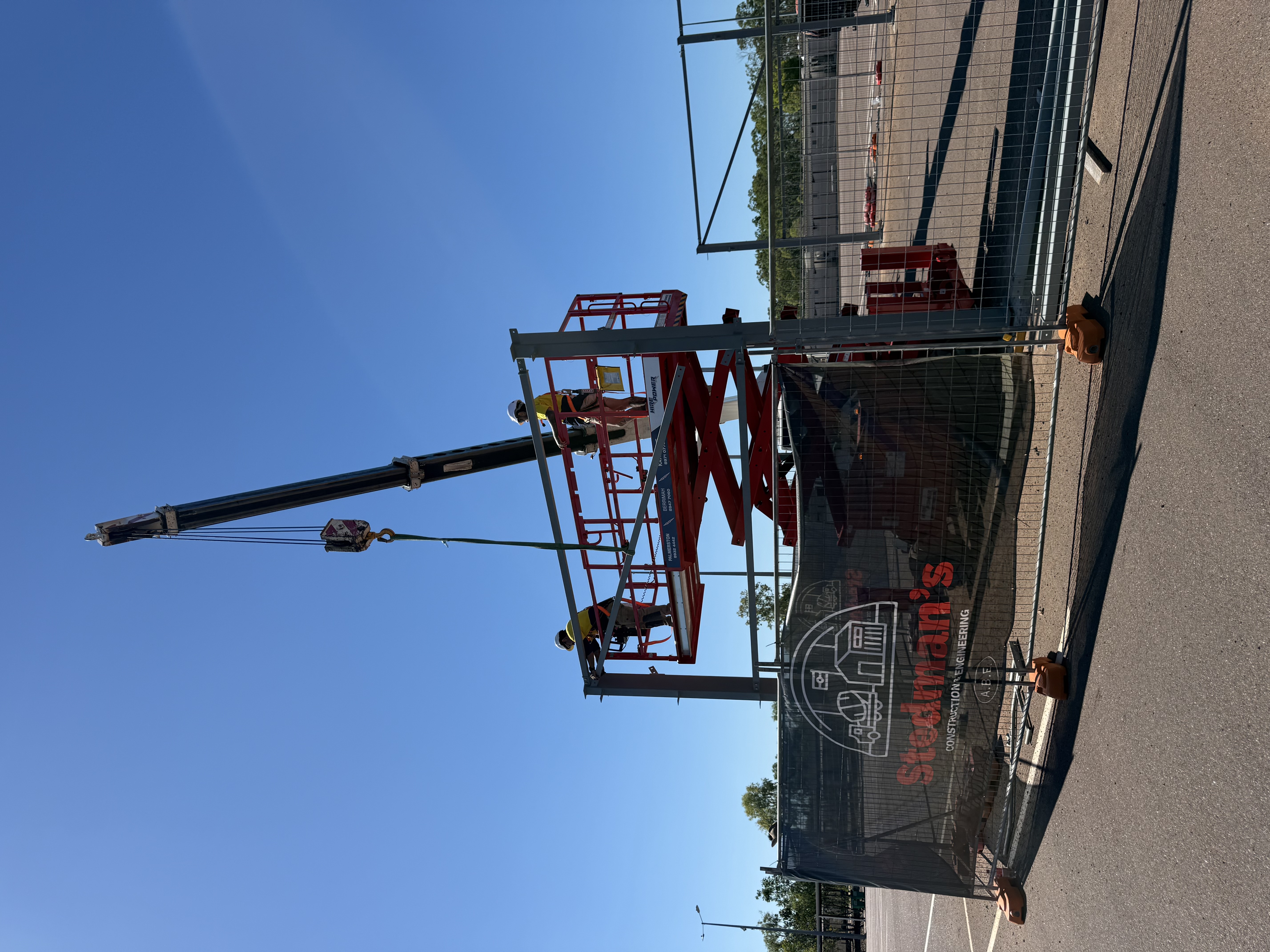
In Darwin, the company is completing work at Howard Springs defence accommodation, including carports over 28 car parks and a large bus shelter to house two buses during the wet season.
The company's current workload remains about 70 per cent Arnhem Land and 30 per cent Darwin. Over the next five to 10 years, Stedman says he would like to add another 10 or 20 staff in Darwin and build a stronger pipeline across civil works, new builds, maintenance and project delivery.
For now, he is focused on controlled growth.
"Head down, bum up," he says.
"We're wanting to continue to keep the good name and the good reputation of the works that we are doing, keep pricing works and continue doing what we're doing."
For young people thinking about their own future, Stedman's advice is practical.
"The biggest thing, and my philosophy, is find something that you really enjoy and you don't call it work," he says.
"I really enjoy what I do. I enjoy all the interactions. I enjoy the headaches. I enjoy the hiccups."
He says it can be difficult to find work that feels meaningful, but young people should keep going until they find the thing that suits them.
The growth of Stedman's is not built on a separation between commercial success and community responsibility. In remote construction, the two are closely linked. The company's advantage is its local workforce, its equipment, its relationships and its ability to remain present in places where outside contractors often come and go.
For Stedman, that is both the inheritance of the business his father started and the foundation for its next stage.
"We're supporting local," he says.
"And we're not really going anywhere."



