




An ancient kelp water carrier or "rikawa" as it is known to Tasmanian Aboriginal people has been returned to the island state more than two centuries after being taken by French explorers.
The kelp water carrier which was taken from Tasmanian Aboriginal people 230 years ago is made from bull kelp, wooden skewers and plant fibre ties, designed by First Nations Tasmanians to hold and carry water.
Collected from near Recherche Bay in 1792 by the expedition party of Bruni d'Entrecasteaux, and after being mislabelled in an African collection for more than a century, the significant Tasmanian Aboriginal ancestral object was rediscovered by Dr Gaye Sculthorpe in 2019 at Paris' Musée du quai Branly - Jacques Chirac after many years of searching.
Dr Sculthorpe, who is a Professor of Cultural Heritage and Museum Studies at Melbourne's Deakin University said the return of the kelp water carrier was of great cultural and historic significance.
"It is one of the most significant Aboriginal items in any museum collection and incredibly important for Palawa people to be able to see it on their Country once again," she said.
"I congratulate all involved who have made this happen."
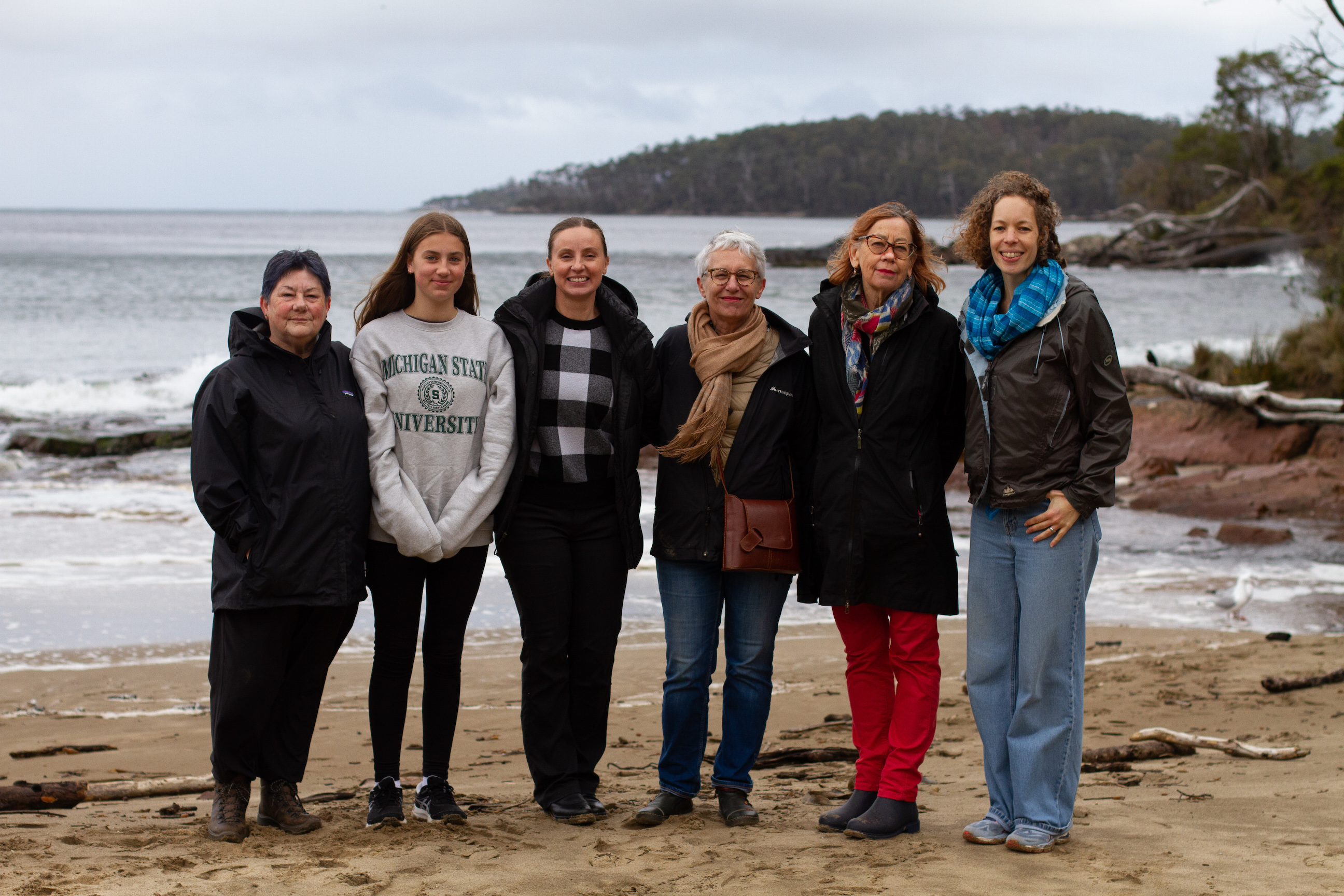
French conservators Stéphanie and Frédérique journeyed with Palawa women Zoe Rimmer and Theresa Sainty to Recherche Bay on the South East Coast of Tasmania, to a site close to where the rikawa was collected from. Image: Tasmanian Museum and Art Gallery.
The kelp water carrier is just is one of only two known historic kelp water carriers in existence, the second was taken in approximately 1850 and after being displayed in the Great Exhibition of London in 1851, was donated with other Tasmanian Aboriginal objects to the British Museum.
The pair of kelp water carriers are now on display as part of the Tasmanian Museum and Art Gallery's taypani milaythina-tu: Return to Country exhibition.
Former Senior Curator of First Peoples Art and Culture at Tasmanian Museum and Art Gallery Zoe Rimmer, who has artwork on display at the museum inspired by bull kelp said the kelp water carrier is more than a historical artefact.
"The rikawa are more than museum objects; they carry ancestral knowledge and presence," Ms Rimmer said.
"To bring the rikawa and other ancestral cultural material home to lutruwita is an incredible opportunity for reconnection, healing and cultural revitalisation.
"Equally, this is an opportunity to build respectful and collaborative relationships between the Palawa community and the international institutions that hold our cultural belongings."
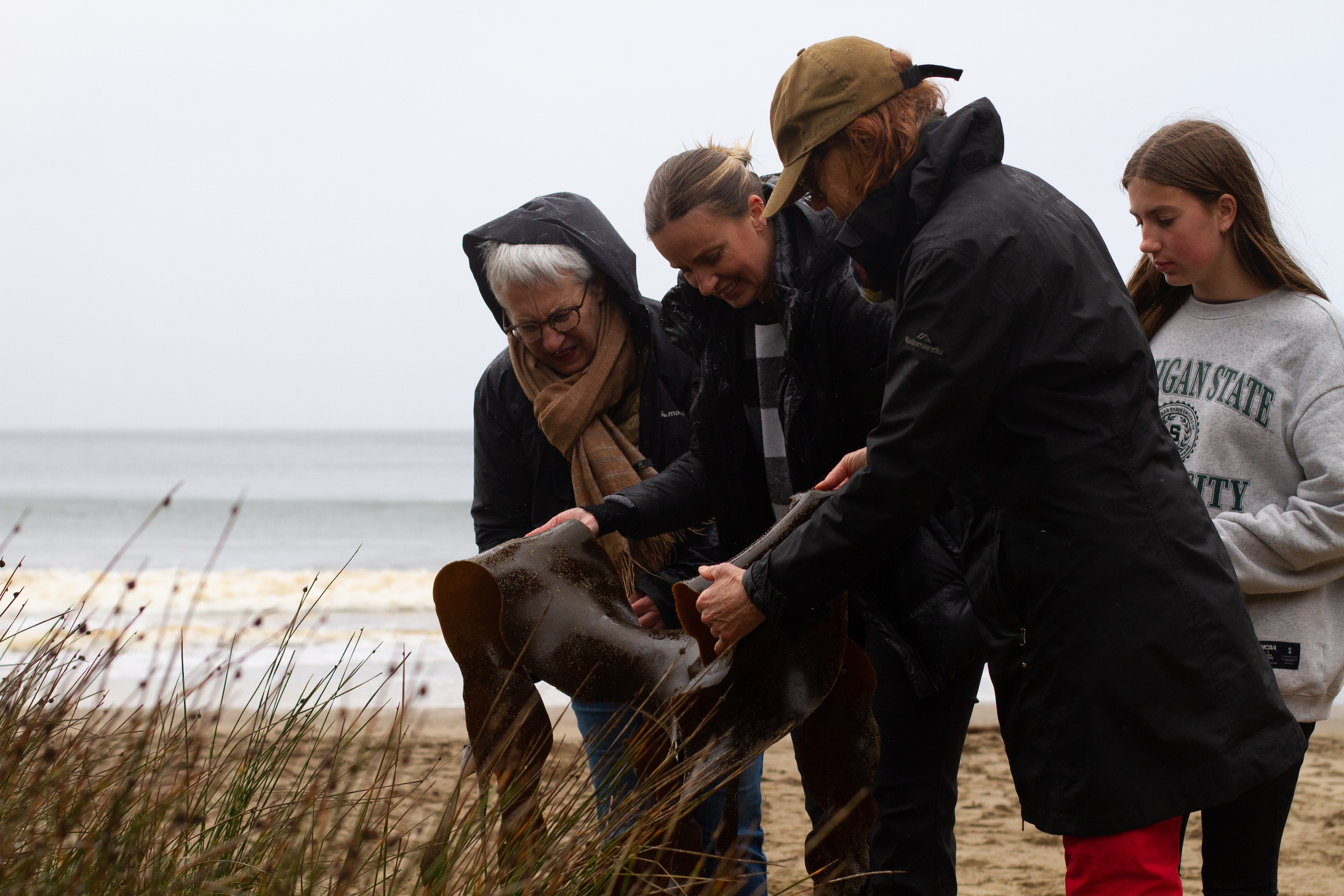
Ms Rimmer, who has mastered the art of rikawa making, and Theresa demonstrated to the French conservators how they collect bull kelp that has been washed onto the shore. Image: Tasmanian Museum and Art Gallery.
Curator of Pacific collections at the Musée du quai Branly – Jacques Chirac Stéphanie Leclerc-Caffarel spoke harmoniously about the return of the kelp water carrier.
"It is astonishing to think that 230 years ago, a French expedition was here on these shores and they took the rikawa, and brought it across oceans," she said.
"Now, here we are centuries later in the same place as part of its return home.
"This kelp water carrier is a national treasure to France and a cultural treasure to the people of Tasmania.
"Who would have thought this small artefact could unite so many people from opposite parts of the world in such a remote place of Tasmania."
The kelp water carriers will remain on display at the Tasmanian Museum and Art Gallery until 7 May 2023, with the community able to access them throughout the remainder of the two year loan period.



