You can clearly see it has an impact, Ian Hamm says.
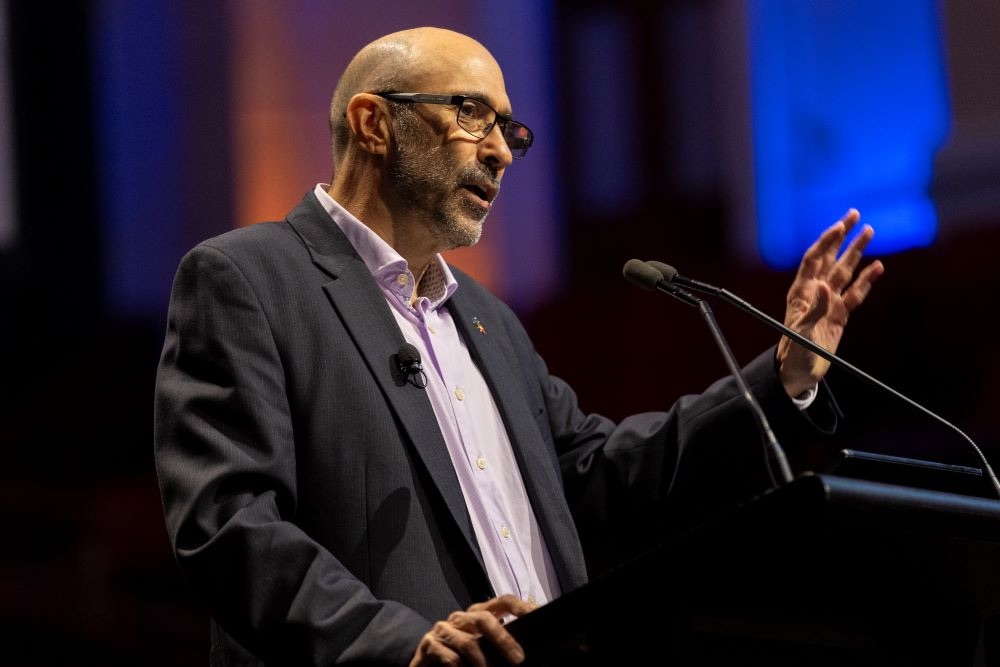
The Yorta Yorta man, who was removed from his family when he was three weeks old, spoke to National Indigenous Times about the experiences of survivors who have accessed Victoria's Stolen Generations Reparations Package.
Who have been able to share their story and have somebody listen.
He recalls the story of one survivor who spoke at a Reconciliation Week event a couple of years ago.
"He went out and bought two chainsaws and a ute, and I thought, 'Where's this going?'" Mr Hamm said.
"And he said, 'Now I get to drive down to Country, to where I'm from, and I collect trees that have fallen down, and I take it home, and I make things. I make things with my hands with wood from my own country.'"
For another survivor, the package meant being able to buy a new car for the first time.
Mr Hamm — who chaired the committee that developed the package and now chairs its independent assessment panel — recalls her telling him: "It's the first time I've really ever had anything new in my life, and I bought myself a little car."
"I could just see the look on her face," he remembers. "It wasn't so much about having a set of wheels; it was about 'I got something new, not second-hand.'"
Victoria's Stolen Generations Reparations Package, which commenced in 2022, recognises the trauma and suffering experienced by Aboriginal children who were forcibly removed from their families, culture and Country.
Designed by the Stolen Generations Steering Committee — which was made up of members of the Stolen Generations and their descendants, as well as community-controlled support organisations — the package applies to Aboriginal children who were removed in Victoria before 31 December 1976.
Along with a $100,000 lump-sum payment, recipients receive a personal signed apology from the Premier and the opportunity to share their story.
"It's like a letter of apology to them," said Mr Hamm, who is Chair of the Healing Foundation Stolen Generations Reference Group.
"It's an acknowledgement of their story, and it's signed by the Premier of the day. And people see that, and they say, 'This is really important. I feel like I've been heard by my own state about my story.'"
Acknowledging every individual story
While the 2008 national apology delivered by then-prime minister Kevin Rudd was vitally important, Mr Hamm argues a personal apology carries its own weight.
"You can see the real impact it has on people's lives...the acknowledgement of their own story," he said.
"People don't often talk about it. They just keep it to themselves. That's really important for them internally."
For survivors, he notes being heard also means being able to speak about their experiences without having to defend them.
"I'm not getting pushback on it, I'm not getting fought over, I'm not getting anybody else's opinion — I'm just speaking, and somebody's listening," Mr Hamm told this masthead. "That's incredibly important to people."
View this post on Instagram
Beyond the payment and apology, the reparations package also provides access to healing programs, including family reunions, opportunities to reconnect with Country and language, and access to state records relating to a person's removal.
The Victorian Aboriginal Child and Community Agency (VACCA), through its Link-Up Victoria program, partners with the Victorian Stolen Generations Reparations Unit to deliver the package, bringing an understanding of survivors' healing needs to the process.
So far, three reunions have brought together 27 survivors.
During one trip, two survivors discovered they were cousins. Others have found the resting places of their mothers, grandparents and great-grandparents.
"Before the trip, I was living," one survivor said. "Now, I'm alive."
VACCA explained to National Indigenous Times that healing from trauma takes time, and that survivors need to be supported throughout the process.
"For many survivors, speaking about their experiences of forced removal and its lifelong impacts is an incredibly difficult process," they outlined.
"Trauma can be suppressed, and revisiting it takes courage, strength and trust. Survivors must be supported to engage with the process in their own time."
While the reparations package will close to applicants in March next year, Link-Up Victoria has committed to continuing support for survivors and holding reunions until October 2027.
Child removals persist
But as the program approaches its end, the legacy of child removals remains a pressing concern.
Victoria has the highest rate of Aboriginal child removals in the country, at almost double the national rate.
In 2024, Coroner Simon McGregor said the state's child protection system was suffering from systemic racism, after a 17-year-old Wemba Wemba child took her own life after multiple requests to connect with her Indigenous culture were ignored by those responsible for caring for her.
Many mothers lose their children at birth, with hundreds of unborn notifications — a mark against a mother's name by a government official or police officer, often for minor or unproven reasons — made against Aboriginal mothers in Victoria each year.
It has prompted some experts to say the government is creating another stolen generation.

The peak body for Indigenous children and families, SNAICC - National Voice for our Children, supports the reparations package. However, CEO Catherine Liddle says recognition of past harms must be matched by action to prevent future damage.
Despite decades of reports, she says First Nations children remain vastly over-represented at every stage of the child protection process, spend longer in care and are less likely to be reunified with family.
The "vast majority of recommendations" from inquiries such as the 1997 Bringing them Home report — which made recommendations to address the experiences and ongoing impacts of the forced removal of Indigenous children from their families — remain "unimplemented and underfunded," the Arrernte and Luritja woman tells National Indigenous Times.
She argued the Victorian government needs to listen and act on the evidence from Aboriginal people, "who have long been clear about the reforms needed to keep children safe and connected to family and culture," to protect future generations.
"That means investing in Aboriginal community-led solutions, strengthening family supports, and expanding early intervention to support families before they reach crisis point," Ms Liddle said.
With the reparations package set to close early next year, some eligible survivors have yet to access the support available to them. Mr Hamm is urging everyone eligible to apply.
"There are people I know who still struggle with their own experience, their own trauma in dealing with it," he said.
"I would encourage them to consider one way of finding a small amount of relief is to apply for the package; is to put in an application for it."
The Victoria's Stolen Generations Reparations Package closes on March 31, 2027. Information on who is eligible and how to apply can be found online. People can freecall on 1800 566 071 or email [email protected]