



Sarah Williams is working to end the scourge of sexual violence across Australia.
The 22 year-old Awakabal woman has been honoured as the 2023 Newcastle Woman of the Year, Young Achiever of the Year NSW/ACT 2023, and NSW Volunteer of the Year 2022 for her tireless advocacy work.
Next Thursday, 29 August, she will be speaking about her work at the TEDxSydney Youth event, to be held at Parramatta's Riverside Theatre from 9.15am to 2pm.
She told National Indigenous Times that disturbing attitudes towards gendered and sexual violence persist for a range of reasons.
"There are many things, including the rise of… people like Andrew Tate and they get these big platforms and people just, they fall into those traps," she said.
"There is also a lack of education and awareness in a lot of society, a lot of rural and regional areas when I got and speak to people in those areas, they don't get consent and healthy relationship education."
Ms Williams stressed this importance of education on "all the intersections of victim-blaming".
"How that looks, and how we cannot victim-blame. There's definitely a lot of systemic inequality and power imbalances, our systems being so broken as they are as well," she said.
"It has become normalised that a lot of people go to a police station, they report sexual assault... they get asked questions they shouldn't be asked, like 'why did you have that to drink?' or 'why did you wear that?' or 'why were you still dating him?'. It normalises that behaviour among people in power, which then goes out into communities as well."
The genesis of Ms Williams' important work came from the violence she witnessed and experienced in her own life – and the response from those who were supposed to help her in the aftermath.
"I grew up with quite a violent childhood. I experienced domestic, family and sexual violence from the ages of eight to 16 years old. In 2021 I was just living life, doing uni, and unfortunately, I experienced three separate experiences of sexual violence by three different perpetrators. I was angry, and I wanted to do something to make change, I myself experienced victim blaming from family members, friends, police quite heavily, and people you would expect to believe you and be on your side," she said.
"It blew my mind that people you go to for help weren't doing what they were meant to be doing. In that moment I didn't realise that that wasn't OK. All I knew was the feelings I was feeling which was anger, devastation, getting upset, so I wanted to work to end sexual violence.
"We launched the What Were You Wearing? exhibition in Australia, it is an exhibition aimed at dispelling the myth that clothing leads to assault, it started in America in 2013. We got permission to bring it to Australia and worked really hard on making an Australian version of it, collecting stories from Australians, making sure there was support and safe spaces and it was done properly so people wouldn't look at it and get triggered because it's a very triggering exhibition."
Ms Williams and her associates collected more than 9000 accounts from victim-survivors in Newcastle in just six months.
"I decided in 2022 that we would start an organisation and become a not for profit and work to fight sexual violence every day, so we pretty much did that and really spent time developing our services that didn't exist in the communities that we were in, we wanted to fill those gaps," she said.
She also successfully secured changes to laws and regulations in NSW to help protect women and girls.
"Working in that space I started to realise that a lot of drink spiking incidents resulted in sexual violence… Someone in our team had their drink spiked at an event we were at – that person and I – and the aftermath of that event was creating a NSW government petition where we were asking for mandatory drink spiking prevention training for all bar staff and security guards in New South Wales, and so what that looked like was we wanted to amend the Responsible Service of Alcohol certificate to include drink spiking prevention training… there was nothing in the RSA on drink spiking.
"After six months we got 20,000 signatures, and it triggered parliamentary debate where to our surprise all the political parties agreed that we should have mandatory drink spiking prevention training in the RSA, it was passed and we have been working with Liquor and Gaming NSW since July last year on what that content will look like, and I am pretty sure it will go live in a week or so," she said earlier this month.
"We took it to the ACT government and lobbied them for about five months to pass the same changes and in January of this year they agreed."
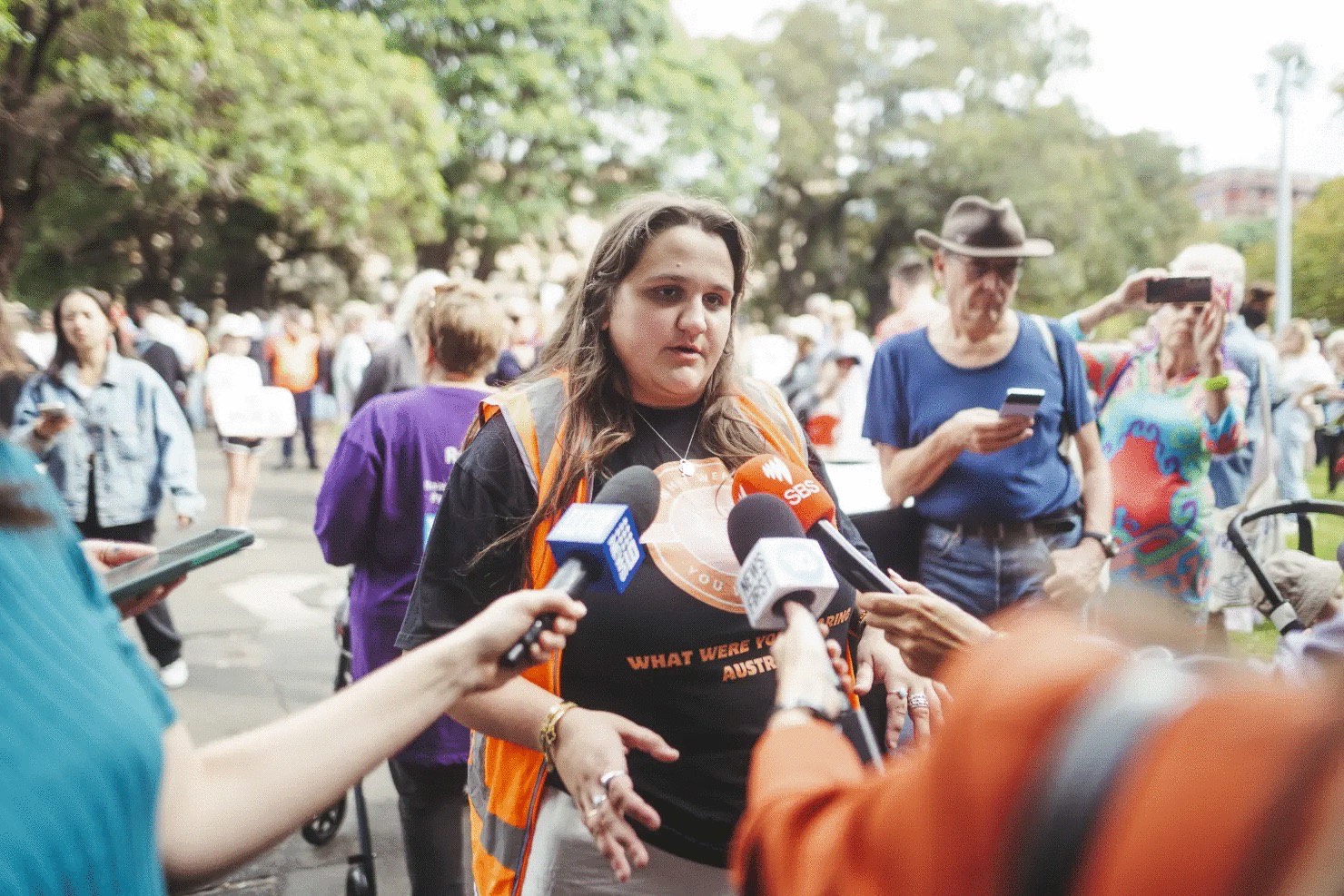
Ms Williams and co are now working on a new campaign for mandatory trauma-informed training for first responders, particularly police.
"Going to the police station to get support should not be worse than the rape itself… When I went to the police station, it was a worse experience than the assault itself," she told National Indigenous Times.
"We want to establish an independent third party body where if you want to become a police officer you need this trauma-informed training, and we want the training to be culturally safe and for Aboriginal women and children to be at the forefront, being consulted and at all points being spoken to. As you know Aboriginal people are over-represented in jails, we are often seen as – even myself, I was going there as a victim and I was seen as an offender.
"We want not only for our police to be trained in what is sexual assault, we also need them to understand the intersections… there is so much racism in our institutions and police, and that needs to be a big part of this sort of training."
Ms Williams hopes her TED talk will further help raise awareness and change attitudes around sexual violence.
"My TED talk is 'how and why we should end victim blaming in a generation' and I genuinely think education and awareness is a way to end that. We need to be educating in schools and unis, but also educating those that – a generation that won't get that consent and healthy relationships education, 50-60 year olds, we need to find ways to educate them as well," she said.
"It could be through the NRL and AFL, places where we reach them, but we need a lot more education and awareness around consent and healthy relationships, in general – what sexual assault and domestic violence is, and when you get that education you have the tools then to be an active bystander, so if a friend says something sexist or misogynist and you want to call them out, when you have the education – we find that people feel a lot more comfortable with actually calling that out. Without that, some people don't know what to say."
If the audience takes just one message away from Ms Williams' speech next Thursday she hopes it will be the understanding that victim blaming is never OK.
"The re-traumatisation that can happen to victim-survivors from victim blaming can be lifelong and can really stunt someone's healing journey," she said.
"There needs to be an end to victim blaming. It doesn't matter what you are wearing, what you had to drink, if you froze or you didn't leave, it's never the victim's fault and we need to change those questions and those ideas – we are asking the victims all these questions, we need to actually start questioning the perpetrators, why did they do it?"



