We've all heard that old saying "fail to plan, plan to fail!" and so it has been since day dot when working to the Circadian rhythm, hunting, gathering and surviving consumed 100 per cent of awake hours. Understanding and reading the seasons was instinctive otherwise you became sabre tooth tiger tucker.
We all know planning is still integral in our day-to-day life whether it be setting our alarm to start the new day, writing our list of daily chores or prefilling our diary with meeting times for the following week or month. Or most importantly, consulting the calendar to work out the best times to go on holidays.
Calendars were invented as a method of keeping time based on lunar cycles and were closely connected to agriculture and changing seasons. The Yoruba people of West Africa have one of the oldest verified calendar systems in the world and it is still in use today. Which begs the question has there been any comparison with their calendar and the First Nations people of Australia and their continual use of seasonal calendars?
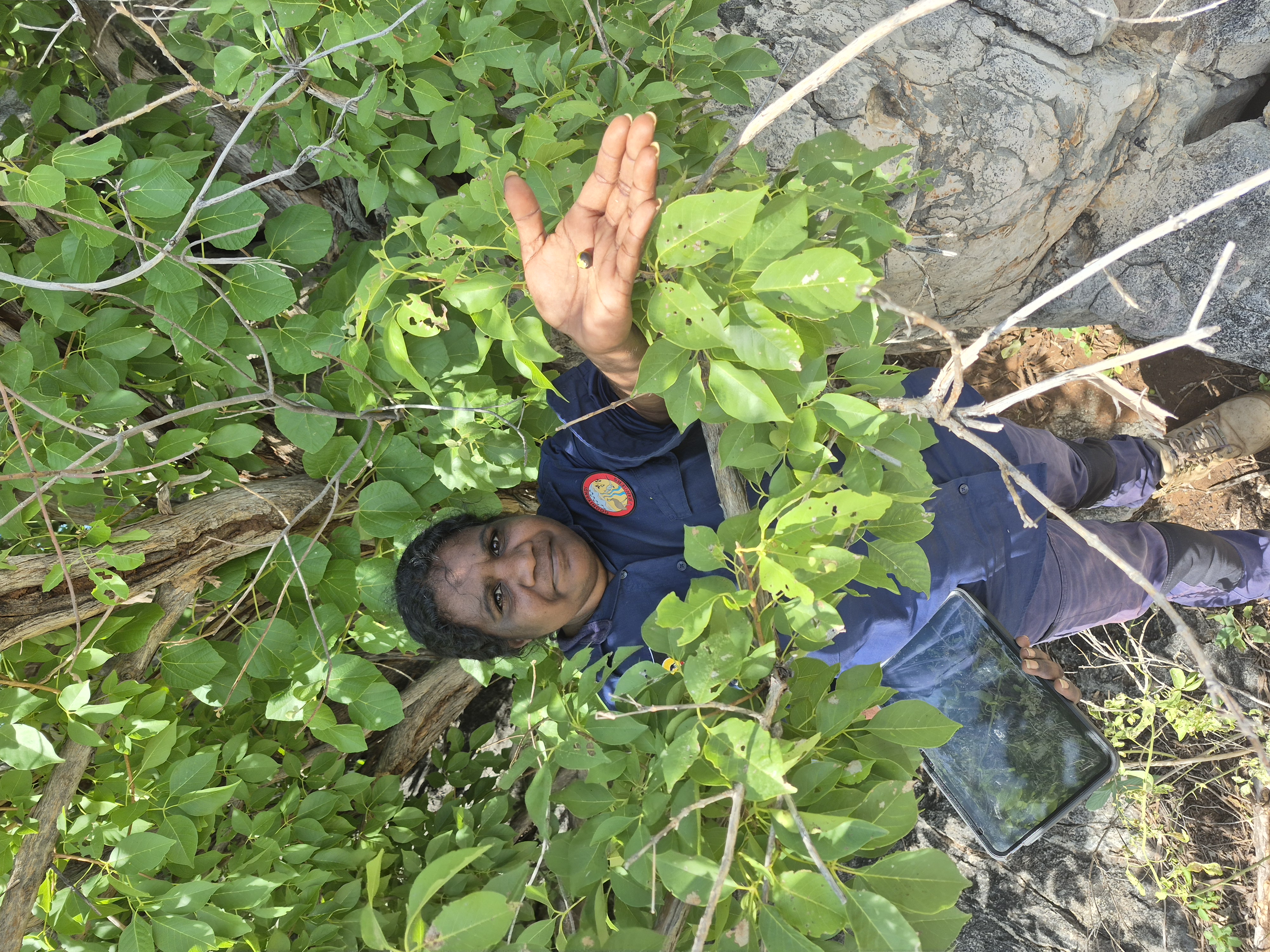
The Gooniyandi Seasons calendar is in prime viewing position in the Gooniyandi rangers' office at Fitzroy Crossing. Working with the rangers to compile some ethnobotanical knowledge I'm gaining an understanding how integral it is to their role and job description. It determines their Healthy Country Program, when they burn, when the fish are biting and when to take Elders out on Country to collect their favourite bush fruits.
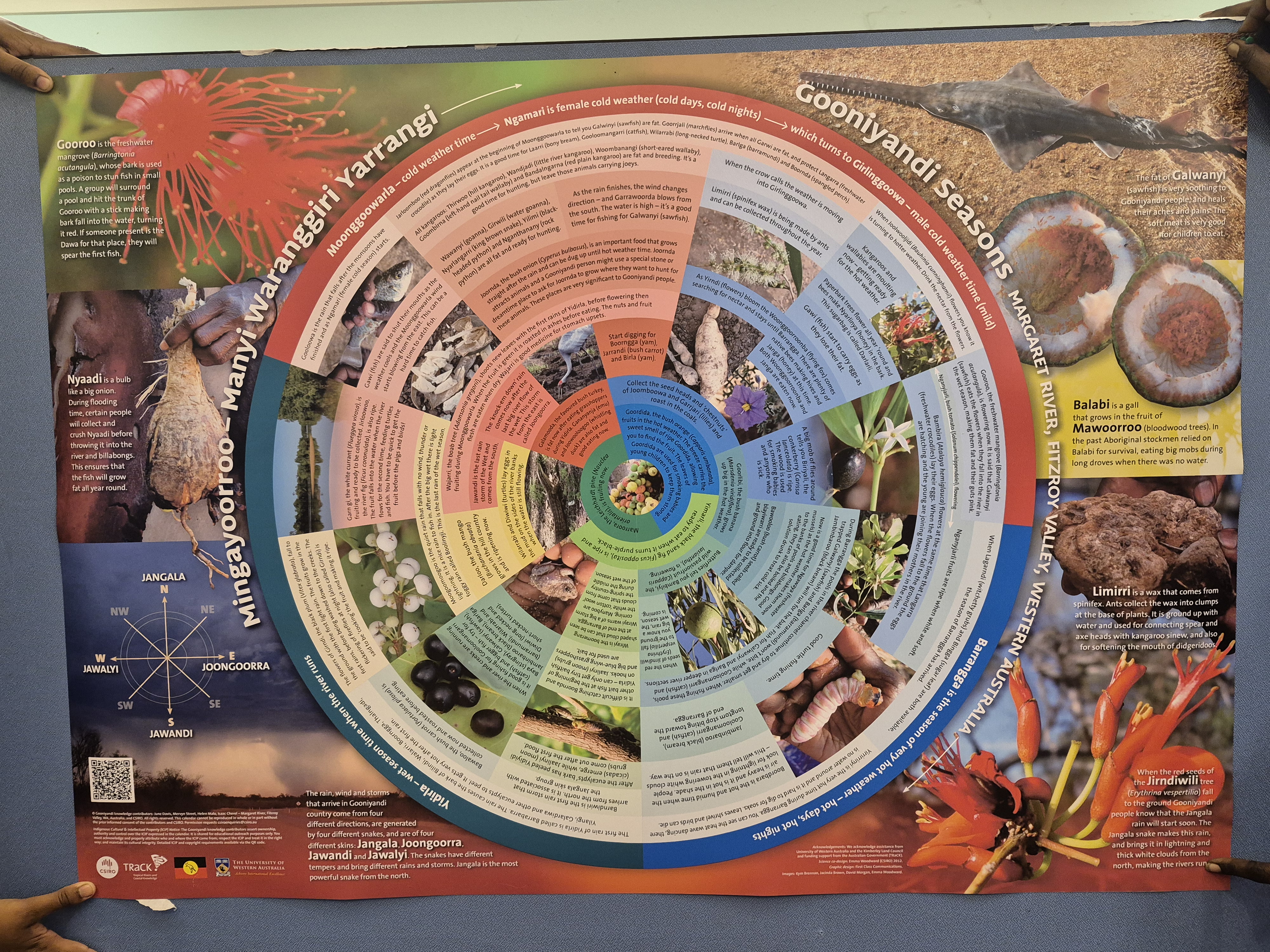
Seasonal calendars are not unique to Gooniyandi people, in fact any ranger group or native title group I've worked with have a printed calendar or are in the process of developing one. In the Kimberley as you cross traditional borders you are often greeted with interpretative signage telling you what season you are in and what you may see that determines why. To me it's a generosity, between the lines saying, welcome to Country, here's something to share with you.
Yearly calendars work to a time, a day, and a month and they don't always correspond to what is happening in the natural world, so it pays to take notice and learn about seasonal indicators.
Broome locals will tell you the soft pink blush of the jigal (Bauhinia cunninghamii) tree accompanied by the bright green flush of the gubinge (Terminalia ferdinandiana) heralds the start of the buildup or Mankala season. The Pigram Brothers on their classic song "My Land" want to share with you too, "You know the tide right, just look at the moon, yellow wattle smell em, tell em, that the mullet must be fat today".
Observe the natural environment around you, talk to the local mob and take the opportunity to learn something new and celebrate it. Galiya.