



Whadjuk Aboriginal Corporation has been served with a default notice by Perpetual, its trustee, after the resignation of two expert directors left the organisation below the minimum number of directors required under its own rule book.
National Indigenous Times understands the notice was issued on 18 May after Gordon Cole and Krista Dunstan resigned from the Board on Friday 15 May, leaving Whadjuk with only three remaining directors; Chair Charne Hayden, Deputy Chair Wayne Ryder and former Chair Colin Garlett.
Rule 8.1.1 of the Whadjuk Aboriginal Corporation rule book states: "...the Corporation must have at least 4 Directors."
The notice has deepened a governance crisis at one of Western Australia's most important Aboriginal corporations, following a contested move to stand down chief executive Leon Ruri on leave with pay last week and install recently employed staff member Dom Panaia as acting CEO.
One disputed conduct issue raised in the lead-up to the meeting involved the alleged sharing of an image or video of a woman. During an exchange between the CEO, Deputy Chair Wayne Ryder and a friend of Mr Ruri's who had been engaged as a contractor by the corporation, an image or video was allegedly shown between the men on a mobile phone.
Almost two months after the alleged incident, Mr Ryder raised the matter with the corporation's Chair, asserting that the CEO's conduct was unprofessional and "degrading". The extraordinary meeting to terminate the CEO was called shortly thereafter. The allegations are strongly denied by Mr Ruri and the other man involved in the interaction. No finding has been made in relation to the incident.
The role of Whadjuk Aboriginal Corporation
Whadjuk Aboriginal Corporation represents Whadjuk Noongar people across metropolitan Boorloo / Perth and surrounding areas. It is one of the key regional corporations established under the South West Native Title Settlement, with responsibilities spanning cultural heritage, land, community development, economic participation and engagement with government, industry and developers operating on Whadjuk Country.
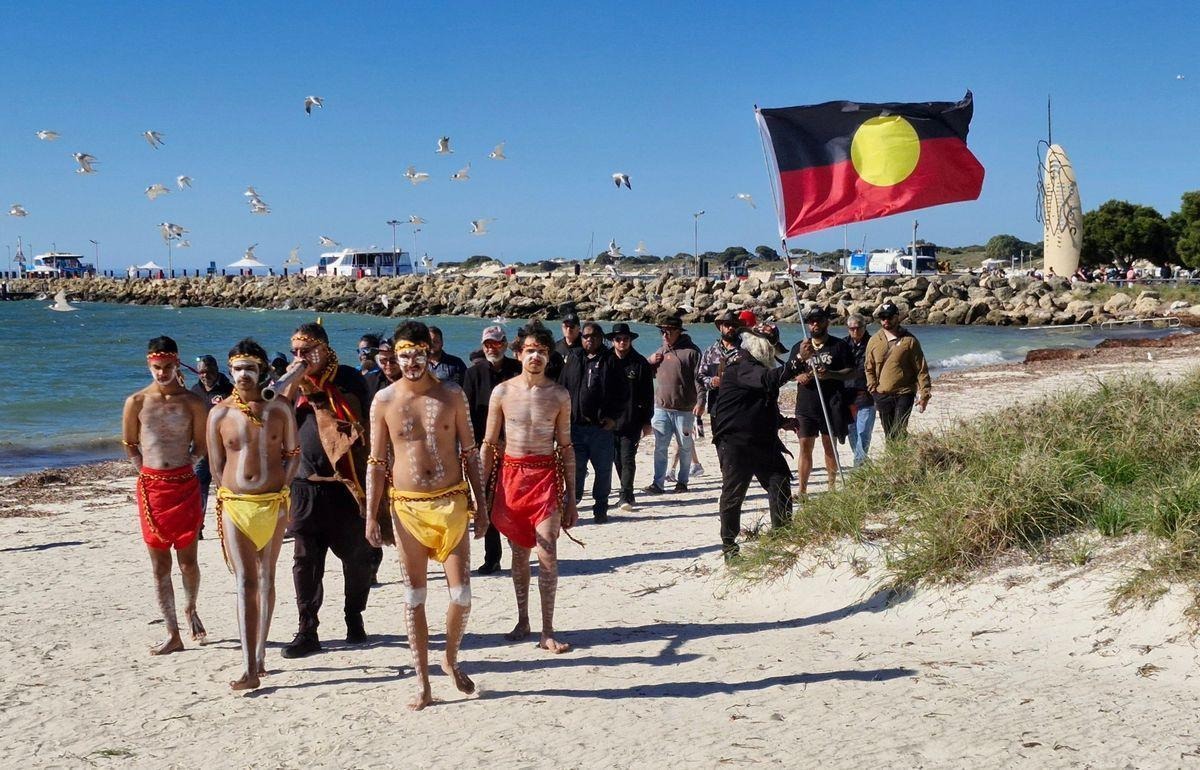
Whadjuk is playing a central role in cultural heritage monitoring on Wadjemup / Rottnest Island, where Aboriginal ancestral remains were recently uncovered during construction works near the main bus stop. Those remains were laid to rest through a traditional burial earlier this month, while further investigations are examining whether additional burial sites may be present.
The corporation's work on Wadjemup has been publicly framed as a major moment of truth-telling, cultural responsibility and employment opportunity for Whadjuk Noongar people.
Board dispute
The default notice follows an extraordinary board meeting on Monday, 11 May, where corporation chair Ms Hayden used her casting vote to carry a contested motion to stand Mr Ruri down on leave with pay.
The vote split two-all. Ms Hayden and Mr Garlett (the corporation's former chair) voted to stand Mr Ruri down, while Mr Ryder and Mr Cole voted against the move. Ms Hayden then used her casting vote to carry the resolution.
Ms Dunstan had already recorded her opposition to the proposal in writing but was unable to attend the meeting after receiving less than 16 hours' notice while she was in Port Hedland for work commitments.
Section 11.2(e) of the Corporation's rulebook states that "The date, time and place for a Directors' meeting must not unreasonably prevent a Director attending."
The original meeting notice proposed the immediate termination of Mr Ruri's employment, the appointment of Mr Panaia as acting CEO for three weeks, and the appointment of Anthony Byron Bennell as CEO for a one-year term from 1 June.
Mr Panaia had been an employee of Whadjuk Aboriginal Corporation for about three weeks before he was installed as acting CEO.
The proposed appointment of Mr Bennell as a longer-term chief executive has also raised questions, with Mr Ryder telling National Indigenous Times he did not know Mr Bennell and would not have supported his appointment without a proper recruitment process.
"I don't know him and I would not vote for that," Mr Ryder said.
The stand-down came approximately two weeks after Mr Ruri received a significant pay rise, which this publication understands was requested due to Mr Ruri's workload, and him not receiving flexitime or payment for weekend and other overtime work.
Supporters of Mr Ruri say the timing sits uneasily beside later claims that urgent action was required over his conduct and performance.
The CEO's performance
Since his appointment in June 2025, Mr Ruri had been credited by supporters and some external stakeholders with helping professionalise the corporation, strengthen government and commercial relationships, announce a full financial audit, move Whadjuk into new premises and expand heritage monitoring services.
In earlier correspondence, Mr Ruri said Whadjuk had employed more Whadjuk monitors than ever and was likely to reach the $2 million revenue mark for heritage services.
The meeting notice also alleged a series of contractual, reporting and governance failures by Mr Ruri, including alleged failures to provide written reports to the Board on their recent delegation to Aotearoa / New Zealand, potential Indigenous Land and Sea Corporation interest, and a proposed hotel development at Perth Airport.
The allegations remain untested. According to correspondence seen by the National Indigenous Times, Mr Ruri has strongly rejected the process used against him and says he was not provided with evidence or afforded a reasonable opportunity to respond before the meeting was called.
Speaking exclusively to National Indigenous Times Mr Ruri said: "I am proud of the strong outcomes achieved under my leadership for Whadjuk people and community."
"During my tenure, the organisation has rebuilt its reputation, secured more contracts than ever before, and achieved record heritage revenue projected to exceed $2 million this year, directly benefiting more families than ever," he said.
"We have engaged over 90 cultural monitors, grown membership to record levels, employed five Noongar staff, delivered cultural awareness training for the first time, and managed significant projects including the Baalang Discovery project on Wadjemup."
Lack of evidence
Some of the strongest concerns about the process came from Ms Dunstan, who warned directors before the meeting that the Board was not in a position to make an informed or defensible decision.
She said the short notice did not allow directors a reasonable opportunity to review the material, seek advice or participate in informed deliberations. She also said the allegations against Mr Ruri had not, to her knowledge, been subject to an independent or procedurally fair investigation.
"I have not been provided with sufficient supporting evidence to properly assess the majority of the allegations contained within the documentation," she wrote.
Ms Dunstan said the proposed appointment of both an interim CEO and a replacement CEO appeared to predetermine the outcome before the Board had undertaken due diligence, received independent advice or ensured procedural fairness.
"Given the seriousness of these allegations, I believe the Board has obligations under the CATSI Act to ensure that any response is lawful, procedurally fair, evidence-based, and in the best interests of the corporation," she wrote.
Mr Cole raised similar concerns during the meeting, saying he could not support action against Mr Ruri without evidence.
"As an expert director, given the legal aspect of this matter, I don't operate with anything other than evidence," Mr Cole said.
"If we were to do this the way we probably should, it should be fair and natural justice to everyone. Not just in terms of Leon, but to all of us. I can't approve these things without evidence."
In an interview with National Indigenous Times, Mr Ryder said he opposed the stand-down because he believed it was not the correct process, but he did still have substantive performance concerns about the CEO.
"My concern was around the process of it all," he said.
"We need to give him a fair process and we have a duty of care for him as well as a board."
Mr Ryder said Whadjuk was now in a difficult position following the resignations of Mr Cole and Ms Dunstan and needed to return to at least four directors.
He described the situation as "very messy" and said the corporation "shouldn't be in this position".
"It's a very uncomfortable position to be sitting in," he said.
The resignation of both expert directors leaves Whadjuk without the independent governance expertise it had recently promoted as part of its reset.
The Chair speaks out
In comments provided to National Indigenous Times, Ms Hayden said the corporation's current direction was intended to bring Whadjuk people together.
"I want to assure our mob that this here is something that is for the wellbeing of our people," she said.
"I am not here to break our corporation, but to bring our people together. We are strong and we have Dom, a Noongar man, who is redirecting us and we will come through this.
"Trust us. I know it's hard, but the old fellas walk with us."
The central question is whether Whadjuk Aboriginal Corporation is properly governed, properly constituted and capable of restoring confidence at a time when it is managing sensitive cultural heritage responsibilities, growing heritage revenue, and carrying significant obligations to Whadjuk Noongar members.
No findings of wrongdoing have been made against Mr Ruri, and the allegations against him remain untested and disputed.



