



A legal challenge against the Australian Government seeking "fair and equal access to the age pension" for Aboriginal and Torres Strait Islander people begins today, 20 February, before the full Federal Court.
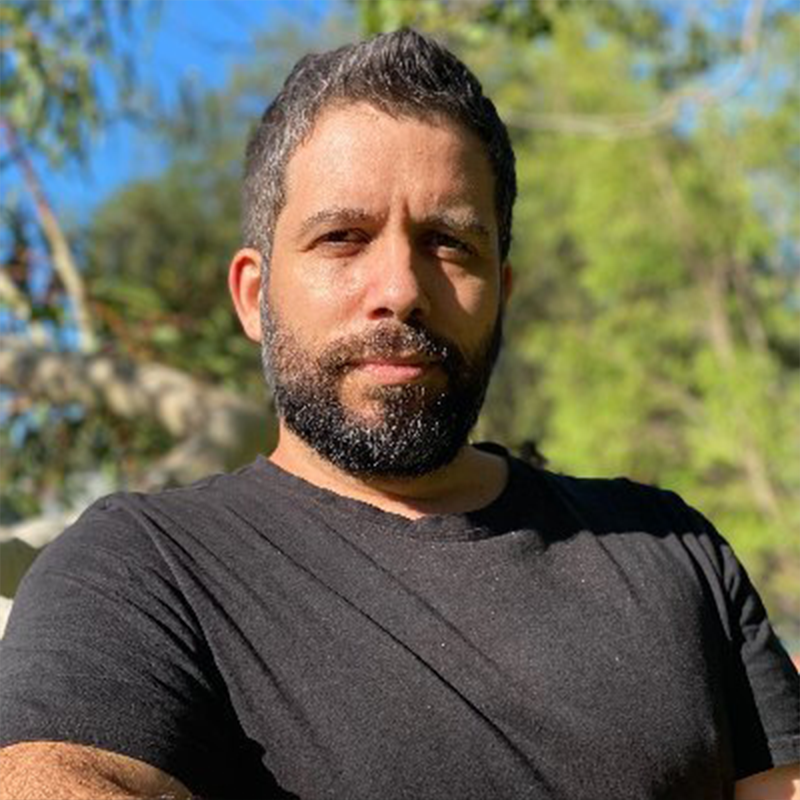
Wakka Wakka man Uncle Dennis, who does not want his last name published, has brought the case in which the federal government faces court for the first time in connection with its failure to close the gap in life expectancy between Aboriginal and Torres Strait Islander people and non-Indigenous people.
Uncle Dennis has brought the case with the Human Rights Law Centre and the Victorian Aboriginal Legal Service, with support from DLA Piper.
The Full Court will consider whether Indigenous people are denied equal access to the pension due to lower average life expectancy, and whether the pension age for Aboriginal and Torres Strait Islander people should be lowered.
Uncle Dennis and his legal team will argue the gap in life expectancy means Indigenous people do not have the same opportunity to retire and receive support through the age pension as other Australians.
VALS and the HRLC said prior to the case commencing the Full Court had been presented with facts agreed between the parties, including that "social, economic and health inequalities experienced by Aboriginal and Torres Strait Islander people from colonisation directly contribute to the gap in life expectancy today".
Uncle Dennis said that as an Aboriginal man, he has seen too many of his people dying at a very early age.
"We are lucky to get to 50 years old," he said Monday.
"White people are living longer because they haven't lost what we have lost. This is about acknowledging what happened here. So many things that Aboriginal people are suffering from today, are because of how we have been treated since colonisation. Our language, our culture, our identity comes from this land. We didn't have a problem, a problem came here.
"It's only fair for the pension age to be lowered. The pension is an important part of caring for and looking after our people when they can't work anymore."
Uncle Dennis said the case "isn't just about money".
"This is about telling the truth and doing what's right," he said.
"If we don't tell the truth we will never be free. Things will never get better unless we acknowledge something is wrong. Truth and accountability are important. We are asking the government to work together with us, to give our people the same chance in life as everyone else."
If successful the case will ultimately lower the pension age for Aboriginal and Torres Strait Islander men. The Human Rights Law Centre and VALS believe it would most likely be lowered by three years, "based on the data for his age cohort".
Last week the federal government acknowledged the gap is not closing fast enough, and committed millions in additional funding.
VALS and the HRLC said it "remains open to the Albanese government to take the initiative to address age pension inequality out of court, by making simple changes …in the Social Security Act".
"Such a move would support several Closing the Gap targets, by improving financial security and wellbeing for Aboriginal and Torres Strait Islander people later in life."
VALS chief executive Nerita Waight said the promises and commitments successive federal governments have made over the years to Close the Gap "need to mean something and need to be enforceable".
"The gap in life expectancy is a direct result of decades of racist colonial policies. Lowering the pension age for Aboriginal and Torres Strait Islander people to access the age pension is a simple and practical measure that will meaningfully respond to the history and systemic discrimination that causes our people to die before their time," she said.
Ms Waight said lowering the pension age to ensure Elders have the necessary support to lead a dignified life in later life is a concrete step the Albanese government can do for reconciliation.
"Our Elders deserve to retire in dignity and afford essentials such as housing, food and healthcare. The pension age should be lowered, so our people have a retirement which lets them properly care for themselves and their families, while governments at all levels work to close the gap," she said.
According to the 2020 Closing The Gap report in 2015–2017, life expectancy at birth was 71.6 years for Indigenous males (8.6 years less than non-Indigenous males) and 75.6 years for Indigenous females (7.8 years less than non-Indigenous females) and the target to close the life expectancy gap by 2031 is not on track.
Principal Managing Lawyer of the VALS Civil and Human Rights team, Alex Walters, told National Indigenous Times before the proceedings began that "it is the first time we are aware of that someone has litigated a close the gap strategy".
"We are proud to be working with Uncle Dennis on this case," he said.
"We think it would make a significant practical difference in people's lives and be a concrete reconciliation measure."
National Indigenous Times has contacted the Minister for Social Services Amanda Rishworth for comment.



