




When rates of self-harm and substance abuse began rising in the Fitzroy Valley 25 years ago, Elders chose a response grounded in Country.
They created a camp for young men; a place to listen, learn and be held by culture.
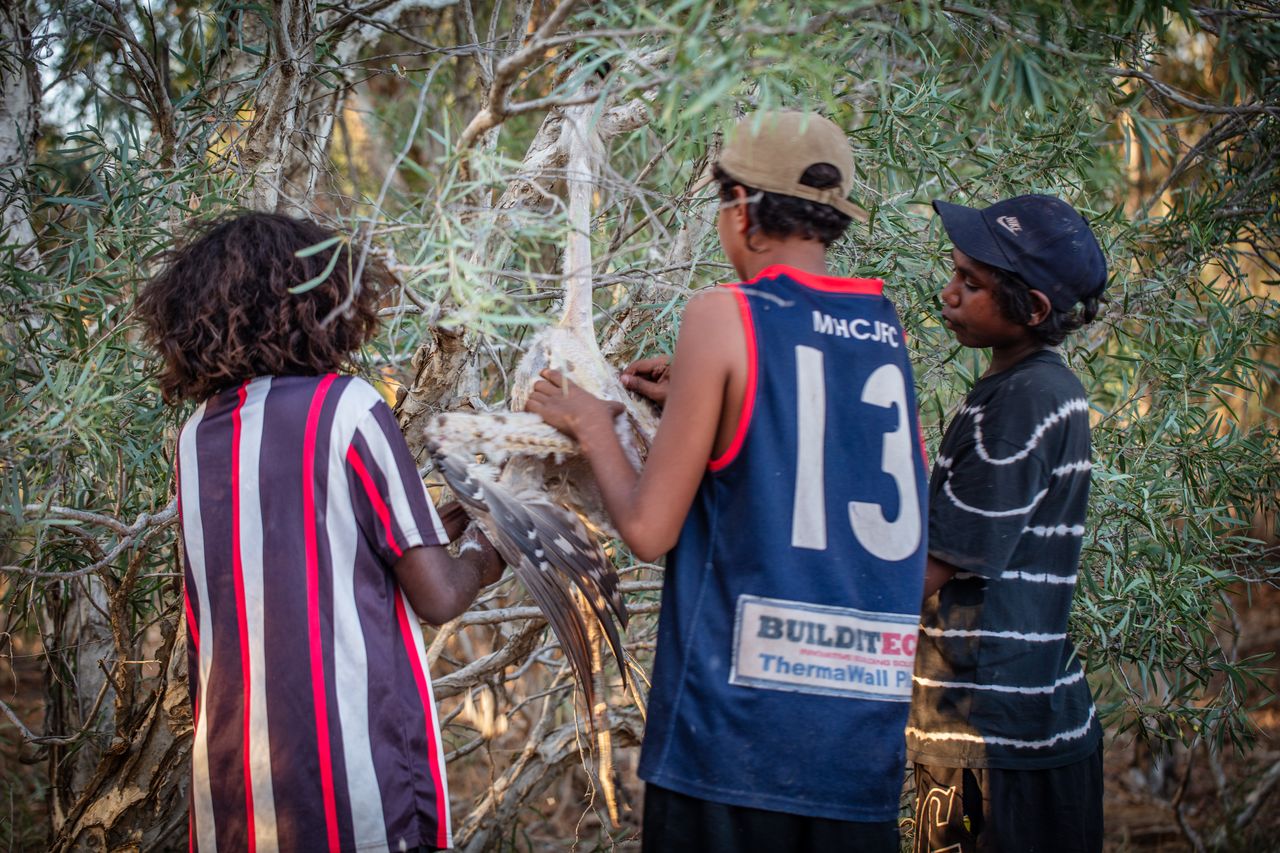
In November, thirteen young men returned to that vision, completing the Yiriman Project camp in the West Kimberley. Guided by Elders, they heard stories of Law, learned to hunt, and took responsibility for caring for Country.
The Yiriman Project is delivered by Kimberley Aboriginal Law and Cultural Centre (KALACC) on behalf of Elders from the Nyikina, Mangala, Karajarri and Walmajarri language groups across the region.
Walalakoo Aboriginal Corporation and the Nyikina Mangala Rangers provided additional staff and on-the-ground support for the camp, which was held on Nyikina-Mangala Country in the south-west of the Kimberley.
The young men gathered around freshwater springs nestled in the Kimberley bushland, learning from mentors the physical and spiritual protocols for approaching, using and caring for these sites, and how to protect them for future generations.
Hunting turkey, emu and kangaroo, as well as fishing, was also part of the camp, with participants learning new techniques to locate nutritious native food sources.
While many lessons were learned through physical activity, the camp also created moments of quiet reflection.
Nyikina Elder Annie Nayina Milgin spoke to the young men about the importance of education, both in the classroom and on Country.
She said that without education, mining and gas companies can take advantage of Aboriginal people, leading to the loss of land and rights; a message that resonated strongly with the young men, according to KALACC.
The Yiriman Project team also plans to run weekly on-Country day trips during each school term, working with Fitzroy Valley District High School and Bayulu Remote Community School.
The trips are designed to support students who have become disengaged from school, including participants who have been out of the classroom for long periods.
By spending time on Country together, participants are able to build friendships with peers who attend school regularly — connections that often encourage them to return to school so they can stay connected to those friendships.
Three shorter engagement camps are also planned for 2026. Led by Elders and Traditional Owners, the camps are intended to provide ongoing support for young people's cultural connection, wellbeing and re-engagement with education.



