




Indigenous homelessness and a lack of adequate housing supply have been pushed to the forefront by Aboriginal Housing Victoria (AHV), with legislative changes, as well as more empty land being freed up for First Peoples some of the suggestions put forward in a recent submission to the Yoorrook Justice Commission.
The audio submission from AHV - centring on land injustice - forms part of Yoorrook's investigation into housing disparity and land inequality for Indigenous Victorians.
In their submission, AHV called for the state government to return unused public land to Traditional Owner groups for the purpose of building housing.
"While you can understand the contemporary housing experiences of Aboriginal people and the origin in dispossession, we do need solutions that are going to work for Aboriginal people because we can't endure continuing homelessness at the level that it is at the moment," Palawa man and AHV chief executive, Darren Smith, said.
Gunditjmara man and AHV board member, Damein Bell, told National Indigenous Times homelessness, as well as a lack of adequate and affordable housing for Indigenous people, was "an urgent situation."
"We have always had a housing crisis because we were dispossessed of our land and the places we lived," he said.
"It always has been, and It will continue to grow if we don't get ahead of the housing crisis that is already here."
The AHV submission noted the "limited" aspects of Native Title and Traditional Settlement Acts, arguing they "don't necessarily provide freehold title back".
"They might provide land back, but it's not land that's going to be able to provide housing necessarily at the moment."
Along similar lines, the Taungurung Land and Waters Council (TLaWC) submission to Yoorrook advocated for legislative changes to enable the protection of freehold title hand which is currently owned by Traditional Owner groups, as well as protection from this land ever being repossessed.
Mr Smith said housing is the "primary" vehicle for wealth creation in society. His submission argued if this is not being provided to Indigenous people "then Aboriginal people are not being restored to where they were prior to being dispossessed".
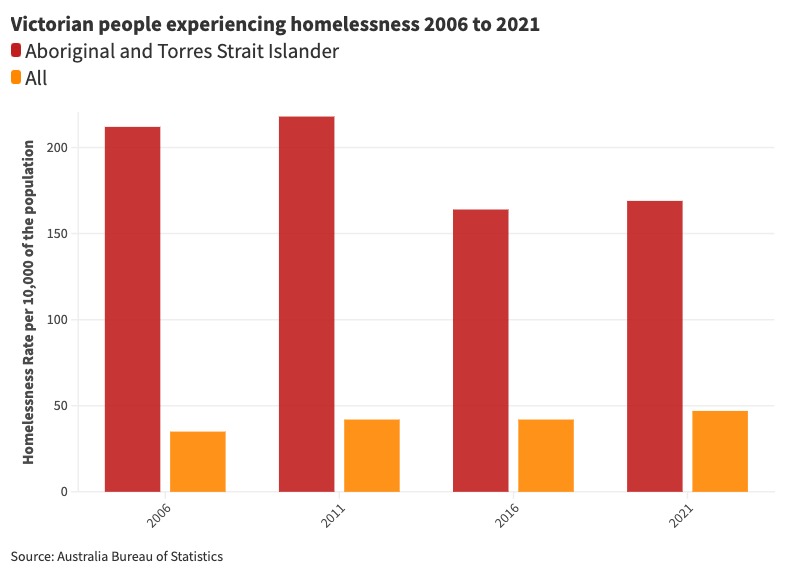
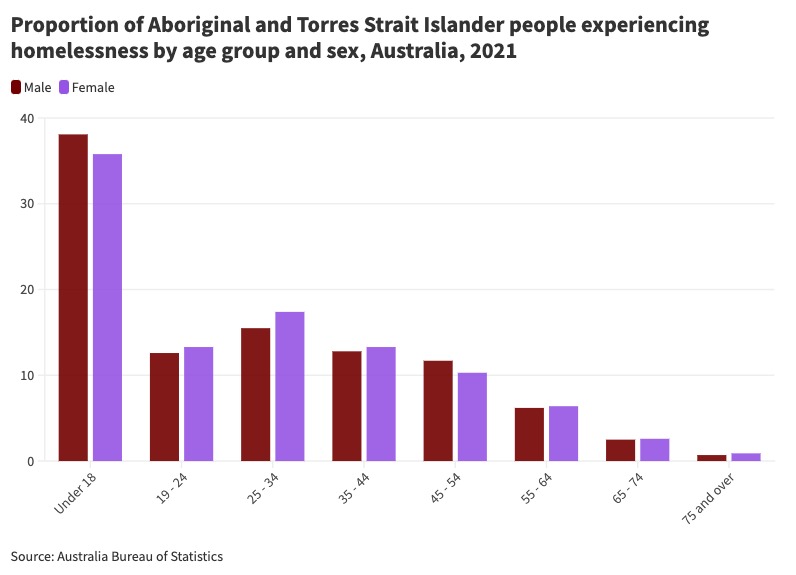
Across all jurisdictions in Australia, Aboriginal and Torres Strait Islander people suffer grossly disproportionate levels homelessness, with young people particularly impacted. Since 2011-12 the number of Indigenous people receiving homelessness services support has been increasing at an average rate of five per cent per year.
Last year Homes Victoria told National Indigenous Times 10 per cent of all new social dwellings in the $5.3 Billion Big Housing Build initiative are earmarked for Aboriginal households. However, a 12-month pilot programme providing public housing for First Nations people, and run by the Victorian Public Tenants Association, was not renewed, leading to criticism from the AHV.
In Victoria, a report authored by AHV in 2022 stated: "Across the entirety of the housing system, Aboriginal Victorians continue to experience discrimination, barriers to entry and economic disadvantage. 11.5 per cent of all Victorians without homes are Indigenous and one in six Aboriginal Victorians will experience homelessness each year".
Mr Smith told AAP in December the rate of long-term homelessness among Aboriginal people is sitting at 35 per cent.
Mana-na worn-tyeen maar-takoort is Gunditjmara for "Every Aboriginal Person has a Home" and is the AHV framework for the future demand of Indigenous housing in the state, which projects an additional 27,000 more Aboriginal households will be needed by 2036. The framework calls for targeted state and federal investment in Indigenous community-controlled organisations.
Mr Smith said an option for local councils and the state government in areas where they control the planning processes is to structure the way land is made available for developers through agreements; enabling land to be set aside for purchase by Aboriginal community-controlled organisations and by Traditional Owner groups.
He argues this would allow usage for "the purpose of providing low cost and affordable housing, social housing, and even for even for low cost and affordable home ownership for Aboriginal people".
"Even if all councils and state governments were applying a very small target in aggregate, what it means is that there's an opportunity for Aboriginal organisations," he said
Mr Bell stated a lot of unused public land could be redistributed and returned to Traditional Owners and Traditional Owner organisations.
"There's always surplus land, governments who operate this land should be engaging traditional owners," he said.
"We should be using legislation already in place to leverage the return of land for purposes including social housing and addressing homelessness."
Both Mr Bell and Mr Smith submitted that colonisation has resulted in a "housing crisis for 250 years".
"The sky won't fall in with new legislation," Mr Bell said.
"Our communities have been providing ourselves for a good solid home for thousands of years.
"The irony is it is our land to unlock."



