



Professor Pat Dudgeon has been honoured with an Australian Mental Health Prize.
Since its foundation by UNSW Sydney in 2016, the Prize has honoured advocates, clinicians, researchers, peer workers and community leaders who have changed lives and shaped national conversation.
The winners announced Wednesday were Professor Dudgeon, Australia's first Aboriginal psychologist whose leadership has redefined Indigenous mental health, and Professor Brian Burdekin AO, a global human-rights pioneer who reframed mental illness as a human-rights issue.
Born and raised in Darwin and descended from the Bardi people of the Kimberley, Professor Dudgeon is a national leader in Indigenous mental health and suicide prevention. She has dedicated her career to embedding cultural, strengths-based and lived experience perspectives into mental health policy, research, and practice.
Professor Dudgeon told National Indigenous Times it was important to recognise the good work people are doing - "whether it's at the leadership level or the community level".
"This award has a really good history; we have had people recognised such as Joe Williams, Megan Krakouer, Helen Milroy and Donna Stanley, a whole range of people," she said.
"It's a strength, we have a diversity of people it's not just the academics, there's a good mix of community people and policy leaders as well being recognised... in the mental health and social and emotional wellbeing space."
Professor Dudgeon said there were many people and organisations doing great work in mental health deserving of recognition, including her colleagues.
"I feel a bit embarrassed to tell you the truth to get this award, because it's not just me as an individual; it's programs I have helped lead and been a part of and a lot of work I have done with community groups. While obviously you do have people who are spearheading efforts, we are not without our colleagues and our community," she said.
"These awards can only recognise individuals, but behind each individual - particularly in the Indigenous area - there's a whole lot of community and effort that has gone into making change.
"Positive change needs to be recognised, but we have still got a long way to go. I was a bit disheartened with the stats that came out last week, that Indigenous suicide has continued to increase. I think it is going to take a while to turn that around. We need to continue to fund and support those programs, I am thinking of Culture Care Connect, 13 YARN, there's a whole raft of very good programs at the national, state and regional levels.
"We need immediate solutions as well, but we need the big programs the chance to turn things around.
"It might have been the rates were under-reported previously, that might be a factor, and we don't know whether the increase would have been more extreme if we didn't have these programs in place. Having said that, there is hard yakka, hard work ahead."
Professor Dudgeon is the Director of the Centre of Best Practice in Aboriginal and Torres Strait Islander Suicide Prevention at the University of Western Australia and a Chief Investigator on the Transforming Indigenous Mental Health and Wellbeing Project.
She led the landmark Aboriginal and Torres Strait Islander Suicide Prevention Evaluation Project (ATSISPEP)and its 2016 report Solutions That Work: What the Evidence and Our People Tell Us, which reframed national understanding of suicide by recognising the impacts of colonisation and the central role of Indigenous-led, culturally grounded responses.
A Fellow of the Australian Psychological Society, Professor Dudgeon has published extensively on Indigenous mental health, social and emotional wellbeing, and suicide prevention. She is a founding Chair of the Australian Indigenous Psychologists Association and serves on the boards of Gayaa Dhuwi (Proud Spirit) Australia and the Indigenous Australian Psychologists Association. Her work continues to influence national policy, research and frontline service delivery.
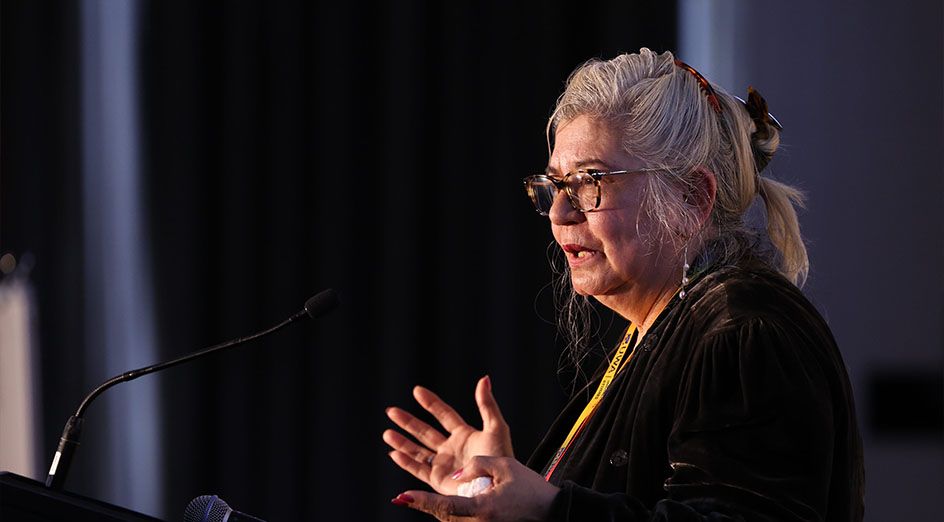
Professor Dudgeon told National Indigenous Times there have been positive developments in the important work being done in suicide prevention and to improve social and emotional wellbeing.
"I mentioned Culture Care Connect, that's a big national program delivered through NACCHO, and we have new peak bodies such as Gayaa Dhuwi (Proud Spirit) Australia, which works to ensure proper policy is put in place and implemented," she said.
"I think that our message to the government about ensuring local voices are part of the solution has been taken up. The changes I have seen has been good Indigenous co-design and governance in various programs and strategies.
"Also, there seems to be more programs that are targeting suicide prevention directly or increasing social and emotional wellbeing, and that's a great change that I have seen."
The Australian Mental Health Prize also celebrated a new generation of changemakers with winners Hugo Toovey and Keith Donnelly, whose lived experience and grassroots innovation are inspiring new approaches to care and connection.
Presenting the 2025 awards, the Emma McBride MP, Assistant Minister for Mental Health and Suicide Prevention, said the milestone was a chance to celebrate both the legacy of the Prize and the leadership of this year's winners.
"These awards shine a light on the people who dedicate their lives to improving mental health in Australia," she said.
"From world-first research and cultural leadership to grassroots community initiatives, the winners of this year's Prize are helping to create a fairer, more compassionate system that gives people the support they need, when and where they need it."
Adjunct Professor Sophie Scott OAM, Chair of the Australian Mental Health Prize Advisory Group, said that since 2026 the Prize has "showcased Australians who are shaping the future of mental health, from policy and cultural reform to lived experience and grassroots care".
"This year's recipients continue that legacy, showing us new ways to understand and respond to mental health and offering Australians hope and practical support when it is needed most," she said.
UNSW Vice-Chancellor and President Professor Attila Brungs said he was immensely grateful to the winners whose unwavering advocacy inspires real change.
"Over the last decade, this prize has honoured the outstanding contributions of individuals who are transforming the Australian mental health sector," he said.
"This year's winners continue this legacy. With their compassion and creativity, they've shaped policy, research and practice, building a stronger and more inclusive society for all. Their impact is truly deserving of this recognition."



