




A collaboration involving the Eastern Pilbara Martu people which explains an environmental phenomenon that western science couldn't was among the winners celebrated at the Australian Academy of Technological Sciences and Engineering's annual national Awards Thursday night.
The awardees were recognised at the 2024 ATSE Awards Gala Dinner at Metropolis Melbourne.
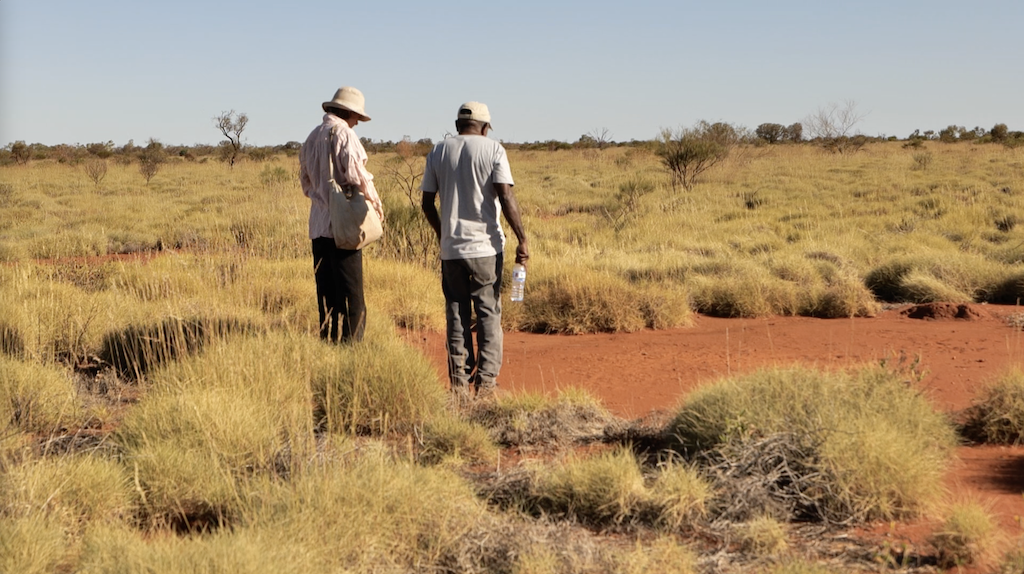
'Fairy circles' are patches of bare earth that polka-dot Australia's arid grasslands in desert country.
They were thought to be the result of competition between spinifex plants, according to research based on similar landscape features in Namibia.
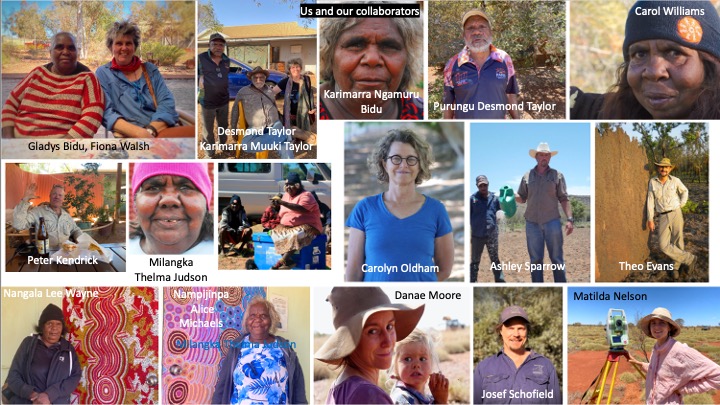
A deep collaboration between the Martu people of the Eastern Pilbara through local Indigenous organisation Kanyirninpa Jukurrpa and non-Indigenous scientists upended this interpretation, and earned the Traditional Knowledge Innovation Award.
The collaboration also disproved the notion that Australia lacks climate and ecosystem data for our desert regions and demonstrated that Indigenous knowledge can lead Australian and international environmental research.
The Martu people call these fairy circles linyji. They know linyji to be the home of spinifex termites called Wartunyuma.
Linyji have long been used by desert people as temporary water sources, places for seed processing and resin making, and other domestic tasks.
Guided by Kanyirninpa Jukurrpa and ethnoecologist Dr Fiona Walsh of the University of Western Australia, the groundbreaking project wove together Traditional Knowledge with environmental surveying and engineering methods.
As a result, shared understanding of the linyji termite pavements has revealed their foundational role in desert art, cultures and ecosystems.
The interdisciplinary and cross-cultural project has been hailed as a study that shows how to respectfully weave together Traditional Knowledge with western science, uplifting Aboriginal voices, expertise and communities.
ATSE President, Dr Katherine Woodthorpe AO FTSE, said the winners are emblematic of how applied science and technology are making Australian lives better.
"The 2024 ATSE Award winners are proof that innovation in Australia is alive and well. These winners are showcasing the innovations that will catalyse Australia's future industries and unlock prosperity, safety and sustainability for all Australians," she said.
"Spanning inventions and discoveries in renewable technologies, health, infrastructure, food and biodiversity, the awardees showcase the value of Australian ingenuity. This must be cherished, nurtured and grown so that Australia continues to inspire future generations of STEM leaders.
The other award winners on the night were:
Professor Andrew Blakers FTSE FAA was named the winner of the prestigious Clunies Ross Technology Innovation Award for his contributions to the renewable energy transition. Andrew helped develop the PERC (Passivated Emitter and Rear Contact) solar cells which make up half of all solar cells world-wide and are mitigating an estimated 2% of global greenhouse emissions. He also created a global atlas of about one million possible sites for off-river pumped hydro energy storage with the potential to power about one trillion electric vehicle batteries.
Professor Sara Couperthwaite has won the David & Valerie Solomon Award for her research transforming mining waste into high purity alumina for safer lithium-ion batteries. By commercialising a pathway to reuse and transform the mining waste filling tailings dams across Australia, she is helping open up new export markets and develop new sources of sustainable critical minerals.
ICM Agrifood Award winners Dr Kristy DiGiacomo and Dr Vivien Rolland are making Australian food more nutritious and sustainable. Kristy is changing the kid rearing and feeding regimes of Australia's largest goat dairies and is demonstrating how a diet of insects can benefit animal growth, health and meat quality. Vivien is creating state-of-the-art artificial intelligence and imaging tools to enhance the productivity and sustainability of key food, oil and fibre crops, tools already being used by commercial breeders and researchers.
Dr Scott Menegon, a structural engineer who is earthquake-proofing Australian infrastructure and informing our building standards, has won the Batterham Medal for Engineering Excellence. Scott is improving the design of multi-storey buildings across Australia – from hospitals to 60-storey apartment blocks.
Professor Lyn Beazley AO FTSE FAA, a neuroscience researcher who went on to become Chief Scientist of Western Australia, has taken home ATSE's President's Medal for her contributions to the Academy, championing of applied sciences and her focus on getting young people into STEM.



