


In 2026 we've seen an uptake of visible and physical right-wing extremism. Over the past few years, we've seen this coming slowly but surely, people with hateful ideologies have been given permission by the lack of actions from our leaders to become more organised and more public in their violence and discrimination.
Post the outcome of the Voice to Parliament outcome in 2023, Aboriginal and Torres Strait Islander communities have been able to quantify with statistics the lack of support we have from our Non-Indigenous Australian peers, that in conjunction with our politicians using sacred and ancient cultural practices as election campaign slogans and strategies, it's no surprise Neo-Nazi / White Australia groups are emboldened.
In WA, these hateful campaigns have expanded to our LGBTIQA+ community members, with violent attacks against Trans and Gender diverse people, targeted flyer campaigns doxing and accusing LGBTIQA+ community members in Boorloo of being predators, LGBTIQA+ organisations and events being targeted and attempted to be shut down, and we aren't seeing an end, if anything we're seeing more organised efforts from these extreme groups.
In the first five months of 2026 we've seen a steady unveiling of the true depth of Australia's racism. Beginning with the removal of the Survival Day Birak Concert from the City of Perth's annual "Australia Day events", the First Nations communities in Boorloo (Perth) were left blindsided after we received no communication that a beloved, annual and long-standing event had been cancelled without adequate community consultation.
Birak Concert historically stood alongside our annual Invasion Day rally, after the march we would congregate to hold each other in shared grief and trauma. It was a space of hope, a physical and visual representation of our resilience, but also important for local First Nations small business owners and performers.
The City of Perth never publicly addressed the cancellation of the Birak Concert, instead it was left up to community members to go back through previous Council Meeting minutes just to find out the decision was made almost a whole year prior during their March Ordinary Council Meeting.
Alongside other Aboriginal community members Ilona McGuire, who started a petition to "bring back Birak Concert", and her father Noongar Elder Walter McGuire, we put forward a motion at the City of Perth Annual AGM on the 27th of January to bring back Birak Concert, I mention the date because it was the day following the alleged attempted terrorist attack on January 26th at Forrest Place.
Rewinding to January 26th 2026, a day that already holds so much pain and re-traumatisation for First Nations community, people who gathered in Forrest Place on Whadjuk Noongar Boodja were exposed to a new level of hate that we have not seen in WA.
A device which has been identified as a home-made explosive device was thrown into the crowd within meters of First Nations Elders, Children, Community members and our allies who gathered with us in solidarity. Whilst this was happening a counter "March for Australia" rally was being held less than two kilometres down the street. Before people in attendance even knew the full extent of the risk we were in or even finished marching, politicians and the WA Police had already started releasing statements, the narrative of our trauma taken from First Nations communities once again and spoken out of mouths of people who weren't even on the ground.
Following January 26th in the first five months of 2026 we have lost 12 First Nations community members to deaths in custody, two women in the same WA prison within a fortnight.
Now imagine the First Nations LGBTIQA+ people who sit at these two intersections. We talk in theory of compounding marginalisation but I urge you to look at the facts, the Walkern Katatdjin Roadmap Report clearly outlines the severely low social and emotional wellbeing of First Nations LGBTIQA+ communities, this is due to layers of racism, queerphobia, lack of access to culture, and all the other forms of violence to which we are exposed.
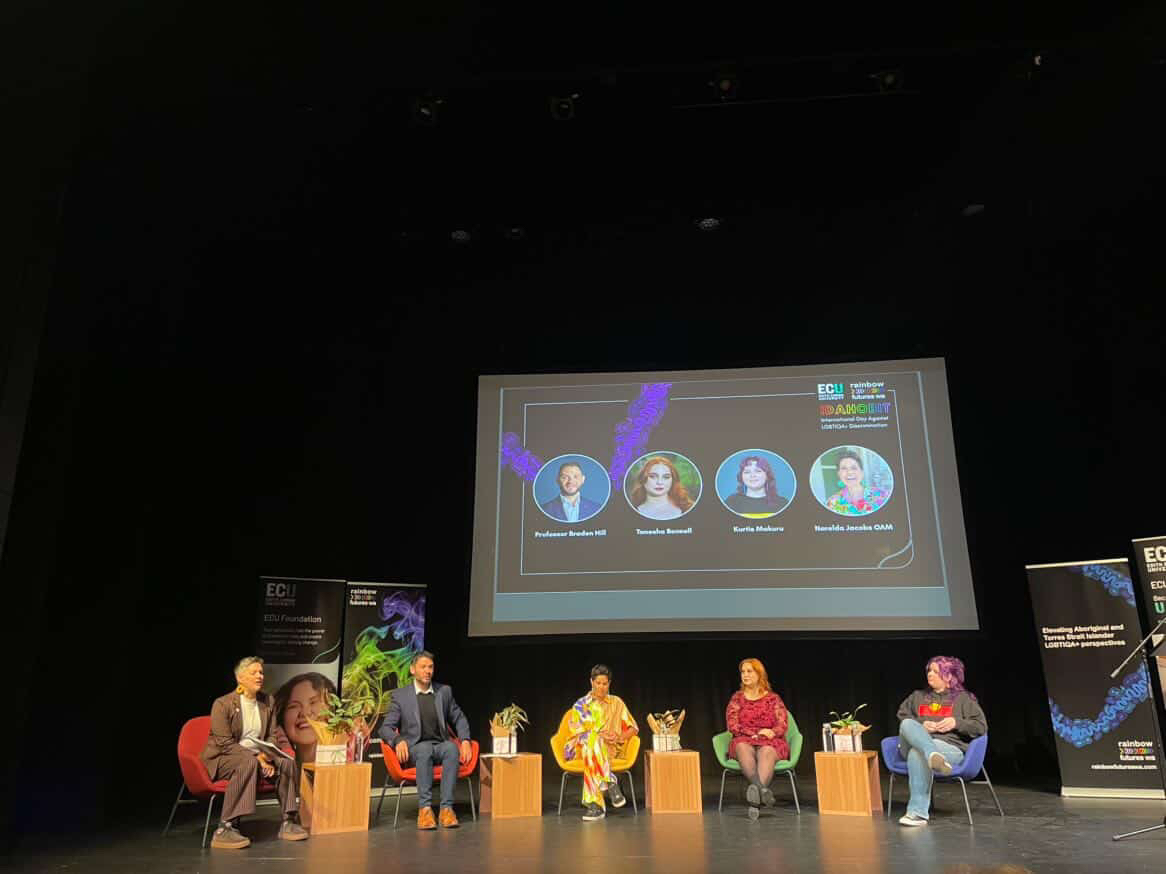
Safety means safety for all, and without anti-racism frameworks and legislations, First Nations LGBTIQA+ people face a wider gap in terms of protections from discrimination, racial vilification, and general safety in community.
An intersectional lens is not only beneficial but essential to have holistic and meaningful impact across all First Nations communities but specifically for intersectional First Nations communities who we know are often overlooked, over criminalised, and don't receive the same amount of supports.
Until all community needs are being met with sustainable, up to date, and tangible impacts, the symbolic and inaccessible current anti-discrimination policies are insufficient in protecting First Nations LGBTIQA+ communities in WA.
I'm calling on community to turn ally from a noun to a verb and to start acting, here's some easy ways you can do so:
This month, Rainbow Futures WA, Youth Pride Network, and Living Proud are calling for change and their asking the community to amplify the message.
- Share our social media posts to raise awareness
- Download the media pack and change your profile picture
- Write to your local MP - it takes five minutes and it really matters.
I would also call on First Nations community members to enter submissions to the "Inquiry into racism, hate and violence directed at Aboriginal and Torres Strait Islander people" which has now been extended until June 1st 2026.
Everyone deserves to feel safe, please do your part to ensure this for us and for our younger generations.
Tanesha Bennell is a Bibulmun Nyoongar yorga and an Aboriginal Community Organiser at Rainbow Futures WA.



