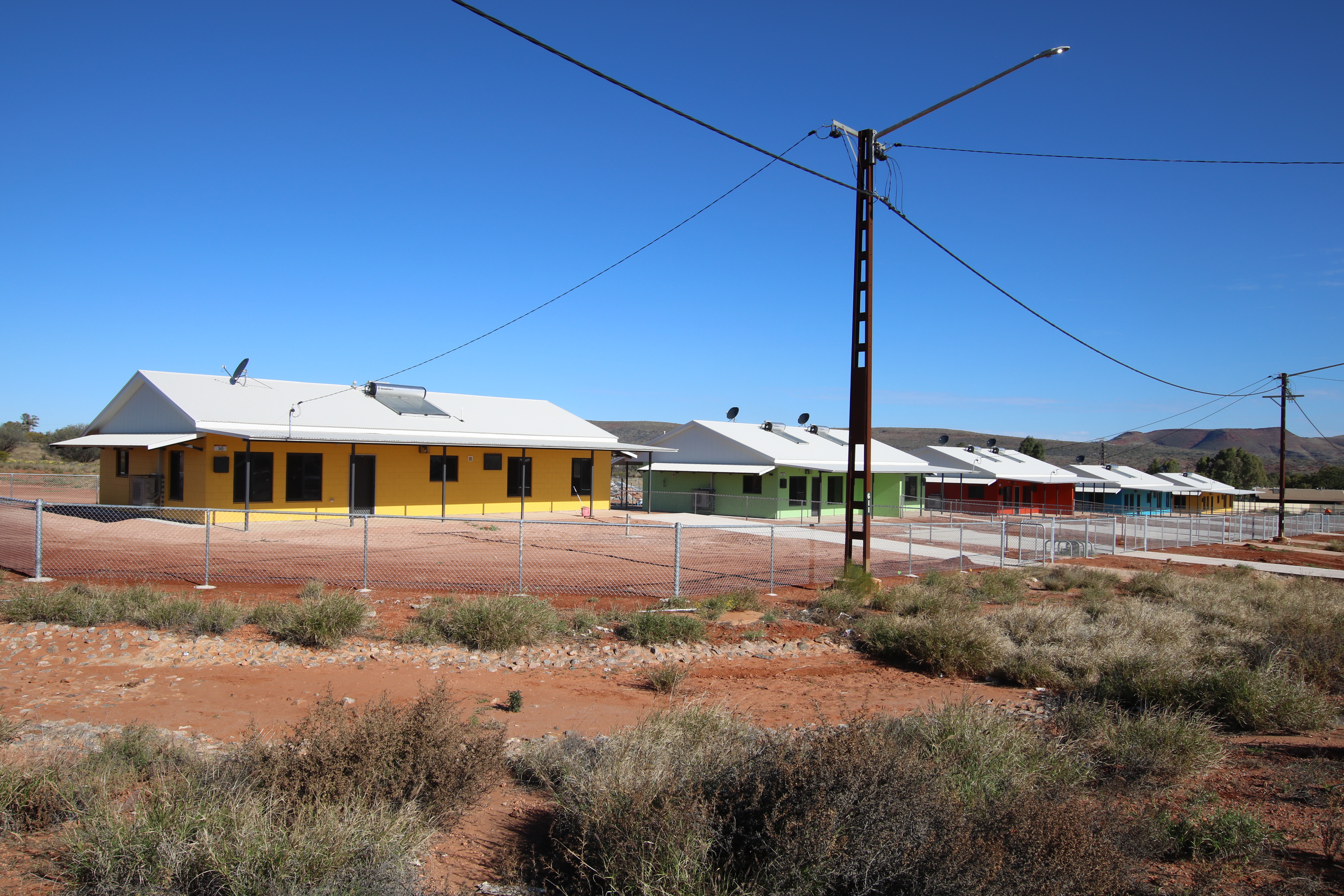

One hundred homes have been built in one hundred days in the Northern Territory "to help close the gap in housing for Aboriginal Territorians", the federal government announced Tuesday.
The homes have been jointly funded by the Northern Territory and Federal Governments through the $2.2 billion Remote Housing Investment Package 'Our Community. Our Future. Our Homes'.
Families from 20 communities have recently moved into new homes in communities from the northeast island of Galiwin'ku, through Jilkminggan and Kalkarindji, to Amoonguna in the south.
Several major construction contracts were involved in works rolling out across dozens of remote communities throughout the Territory, such as a $26.5 million tender recently released in Gunbalanya to build 24 new homes and upgrade another 18, $5.2 million for 11 homes in Beswick, and $6.8 million for more homes in Maningrida.
Federal Minister for Indigenous Australians Linda Burney said the Commonwealth and NT governments are "getting on with the job of delivering for Indigenous Australians".
"We are proud to be working with the Northern Territory government, local land councils and Aboriginal Housing NT to deliver housing in remote communities... because we know that overcrowding and poor-quality housing are barriers to closing the gap," she said.
Lingiari MP Marion Scrymgour said inadequate housing and severe overcrowding is "at the heart of Aboriginal disadvantage".
"Better access to good, safe housing is important to improving the lives of Aboriginal Territorians. For all of these reasons the Albanese government is making better housing for Aboriginal people a top priority," she said.
NT Chief Minister Natasha Fyles said her government had been elected with "a clear agenda" to improving remote housing across the Territory.
"This milestone of one hundred homes built in one hundred days shows just how determined we are to achieve our goal," she said.
"Local decision making is at the core of the planning, designing and construction process and this has encouraged remote community residents to be involved every step of the way from planning and design to allocation."
NT Minister for Housing and Homelands Selena Uibo said the ongoing work "not only makes a huge difference to the many families who finally have a home to call their own, it has provided local businesses with contracts running several years, and created opportunities for Aboriginal Territorians to complete formal training including certificates and apprenticeships".
"These opportunities benefit everyone and help to create sustainable communities," she said.
In April, the National Aboriginal and Torres Strait Islander Housing Association (NATSIHA) has joined forces with the Community Housing Industry Association, National Shelter, and Homelessness Australia amid surging rents and interest rate rises to call for immediate federal intervention in the Territory's housing market.
In September, Aboriginal Housing NT welcomed the agreement between Labor, the Greens and cross-bench to pass laws that establish the Housing Australia Future Fund but warned that "the immediate reality" for Aboriginal families in the Northern Territory is that 55 per cent of nearly four and a half thousand occupied remote Aboriginal homes remain overcrowded, while nearly 98 per cent of people living in severely overcrowded dwellings in the Northern Territory are Aboriginal families.