


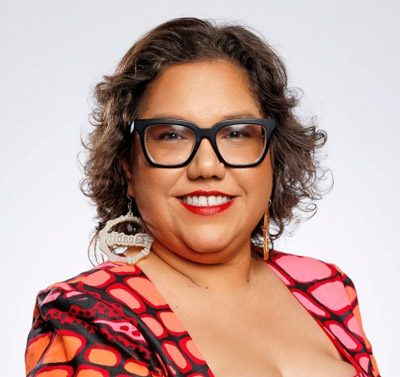

On the 2026 International Day of Women and Girls in Science, the global call to action is clear: "Synergising AI, Social Science, STEM and Finance: Building Inclusive Futures for Women and Girls."
For Gullara McInnes, that theme is not abstract. It is lived.
When she was featured in UNESCO's Women in Science Virtual Museum, the recognition carried more than professional significance. It connected her work on Country to a global audience.
"Being featured with UNESCO truly didn't register until after it was finally up and published," she said. "What I was doing to help preserve my mother's traditional lands is getting global recognition and in a way, my home and where I'm from is getting recognition as well."
Her journey did not begin in an international forum. It began with a drone and a desire to make cultural surveys easier for her Elders.
"In the beginning I was simply a drone pilot trying to make cultural surveys easier for my elders and now it's grown into my greatest passion. In a way having this recognised on a global stage also pays homage to my Elders that were there at the start of my journey and now that they've passed on, I've taken up their mission."
That mission sits at the intersection of technology, culture and responsibility.
Kim Dyball, Executive Manager of the Young Indigenous Women's STEM Academy, explains why Ms McInnes was nominated.
"We nominated Gullara for the UNESCO Women in Science Virtual Museum because she is a leader that embodies the strength of Indigenous values in action, particularly reciprocity, responsibility and respect for Country. Gullara is always willing to share her knowledge and expertise by representing the Young Indigenous Women's STEM Academy at various events like the World Indigenous Peoples' Conference on Education and the AIATSIS Summit and inspiring future leaders at Junior Ranger Workshops," she said.
"We believe Gullara's innovative use of drone technology and 3D imaging to protect cultural heritage and biodiversity, while honouring cultural protocols, is profoundly important. Her work clearly demonstrates how Indigenous science and Western science can work together to protect and preserve Indigenous knowledges for future generations."
The 2026 theme speaks to synergy. Ms McInnes's work embodies exactly that.
"Both of these worlds have two very different ways of looking at them," Gullara explained. "There is immortality with western sciences in the way data is recorded and stored, it is accessible at the press of a button, whereas the traditional knowledge I am trying to preserve is handed down through teachings for generations. At times it seems fragile since knowledge can disappear with the passing of one single person and it has happened."
Rather than positioning Western science and Indigenous knowledge in opposition, she reframes technology as preservation.
"I like to view Western tools as the ultimate time capsule. I can take a 3D image of a tree for example and that image, no matter what happens to the tree, is held forever and preserved for the next generation so that the memory still continues. It does have its challenges at times. Empirical science and a living culture do clash, such as I can't directly go onto a men's site for example, but a drone can photograph the area above."
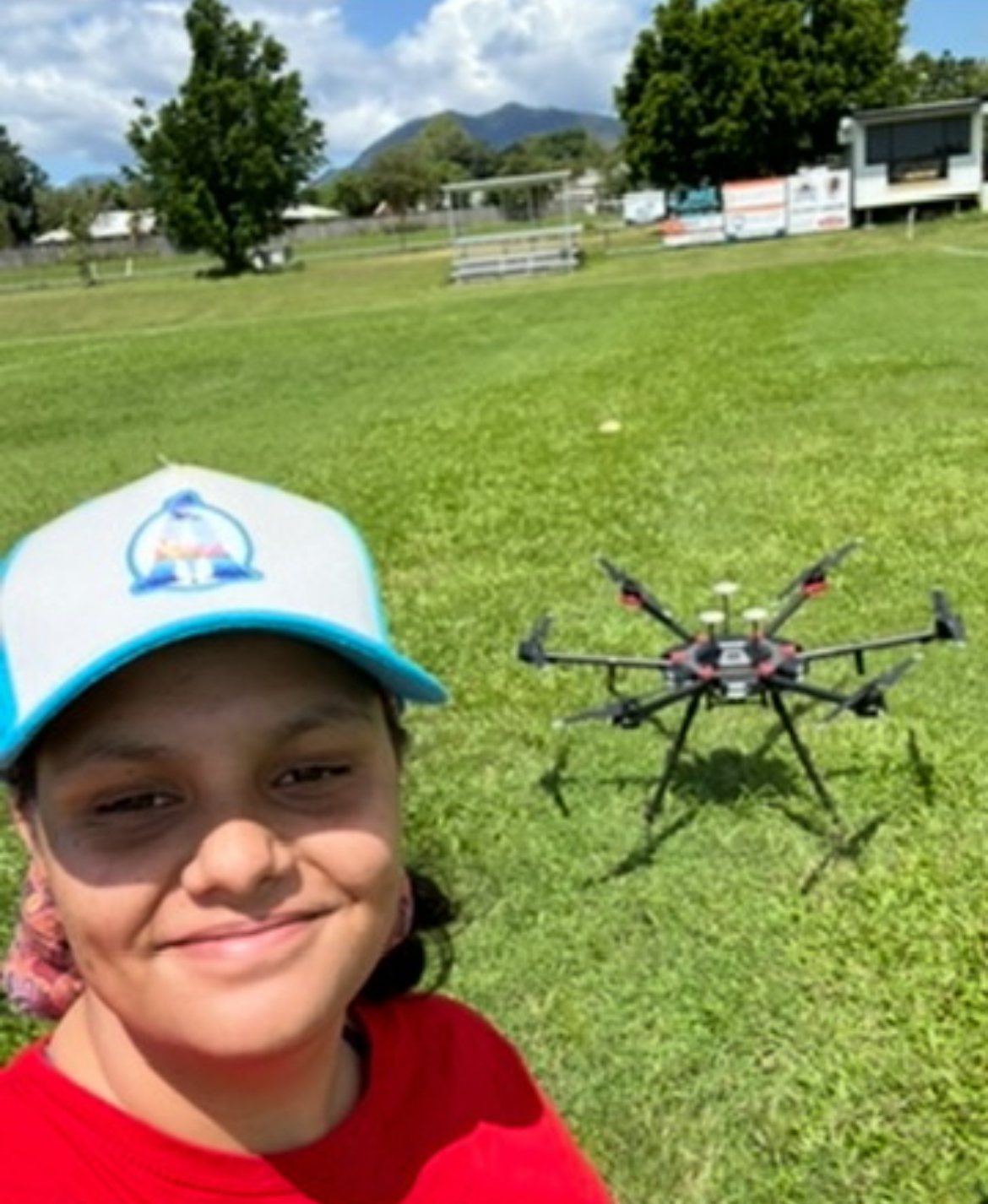
Now interning with CSIRO's Atlas of Living Australia, Ms McInnes is working with biodiversity data and exploring how Indigenous knowledge can reshape scientific narratives.
"For my project with the Atlas of Living Australia I initially wanted to see what the seasonality of birds was being shown through data, to see if the data showed what my family have known about bird migrating patterns for generations. Spoiler alert - it didn't," she said.
Instead of relying solely on conventional data presentation, she merged art and analytics.
"With the help of my mother, I created a painting of the two worlds, a traditional painting of the animals in Mareeba combined with data visualisation to not only tell a traditional story but a data story as well."
This is what synergy looks like in practice. Artificial intelligence, biodiversity databases, cultural knowledge and community leadership working side by side.
Yet systemic barriers remain.
"Educators," Ms McInnes says when asked what still needs to change. "It can be a university lecturer or a high school teacher but one negative person can take the wind out of your sails. When that happens you often feel alone. There needs to be accountability in all kinds of classrooms so that students feel supported no matter their passions."
She also points to rural inequity. "Rural schools sometimes just can't compete when it comes to STEM. There's barely any extracurricular programs or clubs dedicated to STEM and without space to practise your passion or find inspiration, it's easy for the fire to burn out."
The 2026 theme calls for inclusive futures. Ms McInnes is not waiting for systems to transform on their own.
"I'm not thinking of a legacy just yet," she says. "But I can already see that many others are starting to look to western technologies and sciences to preserve cultural heritage. What I hope is that anyone inspired by my footsteps innovates, takes what I have done and betters it for everyone across Australia. If what I have started spreads and is improved, the future of culture, the knowledge handed down and the memories of those that shared that knowledge will forever be immortalised and protected from being lost and forgotten."
Synergy. Inclusion. Impact. Gullara McInnes is already building the future the 2026 International Day of Women and Girls in Science calls us to create.



