




Children as young as ten-years-old in youth detention in Western Australia face racism and miss out on seeing their families during lockdowns, a new report by the state's Commissioner for Children and Young People has found.
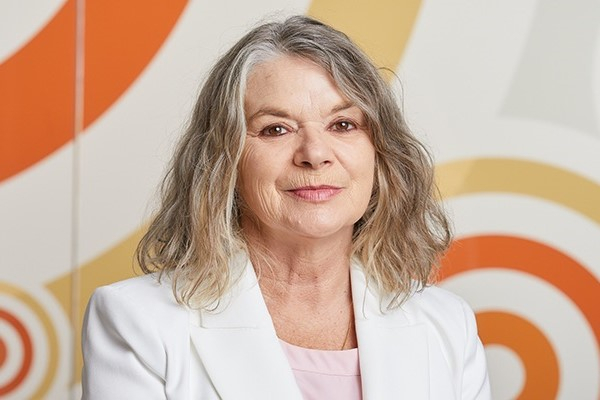
The Hear Me Out report by Commissioner and Arrente/Warramungu woman, Jacqueline McGowan-Jones was tabled in WA Parliament on Thursday morning, and comes in the midst of a series of explosive revelations about the state's youth justice system during the coronial inquest into the death of 16-year-old Cleveland Dodd.
"On 3 October 2023, due to ongoing concerns regarding children and young people in detention in WA, I determined it critical to hear the views of detainees at Banksia Hill Detention Centre and Unit 18 custodial facilities at Casuarina Prison," Commissioner McGowan-Jones said.
"My role as Commissioner is to ask children and young people what they think about issues that affect them, and to monitor their wellbeing. This includes children and young people in Detention."
The report featured the voices of 43 children and young people detained at Banksia Hill and Unit 18 - the makeshift facility houses inside WA's maximum security Casuarina prison.
"The 43 young people we interviewed shared their views on daily life at both facilities, including interactions with staff, services, education, food, family contact, concerns and their hopes for the future," the Commissioner said.
"We also spoke to staff and service providers at the detention centres and reviewed documents provided to us upon request by the Department of Justice, particularly in relation to the Implementation of the Model of Care."
Many children who were spoken to could not associate their actions with their behaviour, which the report argued was "to be expected given the ages of some of the participants…", whilst others had complex needs, including intellectual disabilities and neurodivergence or challenges including foetal alcohol spectrum disorder.
The report acknowledged the department's Corrective Services Division (CSD) has made "significant efforts to expand the programs, services and supports" for detained children and young people in WA, but argued "insufficient staffing" remains a significant issue at both facilities, which has resulted in children being confined to their cells for significant periods of time —sometimes resulting in them not being able to see their families.
"...when there is a code red, even if you don't do anything wrong, we ALL get locked down," one child said. "Family who come to visit us get turned away and visits are cancelled."
Another said: "… family come all this way to visit, why can't they lock down the area where the boys are playing up, even if we haven't been involved…"
One inmate said when they arrived in detention they were given no information, simply having to learn from others, whilst others said they were placed in the Intensive Supervision Unit (ISU) as soon as they arrived.
In her introduction to the report, the Commissioner noted: "Inspections undertaken by the Office of the Inspector of Custodial Services (OICS) have consistently identified a range of practices, services and programs that are failing to provide the necessary support and care for children and young people in detention."
These follow comments from experts such as Judge Denis Reynolds, the longest serving president of the WA children's court, who slammed the decision to allow children to be housed in Unit 18, and who previously described the WA Department of Justice as "incompetent".
The report found the Youth Custodial Officer (YCO) staffing model was "inadequate for providing an individualised, holistic and child-centred service model", notwithstanding staff shortages.
Furthermore, it argued there seemed to be "no formalised approach to defining the purpose, goals and objectives of programs offered in detention facilities".
Despite its limited scope, the report offered 16 recommendations, including reviewing the Young Offenders Act 1994, which has been subject to significant delays; to develop a specific implementation plan to address the highly complex and multiple needs of detainees at Unit 18; and to provide children and young people with age and developmentally appropriate information so they are able to understand changes and provide feedback and suggestions.
Commissioner McGowan-Jones said the report highlights the "systemic failure" of successive governments who fail to put the needs of children and young people as their primary consideration.
It comes after former Minister Bill Johnston - who has been widely criticised for his handling of youth detention in the state - said in 2022 that his priorities were "community safety first", "safety of the staff second" and "then the third element is to keep the young offenders safe".
"We must do better to ensure that children and young people in detention are receiving appropriate care and support so that when they leave, they have a chance of breaking the cycle and succeeding in life after detention," Commissioner McGowan-Jones said.
"We have seen from recent media coverage of youth justice issues in WA that the situation in youth detention is dire. Now is the time for change. If not now, then when?"



