



Evonne Goolagong Cawley's legacy at the Australian Open has been further cemented with the event's annual First Nations Day renamed in her honour, on the 50th anniversary of her second women's singles title there.
The four-time Australian Open singles winner (1974, '75, '76 and 1977) remains a national icon, and one of the game's all time greats.
Goolagong Cawley was the first Indigenous athlete to break through in elite tennis, winning seven Grand Slam singles titles between 1971-1980, with additional trophies in doubles, and 120 titles overall.
She ended her career with a winning percentage a fraction shy of 80, and was inducted into the International Tennis Hall of Fame in 1988.
Only one Australian would win their home Slam after Goolagong Cawley's last singles title in Naarm before Ngarigo woman Ash Barty ended the drought in 2022, who she joined on centre court with the trophy.
Since retirement and returning to Australia in the 1990s, she continues to work in inspiring the next generation of Indigenous tennis stars and leaders with her foundation and national development camps.
The Australian Open introduced First Nations Day in 2022, with Indigenous ball kids, businesses, art and performance taking centre stage for a global audience with the yearly celebration.
With the day now bearing her name, Goolagong Cawley jumped on the court with ball kids ahead of the day's play on Wednesday.
"So this is wonderful today to see, Indigenous kids actually playing the game. When I first started there was hardly any Aboriginal people actually playing the game," she said.
"Who knows, you may have some of those young people there being role models for kids down the road, and we'll have even more Indigenous kids playing this lovely game."
On Wednesday, Goolagong Cawley joined Wurundjeri Woi-Wurrung Elder Aunty Joy Murphy for a Welcome to Country on the steps of Margaret Court Arena ahead of performances from Aboriginal and Torres Strait Islander dance groups and Dan Sultan.
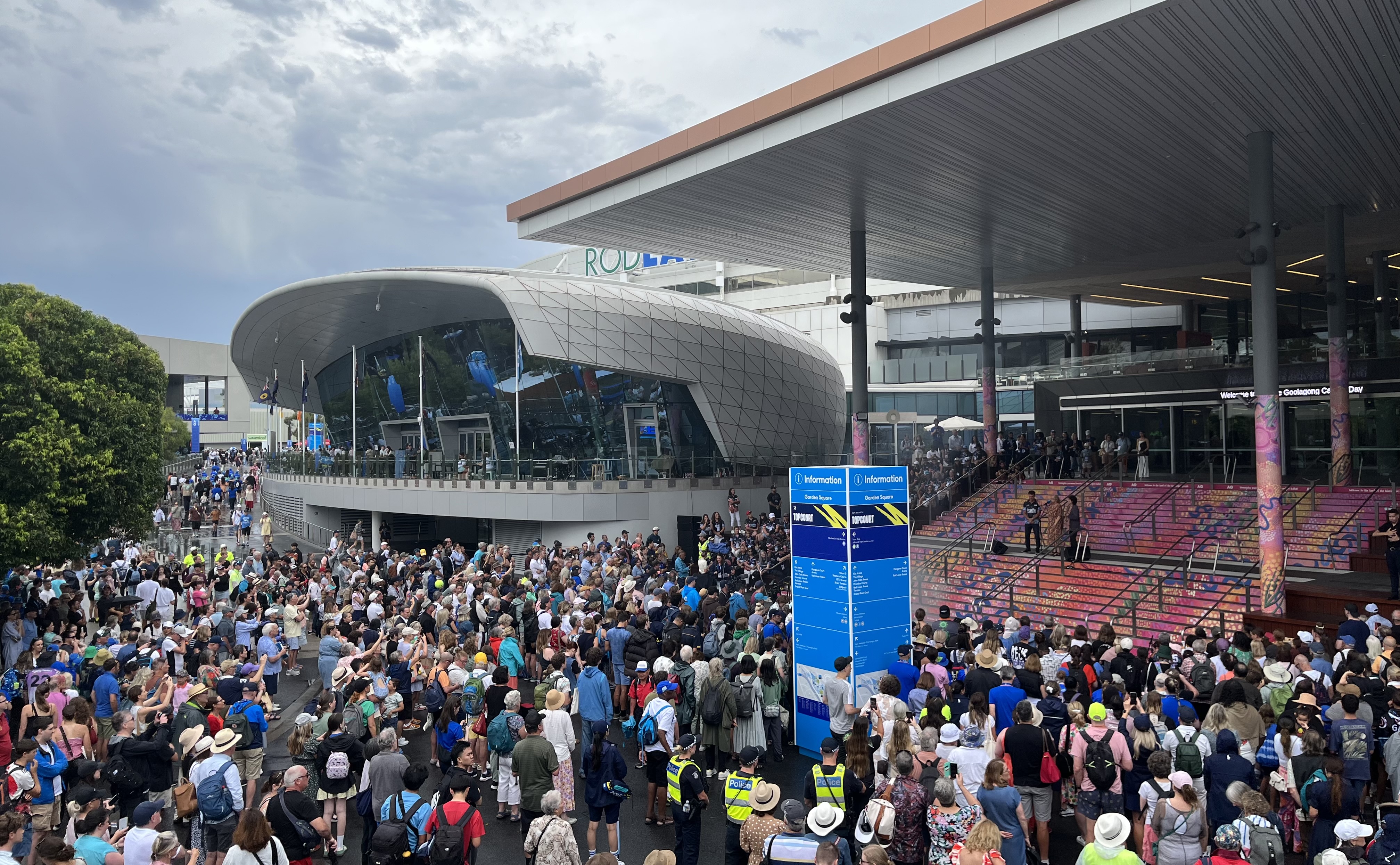
Stretched below was Ngarluma, Kariyarra, Nyul Nyul and Yawuru artist Bobbi Lockyer's work 'Together'.
"It is a story of everyone coming together. It's a story of unity and inclusivity here at the Australian Open…with people coming from all walks of life and all over the world to come together for our shared experience," Ms Lockyer said on Wednesday.
"I thought, 'Wow. It's so beautiful and vibrant,'" Lockyer said of seeing it for the first time, "it's just made me really, really proud to be part of this event and to be able to put Indigenous art out there on a global stage and to make other Indigenous people feel welcome and included."
Tennis Australia First Nations Lead told National Indigenous Times "we're on the lands of the Wurundjeri people, we're really excited we're able to celebrate and showcase our Aboriginal culture and our history here on a world stage".



