




Information obtained by the National Indigenous Times has thrown light on the extent children are being charged by Queensland police for breaches of bail.
Since the beginning of March, when the State suspended its Human Rights Act to make breaches of bail by youth a crime, there have been 594 alleged bail offences committed by children, with 440 charges, according to numbers from the Queensland Police Service (QPS.)
The Queensland government has spruiked a 'high visibility' operation against youth crime in the previous eight months, which has seen over 2,700 youth offenders arrested on more than 5,000 charges.
Police Minister Mark Ryan said that the results show the operation - known as Victor Unison - are "working," and said that the state had some of the "toughest youth justice laws in the country".
"We are tackling youth crime from every angle – from prevention and early intervention to targeting serious repeat offenders," Mr Ryan said.
A QPS spokesperson said the aim of Operation Victor Unison is "prevention and community safety."
"Operation Victor Unison is focused on proactive high-visibility patrols to prevent, deter and disrupt offending."
In response to a question by Greens MP Michael Berkman, Youth Justice Minister Di Farmer said 461 young people were classified as Serious Repeat Offenders (SROs) as of the 30th of September, of which almost 73 per cent (335) were Indigenous, and 15.4 per cent (71) were between the ages of 10 and 13.
The most recent data for child protection orders (CPO) - the 30th of June - highlighted that of the 452 SROs at the time, 29 per cent (133) had an active CPO and were therefore the responsibility of the state.
Welfare advocates, lawyers and Indigenous groups have said that these numbers are unacceptable and will only exacerbate issues in the future.
Queensland's Human Rights Commissioner, Scott McDougall said the numbers were concerning, but they aren't a surprise.
"Of course, they're concerning, but they were also predicted," he told National Indigenous Times.
"They were predicted by the various witnesses who gave evidence to the Parliamentary Committee, warning about the impact that a breach of bail offence would have. Particularly on Indigenous children, and particularly on the Closing the Gap target."
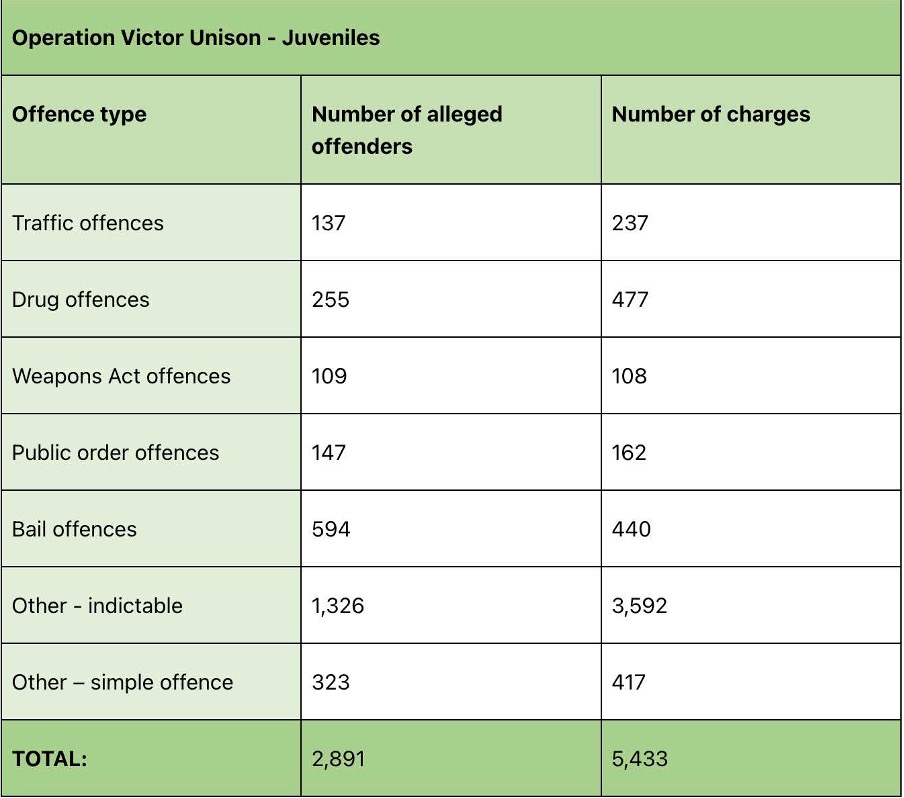
*Where the figure attributed to offenders is higher than the number of charges, this may refer to where alternative action was taken (caution, diversions etc) or circumstances where an offence/offender has been identified, and charges are pending for investigative reasons.
Gunggari person and Change the Record's national director, Maggie Munn, says Queensland's bail conditions are unreasonable and strict.
"For example, a child fleeing violence could be arrested, or a child without a home to sleep at could also be arrested for breaching bail conditions," they told National Indigenous Times.
"We know that three in five children who are behind bars have experienced family violence and a further 3 in 5 come from Australia's most disadvantaged neighbourhoods.
"This is essentially the problem with policy makers who don't understand the issues on the ground, and why First Nations organisations need to be consulted to come up with solutions that address a child's needs and give them every opportunity to thrive."
Experts told National Indigenous Times of various clients who were given highly restrictive or punitive bail conditions. One child was given a choice between prison and going to a home where they had previously been the victim of sexual assault. Leaving that premise, would result in an immediate breach of bail charge.
Another child was told to live with an abusive stepfather or remain behind bars; they instead chose to spend their nights on the street - homeless - risking a criminal charge for breach of bail in order to escape the premises.
Others were given 24-hour curfews in the same home, unable to leave, whilst another had a bail condition imposed on them that they could on be a passenger in a car that was driven by a parent or youth justice worker.
Experts were quick to remind people that none of these children had been found guilty of a crime when placed on bail, but were being punished overtly, and sometimes punitively.
"What is truly horrifying is that almost 90 percent of the children held in police watch houses are on remand- meaning they haven't been convicted of any crime," Munn said.
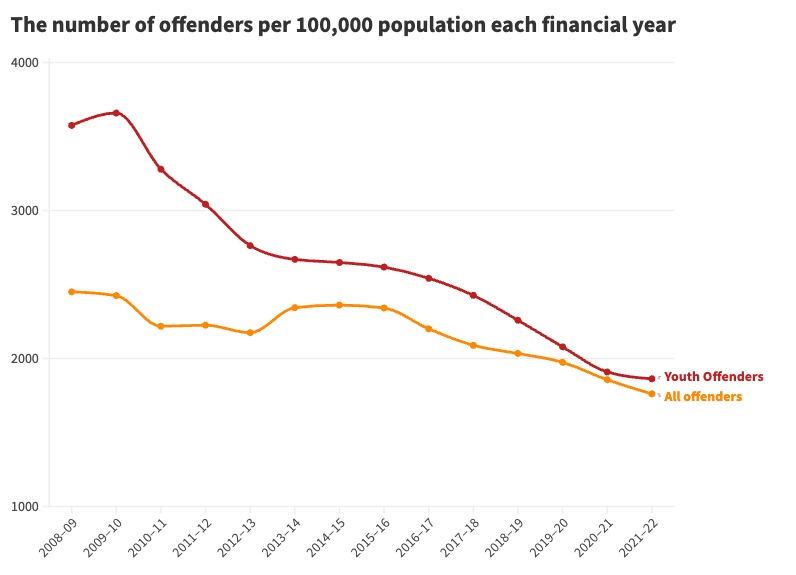
Arguments abound that the 'tough on crime' approach is a race to the bottom. The ABC reported in September a significant long-term decrease in crime throughout the state, despite some short-term increases across some categories in the post-lockdown period.
All Australian jurisdictions witness children between the ages of 10 and 17 commit more crimes than the general public, but this gap has continued to close according to data from the Bureau of Statistics.
"I am unaware of any evidence that increased maximum penalties of imprisonment will deter a child from engaging in risk-taking behaviour," Mr McDougall said in March.
However, these decreases have not stopped the implantation of stricter laws, including longer sentencing.
It was noted by experts that spoke to National Indigenous Times, that breaches of bail - which led to imprisonment - do nothing to stop crime.
The government has expressed repeat offenders as one of their major concerns but evidence shows recidivism is a major outcome for people who are exposed to the criminal justice system - especially incarceration - at a young age.
"While the rate of unique youth offenders and rate of unique adult offenders has declined…the reality is that there is a hardcore group of recidivist offenders who have to be held accountable," Minister Ryan said.
Youth Advocacy Centre chief executive Katherine Hayes said the imprisoning of children early will only lead to further crime in the future and does nothing to reduce youth crime or offer long-term solutions.
"We are concerned about the breach of bail numbers because this is a focus on criminalising young people rather than addressing the root causes of their behaviour," she told National Indigenous Times.
Mr McDougall said early intervention was key to long-term fixes, but not from the police.
"The early intervention that you want to have is by service providers other than police officers," he said.
"You don't want the police being the early intervenors because - sadly - history shows that police exercise their discretion to arrest children and we want to keep these children who are in need of services away from the criminal justice system."
Munn said the bail laws continue to have a traumatising impact on First Nations communities, which they argue are punitive in nature and application, and fail to address systemic issues.
"The way this government continues to target traumatised children who are largely First Nations children or children with disabilities shows there is slim interest in addressing the root causes of behaviour, but rather in punishment," they said.
"The Queensland government needs to repeal these laws as a matter of priority and consult with First Nations communities on the best solutions to support kids who need love, care and support."



