


Nadine Hunt has an acute awareness of creating a small piece of Indigenous sporting history.
The triathlon feat is hardly groundbreaking enough to rival a Cathy Freeman moment on the track, but it's always been there.
The busy mum of a five-year-old boy is set to be both the first Indigenous woman and the only Torres Strait Islander to qualify and race the Ironman World Championships.
That's more than 180kms cycling, 42kms running and 3.8kms swimming – an identical distance to what the men endure – to prove women finishing the iconic event around the big island of Hawai'i display more than just steely resolve but iron will.
For the 34-year-old, whose next birthday coincides to compete in the 35-39 years age category, she will be out of the comfort zone but primed for its rarified atmosphere.
The ultra-triathlon course is more than double the distance across all three disciplines than the qualifying for the final Oceania spots at the Cairns 70.3 race last month.
"I have never ever competed in anything like this – I have never expected or gone to a world championship event," Hunt told the National Indigenous Times.
"I have never taken on the best athletes in the world.
"That is going to be a challenge in itself just to be there, but I certainly don't want to just go there to tick a box either.
"I have 12-13 weeks until the event, so that allows me to recover from Cairns and get another good block of training in."
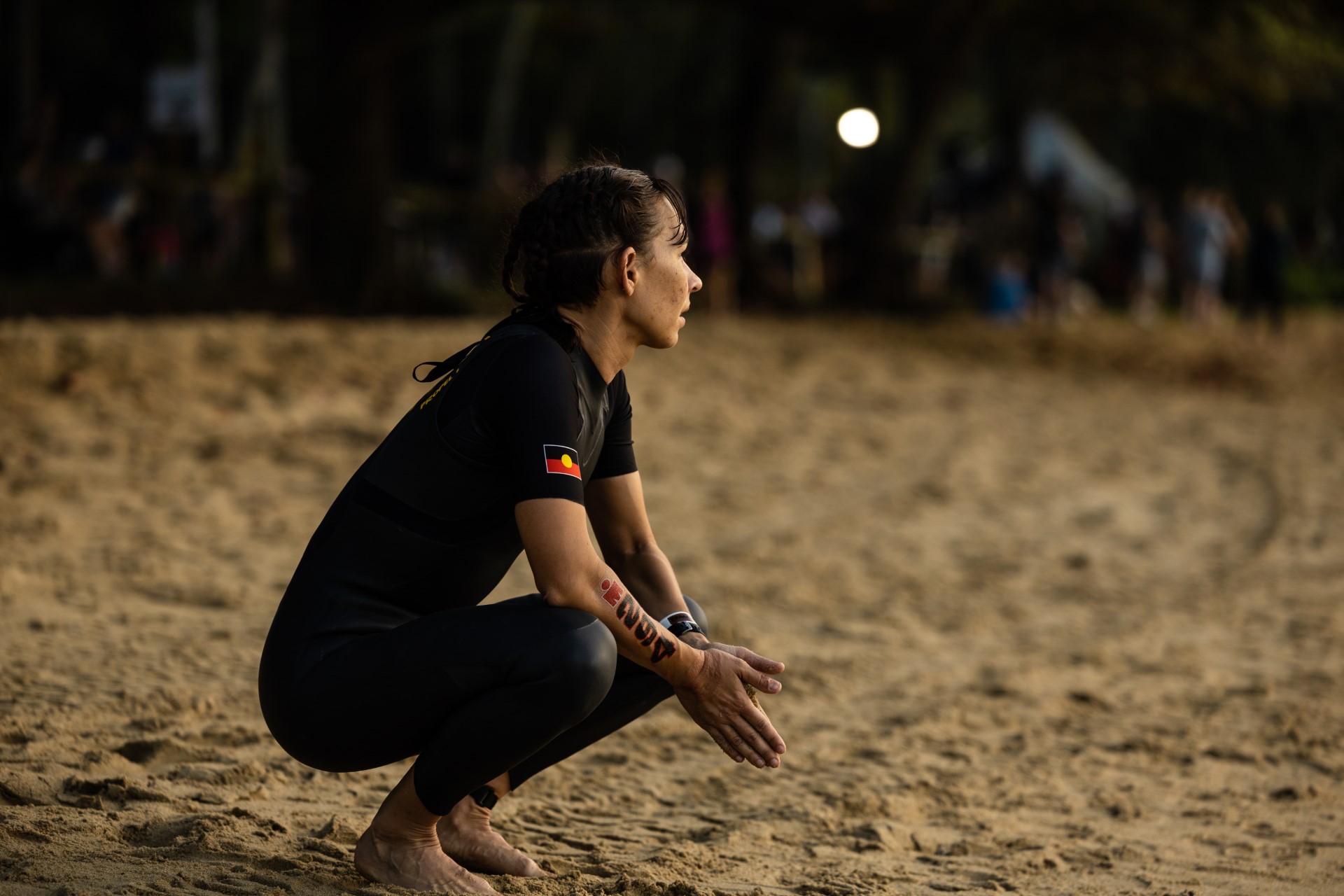
The Queenslander recognises the ensuing milestone for all First Nations people while hard-earned is also half fortuitous.
Victorian woman Sharon Bolger qualified for Hawai'i in 2021, but the unfortunate ills of the coronavirus pandemic denied the Aboriginal woman the opportunity to break down a long-standing cultural record on the Indigenous island of Polynesian peoples.
Western Yalanji elder Terry O'Shane – for the record – was the first Aboriginal man to enter way back in 1983, five years after the inaugural Kona Hawai'ian Ironman.
Hunt, a proud Iamalaig woman from the Kulkalgal nation of the Torres Strait but also of the Kaantju Aboriginal mob on Cape York Peninsula, only needs to fly to Honolulu Airport to end Aboriginal and Torres Strait droughts that's lasted all of the 45 years.
There was more on her mind than getting to the start line of the hometown course.
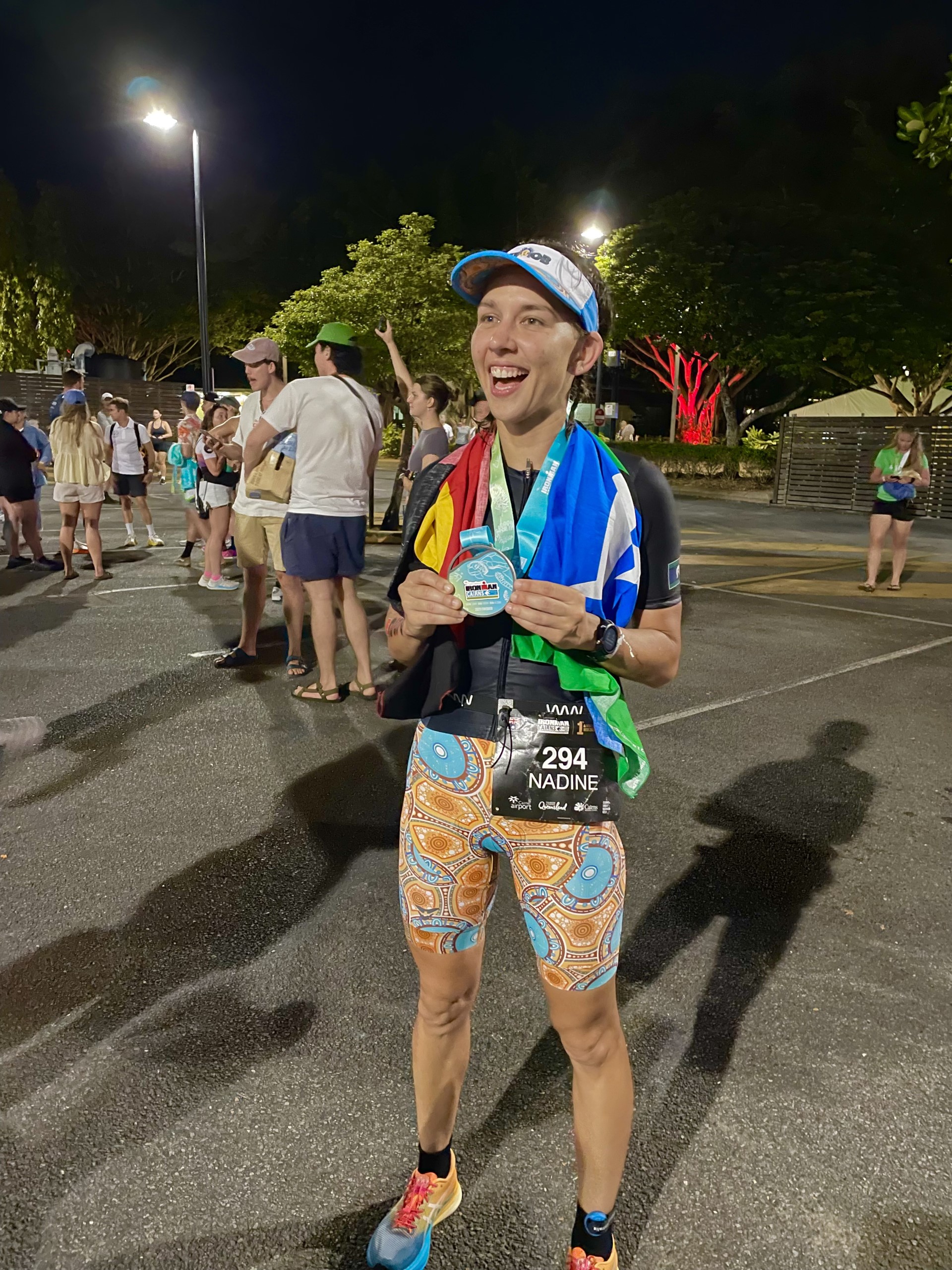
The TriMob member, who only joined the First Nations Triathlon Club two and a half years ago, took 10 hours, 44 minutes and 9 seconds to traverse the Cairns triathlon.
But all Hunt had to really worry about was keeping count of the number of females in the horizon running ahead towards the finish line.
"I kind of knew that as long as I finished in the top six (women) in Cairns, I had a good chance of getting a spot in Hawaii – so, I was lucky to scrape in there," she says.
"The qualifying courses (around the world) are all quite different, so that's why it's on places, not times."
But staring at the stopwatch in Kona will be more daunting, as competitors have been known to start in the glare of the morning sun and hit the tape while struggling in the darkness of the night.
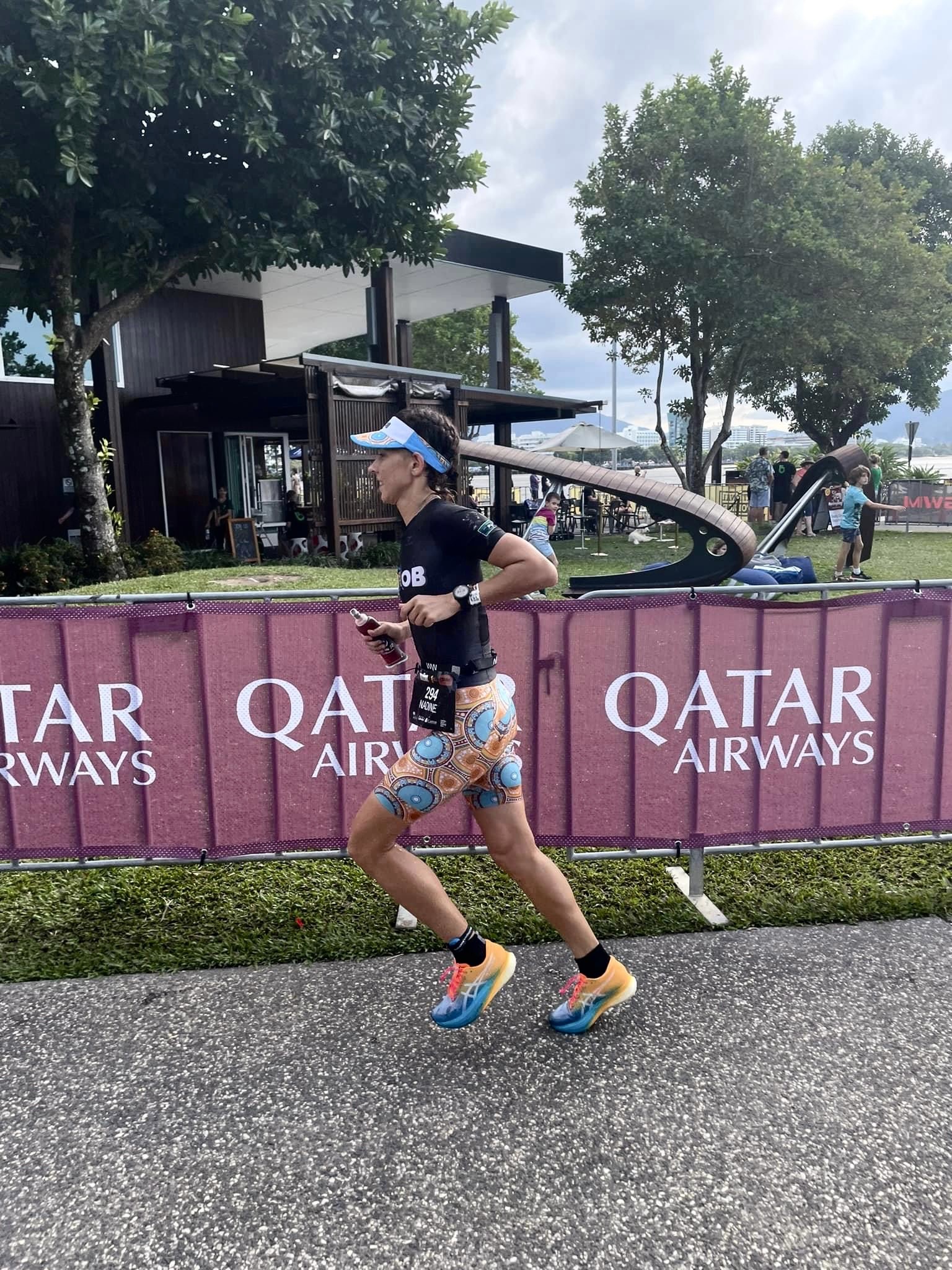
The training in humid Cairns may go some way towards giving Hunt an edge to keep on going amid the similar Hawai'ian climate.
The former Indigenous Marathon Project runner, who made it through 42.195kms for the first time at New York City in 2013, has been running three times a week, but with a fourth straight off the bike to simulate the final transition in this women's only race.
"It's going to be a helluva lot harder with conditions there challenging," she says.
"It's known to be incredibly hot, with the bike leg apparently windy with lots of cross-winds."
But that's just a blip on the radar that Hunt will take in her stride much like the switch from marathons to triathlons – and now onto the ultimate of ultra-triathlons.
The long-shot opportunity at a rare world title is too good to let slip by and the upshot of the commitment demands an increase of training loads to insanely new levels.
Hunt may be new to the Ironman, whose seven words make fit athletes tremble, but she firmly understands the unofficial rules of a race that's more of a trek or a journey.
Competitors simply can't cheat the Ironman. There's no shortcuts to the end.
There's nearly 226 kilometres to swim, cycle and run, not just the 112.9kms of Cairns, and certainly not the 42.195kms of New York City without the goggles or pedals.
There's either finishing or quitting, but just finishing the Ironman is akin to a victory.
Hunt is under no apprehension, and is putting in the work because the consequences is that the body could but probably will shut down otherwise.
She commits 16 hours a week, every week, with up to 13 sessions to prepare to avoid the unfathomable, including three or four days focused on running compared to six days for marathons, all the while working, studying, raising a child, and having a life.
"It gets a little bit hectic now, but it's a lot less taxing on the body though," Hunt says.
"It might be a higher volume, but the impact is not there like just running."
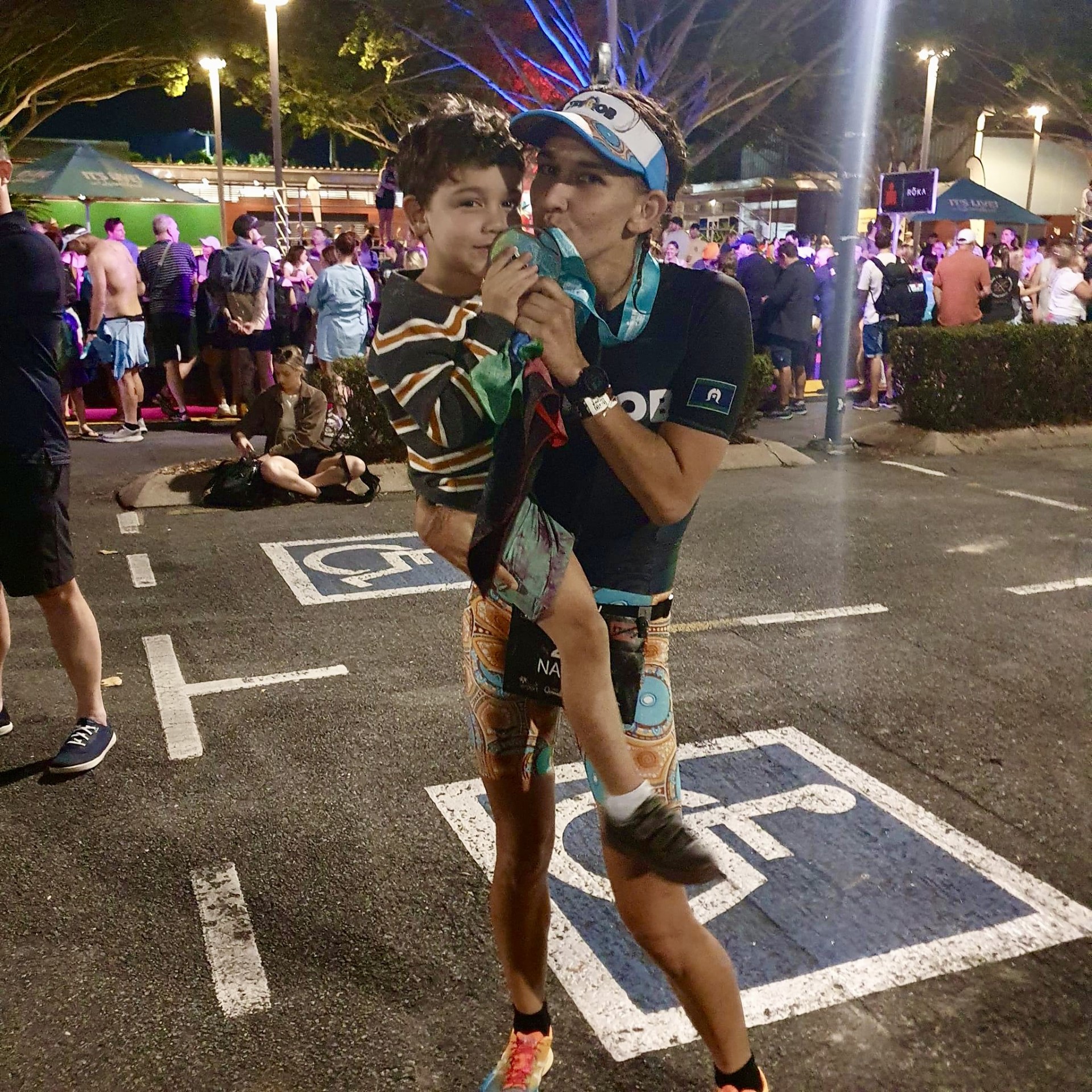
After giving birth for the first time in 2018, Hunt ran out a return marathon just prior to the first birthday of her son, Alexander.
But something just didn't feel right anymore.
It wasn't pulling up sore necessarily from the first marathon in around two years.
Rather the impacts of motherhood on daily life.
"Trying to train six days a week, you're sleep deprived and your body is so different," she says.
"Then I really just struggled and hated it, and not enjoyed running at all."
It was pointed out that triathlons were never her natural fit.
That's an amazing admission from Hunt for someone, who's been crossing each of the days off the calendar until the date of the Ironman World Championship in October.
Slowly but surely, she had to be persuaded to take up the tri-sport, one stage at a time.
Not until Nat Heath, the third Aboriginal man to complete the Hawai'i race after Ben Bowen did likewise 12 years before, had "planted the seed", according to Hunt, to just suggest the bike into the routine to take the load off the sore feet did she consider it.
But there was still one problem no words into her ear could change the psychological barrier inside of her head.
Cairns members of the TriMob – the Indigenous organisation that Heath for all intents and purposes founded after dipping his toes into Hawai'ian waters – were struggling to understand why Hunt would not take the plunge until delving into her background.
"I really couldn't swim, so I wasn't going to do triathlons," she says.
"I was just enjoying this group, then no-one knew I was a runner.
"They just thought I was a newbie, just learning how to ride a bike far."
She's come so far and gone through it all in such a short time.
From jellyfish stings that perpetuated her phobia of ocean swimming to a serious bike accident just days before her first Cairns triathlon.
But the unashamed mum that often runs 25 kilometres while pushing the pram with 20 kilograms of love has overcome setbacks to change the narrative for inspiration.
"I want other mob, but especially women, to look at me, an average, everyday person, who's wearing a million different hats and juggling a lot, still trying to chase goals," she says. "I don't want our women to be limited to what we can achieve."



