




Yindjibarndi Group chief executive Michael Woodley has issued an official response following the determination by the Federal Court on Tuesday that Fortescue should pay Yindjibarndi native title holders $150.1 million for cultural and economic losses.
Mr Woodley, who spoke outside court on the day, reiterated on Thursday the importance of recognising "the enormous courage and strength of the Yindjibarndi people: the Elders who are with us today, and the Elders who left us, through this whole journey of 15 years or more".
"They stood with integrity, and they stood firm on their principles," he said.
"Yindjibarndi people expect any proponent who works on Yindjibarndi Country to respect the Yindjibarndi laws and the way that we conduct our business based on win-win.
"This includes a shared benefit from the land that is being exploited, which the Court referred to 'as generating tremendous revenue for both FMG (Fortescue) and the State by way of royalties collected in accordance with the State's mining legislation'. This wealth from our lands is also contributing to the financial freedom, good life and prosperity of individuals. This needs to be mirrored in the Yindjibarndi community."
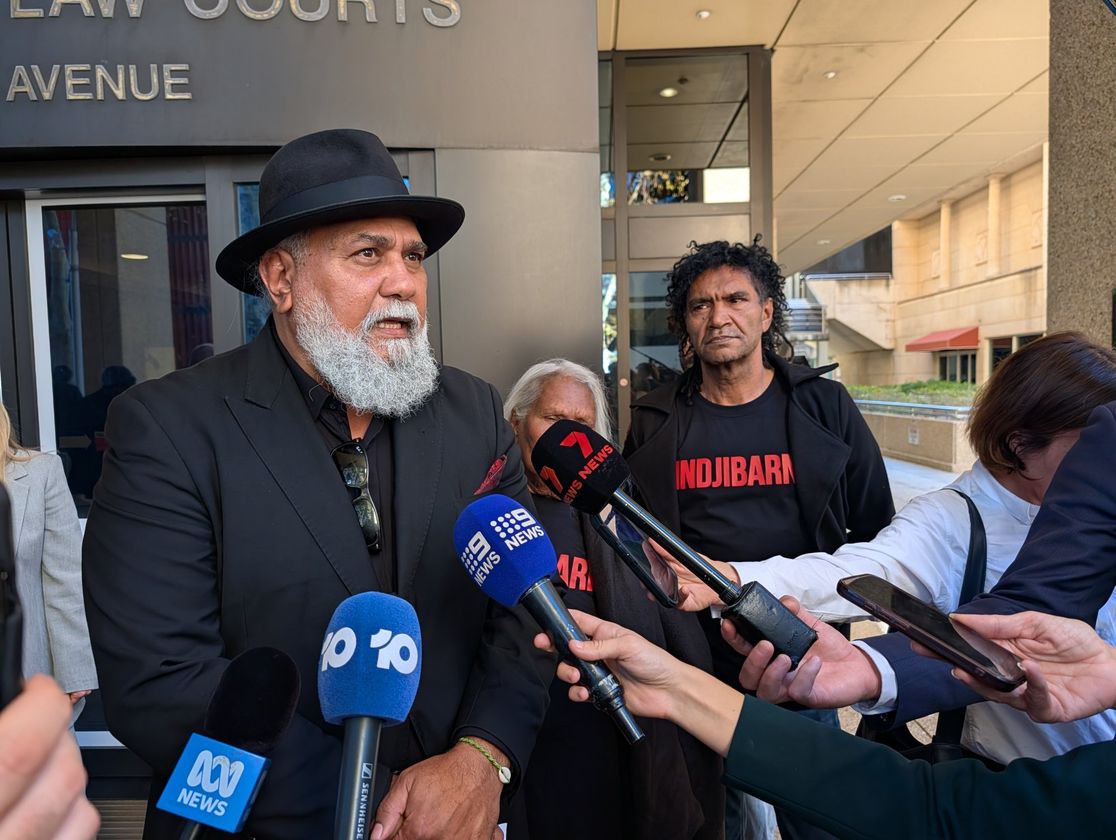
'The Court demonstrated understanding of Yindjibarndi cultural losses'
Mr Woodley also acknowledged "the efforts of the Federal Court in hearing this case and delivering these findings".
"The Court demonstrated understanding of Yindjibarndi cultural losses, including quoting at length from Uncle Middleton Cheedy and my mother in-law (Nyidi) on the devastating impact that the mining has had on them," he said.
"The determination acknowledged significant damage has been done to Yindjibarndi songlines and other areas of cultural heritage, including the complete destruction of 124 Yindjibarndi cultural sites, damage to many other sites and impacts on ground and surface water systems.
"The Court accepted evidence about our deep spiritual connection to country and the physical and emotional impact of the mine suffered by Yindjibarndi witnesses and awarded $150 million for cultural losses based on what, in its opinion, was the amount the broader Australian community would regard as appropriate."
Mr Woodley noted that with regard to the $100,000 awarded for economic losses, the Court did not accept the Yindjibarndi people's argument that the economic losses should be assessed based on the usual royalty rate paid by miners in the Pilbara for native title agreements; around 0.5 per cent of FOB (free on board) revenue generated by the mine.
"Instead, in its judgement, the Court followed the precedent set by the 2018 High Court case at Timber Creek in the Northern Territory, for which economic losses were assessed based on freehold land value," he said.
"Given this, the headline amount that the Court arrived at is unsatisfactory in context of what has been lost."
'We encourage the Stage Government to readjust their priorities'
Mr Woodley said Yindjibarndi Traditional Owners also note the fact the Western Australian Government "could have adopted a neutral position on the amount of compensation in this case and left the other parties to fight this out in Court but instead it argued against the Yindjibarndi".
"We take this opportunity to encourage the Stage Government to readjust their priorities, and work on behalf of all Western Australians equally and consistently. This includes allowing Traditional Owners to achieve prosperity and good life from mining on our own Ngurra," he said.
"We also want to say that we are not the enemy of the State when it comes to mining."
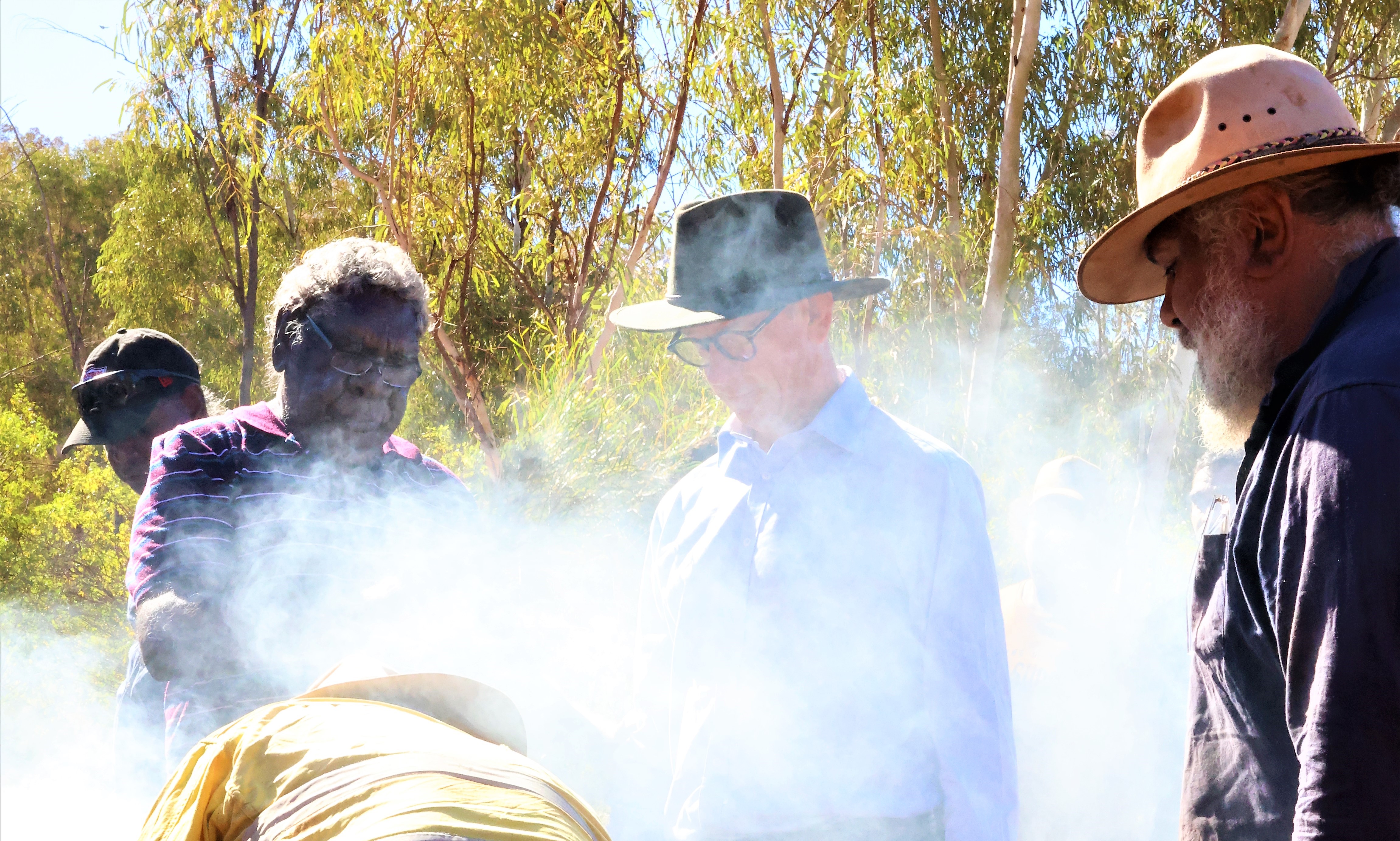
Federal Court Justice Stephen Burley (centre) is welcomed to Yindjibarndi country at Bangkangarra via a smoking ceremony, by (L-R) Angus Mack, Stanley Warrie and Michael Woodley. Image: Phil Davies, Juluwarlu / Yindjibarndi Aboriginal Corporation.
'Fortescue accepts that the Yindjibarndi People are entitled to compensation'
In a statement issued after the ruling was brought down on Tuesday, Fortescue said Andrew Forrest and the company "care deeply about all First Nations people, including the Yindjibarndi community".
"Fortescue accepts that the Yindjibarndi People are entitled to compensation. The Company has agreed to and pays financial compensation under all of its other seven native title agreements," the statement said.
"Fortescue has strong relationships with the First Nations people of the Pilbara region of Western Australia, with dedicated Heritage, Native Title and Community teams working hand in hand with Traditional Custodians to ensure cultural heritage is managed sustainably and responsibly."
Self-determination - 'You can see what we are achieving now'
Mr Woodley said self-determination for Yindjibarndi people "means being able to determine and dictate how we continue to live our lives and how we grow our own nation through those opportunities that are being created and developed from our Ngurra (country)".
"We have asked our lawyers to examine the details of this determination, and the next steps for Yindjibarndi are to continue to support our self-determination aspirations."
He noted Yindjibarndi people were making significant progress with infrastructure, services and other works.
"You can see what we are achieving now. We are just about to start our first project with renewable energy (Jinbi solar project); we have grown a civil contracting company (Yurra) that started 15 years ago with two people and now employs 450; and we have other economic development projects and community development aspirations," he said.
"We have responsibilities with culture and how we continue to grow and develop people through those opportunities and working on country, Ranger programs, documentation of history, our partnership building with the industry that has a positive agreement and relationship with Yindjibarndi people."
Mr Woodley said the Yindjibarndi people appreciated the media and broader community's interest in the case, around Australia and overseas, and thanked "everyone for their interest and support".



