



A repatriation ceremony was held at the Queensland Museum on Monday to mark the return of 36 Aboriginal ancestors, including six identified ancestors belonging to four Queensland communities.
The ancestors arrived in Meanjin on Monday following a 36-hour journey from London.
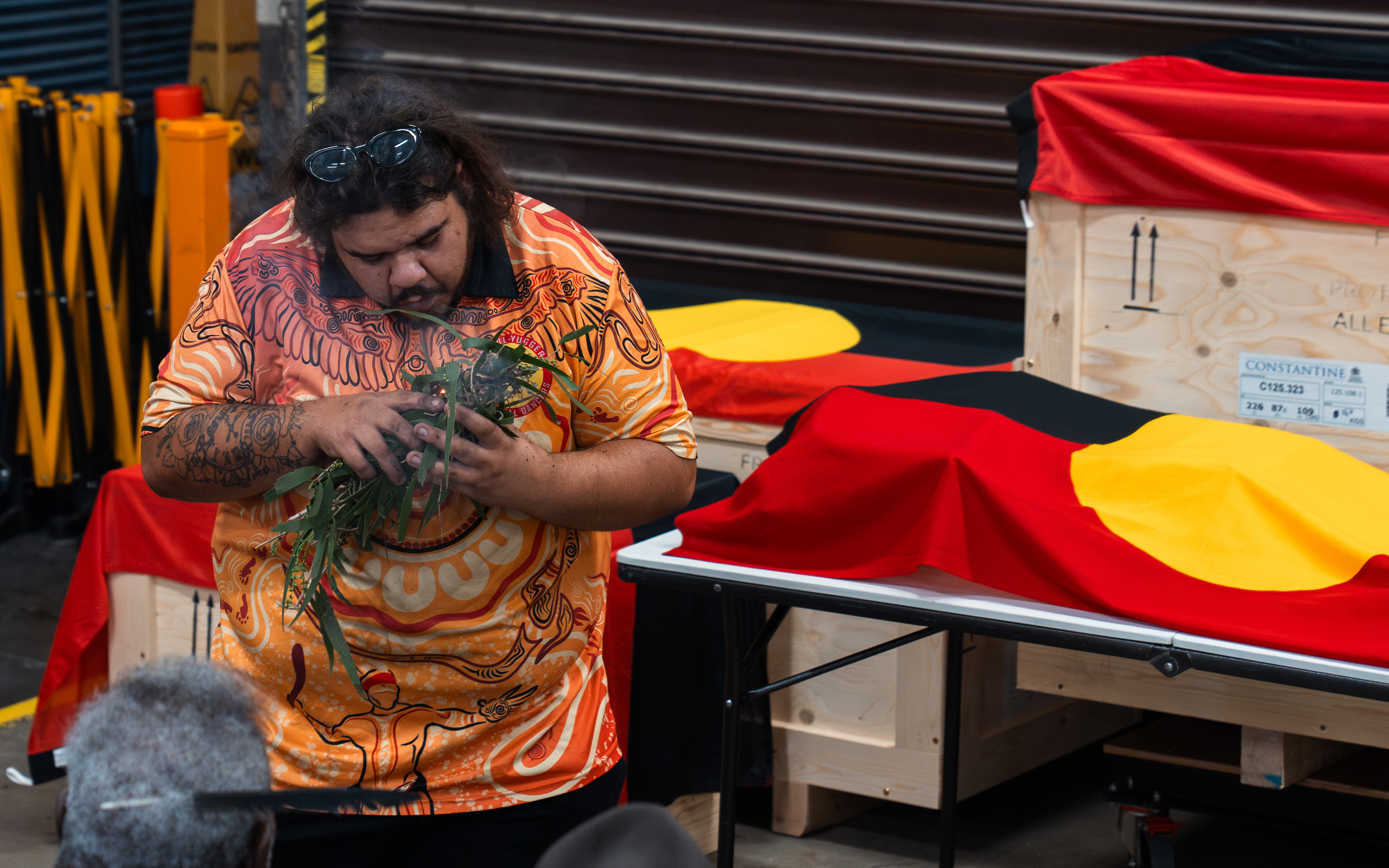
The return ceremony took place in the museum's loading bay to allow the ancestors to be welcomed into the building in line with cultural protocols.
Yuggera man Mr Aaron Ruska conducted a smoking ceremony, welcoming attendees and the ancestors back onto Country.
Woppaburra, Warrgamay, Wuthathi and Yadhighana communities each received one or more ancestors.
Warrgamay man, Thomas Holden said one of the ancestors returned to his community had been taken in 1907 and later shipped to London, where he was held in collections.
"This ancestor was taken from us in 1907 and then he was shipped out in 1924," Mr Holden told National Indigenous Times.
"And there he remained for a period of time until 1942 when they had a bombing.
"They lost his skull and what remains is two femur bones and a king plate, which finally has been returned to the Warragamay traditional owners and specifically to his bloodline descendants."
The remaining 30 ancestors, with provenance to Queensland, will be cared for by the Queensland Museum while further research is undertaken to determine their Traditional Custodians.
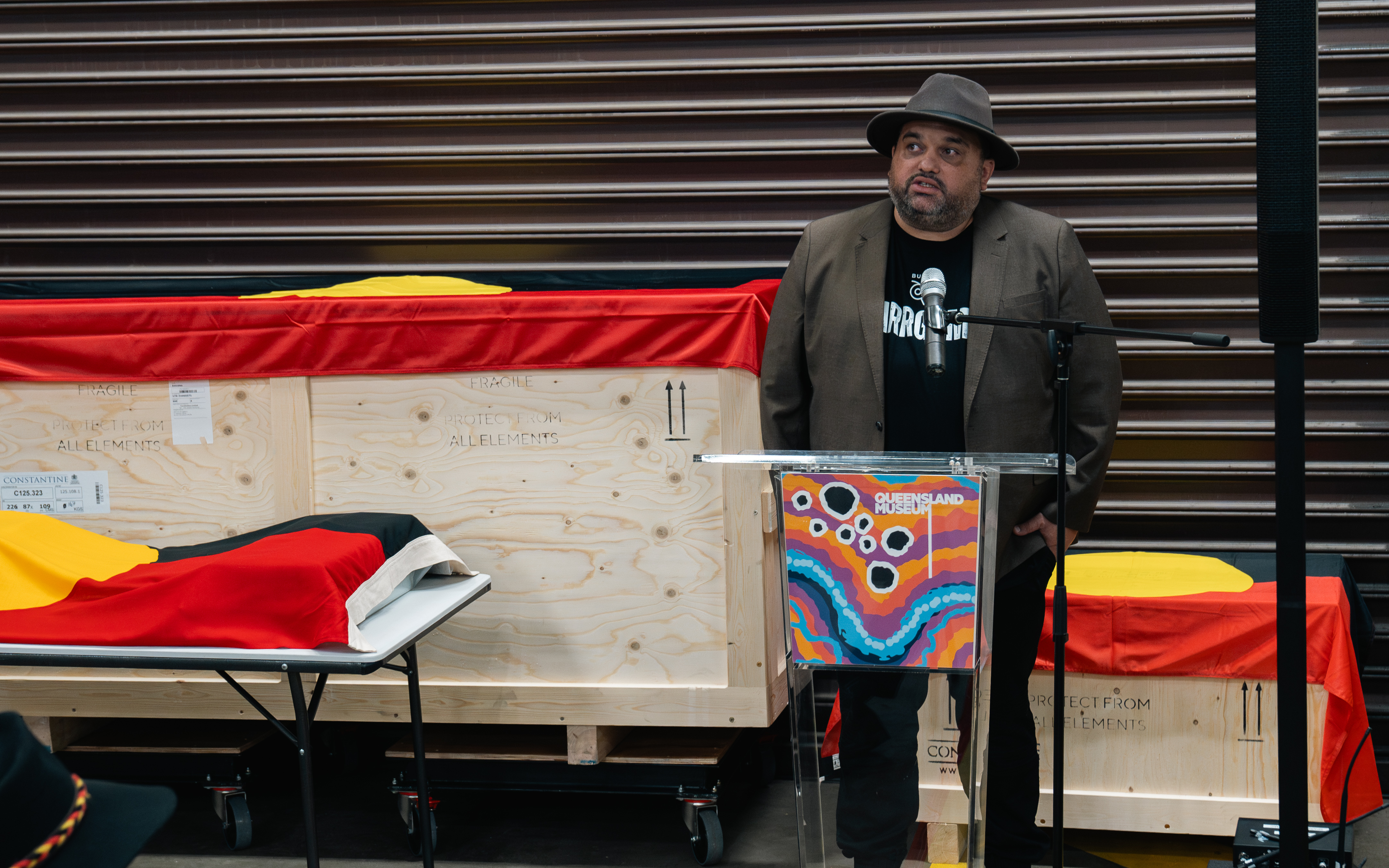
Queensland Museum Network chief executive Jim Thompson addressed those gathered, vowing to treat the ancestors with dignity and cultural safety.
Many attendees shared reflections during the ceremony, expressing both grief and relief at the return of their Old People.
Mr Holden said the repatriation brought mixed emotions and important historical insights.
"It's a big lot of sadness and it's a big lot of happiness all at the same time," he said.
"If this process didn't go through, we wouldn't actually have known what happened to him.
"The British museums and the College of Surgeons had a lot of information - locations of burial, who picked him up, where he came from. That just strengthens us to go back to our country."
He said the repatriation effort was not only for today's communities, but for future generations.
"It's going to be the next generation, which is our youth, who will have to carry out some of that legwork to ensure the process is done with dignity and respect and culturally aligned."
Dau'wai (stringy bark tree) Kau'bvai (Native Bee) man and Repatriation Manager for Queensland Museum, Danny Williams, said the museum worked directly with communities to ensure the process is culturally appropriate.
"We actually talk with community right from the get go," he said.
"We ask community how they want their ancestors cared for, what protocols they want us to follow - and we follow those protocols."
Mr Williams said the next stage will involve researching the 30 unprovenanced ancestors.
"We'll identify one ancestor, go through all Queensland Museum material, State Library, National Archives to see what information we can find." he said.
"It's not a quick process, it can take weeks, months, or years.
"Our hope is to identify where all the unprovenanced ancestors come from and have them go home."
Kabi Kabi and Wiradjuri woman and Queensland Museum's Director of First Nations, Bianca Beetson, said staff are committed to working with care and integrity.
"We don't do anything in regards to the ancestors without community permission," Ms Beetson said.
"Those ancestors we care for belong to community, and we will care for them like they are our own."
She added that only Aboriginal and Torres Strait Islander staff are involved in handling the remains to ensure culturally safe practices.
"Today's been really special," she said.
"We will continue to research, cross-match records, and do everything we can to help these ancestors return home."



