



The United Nations Expert Mechanism on the Rights of Indigenous Peoples recently took the significant step of issuing Technical Advice to Canada regarding implementation of the United Nations Declaration on the Rights of Indigenous People and Canada's Bill S-2 An Act to amend the Indian Act (new registration entitlements).
The Technical Advice issued by the Mechanism (EMRIP) on May 7 urges Canada to end the continuing sex and race-based discrimination in the Indian Act and remove the second-generation cut-off because of its assimilatory effects.
EMRIP also raised concerns about the forced assimilation of First Nations in Canada, accomplished through the second-generation cut-off in violation of the UN Declaration, which guarantees Indigenous Peoples' right not to be forcibly assimilated by the state (Article 8).
The Union of British Columbia Indian Chiefs (UBCIC) and First Nations women from the Indian Act Sex Discrimination Working Group has backed the advice from EMRIP for the federal Government to pass Bill S-2 as amended by the Senate without further delay.
The Indian Act Sex Discrimination Working Group is an advocacy body of organisations and women experts from across Canada who convene in pursuit of full recognition of citizenship and human rights of First Nations women and their descendants who have been discriminated against under the Indian Act and for repair of all its harms.
Bill S-2 was introduced as a limited response to BC Supreme Court's August 2025 decision in Nicholas v. Canada relating to discrimination against the descendants of a parent, grandparent, or great-grandparent who enfranchised (no longer had Indian status); however, the Canadian Senate amended the bill with a historic unanimous vote, to remove provisions that perpetuate sex and race discrimination and to remove the second-generation cut-off.
The second-generation cut-off is a rule which limits how Indian status (registration) is transmitted from parents to children under the Indian Act. After two generations of parenting with a person who does not have Indian status, the children will not be entitled to be registered as Indians.
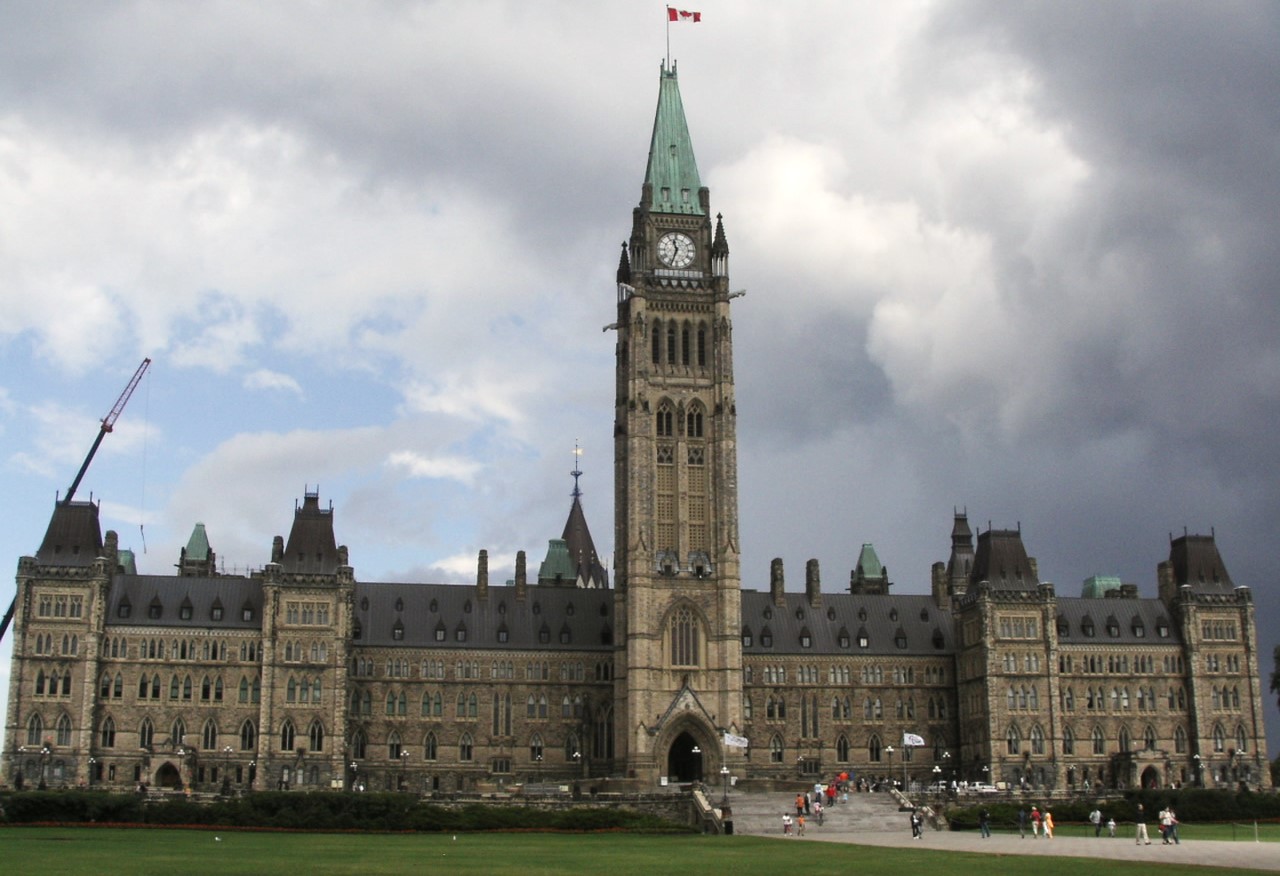
In a statement on Tuesday, the UBCIC warned second-generation cut-off rule will cause "the legislative extinction of status Indians" within several generations and "cause irreparable harm to families and First Nations".
The Union noted the Senate's amendments were made at the request of First Nations leaders and supported by resolutions, as well as at the request of First Nations women and youth, and First Nation organisations from all over Canada.
"Despite this near-unanimous support from First Nations, Canada's federal government insists it cannot accept the Senate amendments because it needs further consultations with those very same First Nations," UBCIC noted.
This is the second time in 2026 alone that the United Nations has explicitly called on Canada to address forced assimilation and ongoing discrimination in the Indian Act by adopting Bill S-2 as amended by the Senate.
In March, the United Nations Human Rights Committee recommended that Canada "eliminate the remaining discriminatory effects of the Indian Act on indigenous women and their descendants" by "adopting proposed amendments [in Bill S-2] concerning the second-generation cut-off rule".
UBCIC said EMRIP's Technical Advice represents "a unique opportunity for Canada to show its commitment to its international human rights obligations and its own legislation, the United Nations Declaration on the Rights of Indigenous Peoples Act, which affirms the application of the UN Declaration in Canadian law".
Mi'kmaw lawyer and a member of the Eel River Bar First Nations in northern New Brunswick, Dr Pamela Palmater, said Canadian authorities continue to "delay justice for First Nations women and children by maintaining sex- and race-based discrimination in the Indian Act, while insulating itself from liability for the irreparable harms done to these women and children, their families and ultimately their First Nations".
Union of BC Indian Chiefs Secretary-Treasurer, K̓áwáziɫ Marilyn Slett, said First Nations Chiefs and leaders from across the country have "explicitly and publicly called for an end to the second-generation cut-off via numerous resolutions", since Canada introduced it in 1985.
Chief Slett, who is also Chief Councillor of the Heiltsuk Tribal Council, noted that eliminating the second generation cut-off is supported by UN human rights bodies including the UN Human Rights Committee, the UN Committee on the Elimination of Discrimination Against Women, and now the UN Expert Mechanism on the Rights of Indigenous Peoples, as well as by parliamentary committees, and numerous witnesses who have testified before the Canadian government on its harmful and assimilatory effects.
"After 150 years of forced assimilation and denial of rights under the Indian Act, we are facing mathematical genocide before our eyes. Now is the time to act and pass Bill S-2 as amended by Senate," she said.
Sharon McIvor, lead plaintiff in the McIvor v. Canada case and author of a successful petition to the UN Human Rights Committee, said: "I have been fighting sex and race discrimination in the Indian Act for 60 years."
"Over 18 Ministers of the Crown have promised me they would address the ongoing discrimination later, but that promise has never been kept," she said.
"Bill S-2 as amended by the Senate must be passed swiftly as a failsafe measure, should the Minister's promise of standalone legislation to address the second-generation cut-off prove false."
Ms McIvor, who is a member of the Lower Nicola Band, said the international human rights community "is watching expectantly".
Jeremy Matson, requestor in the 2026 May United Nations Expert Mechanism on the Rights of Indigenous Peoples - Canada Country Engagement, and successful author in United Nations petition to the Committee on the Elimination of Discrimination Against Women, said the sex and race discrimination in the Indian Act is "a terrible stain on Canada's reputation as a global human rights leader".
"For over 40 years Canada has rejected the findings of the United Nations regarding discrimination in the Indian Act. Now, the UN Expert Mechanism is naming Canada's policies for what they are: forced assimilation and non-compliance with Canada's international obligations. Canada must pass Bill S-2 as amended and end legislative extinction of First Nations without delay," he said.
National Advocacy for Justice for Girls director Zoë Craig-Sparrow, a member of Musqueam Indian Band, asked: "How many times does the United Nations have to issue recommendations and statements saying that the second-generation cut-off is discriminatory and a violation of our rights?"
"This is now the second UN body in as many months that has urged Canada to pass Bill S-2 as amended by the Senate," she said.
Ms Craig-Sparrow said the Canadian government "cannot continue to hide behind the excuse of needing more consultation to be aligned with UNDRIP or cherry pick which articles of the UN Declaration it chooses to abide by".
"EMRIP's technical advice makes it clear; the real violation of UNDRIP would be to strip out these amendments and continue forcibly assimilating our people," she said.



