


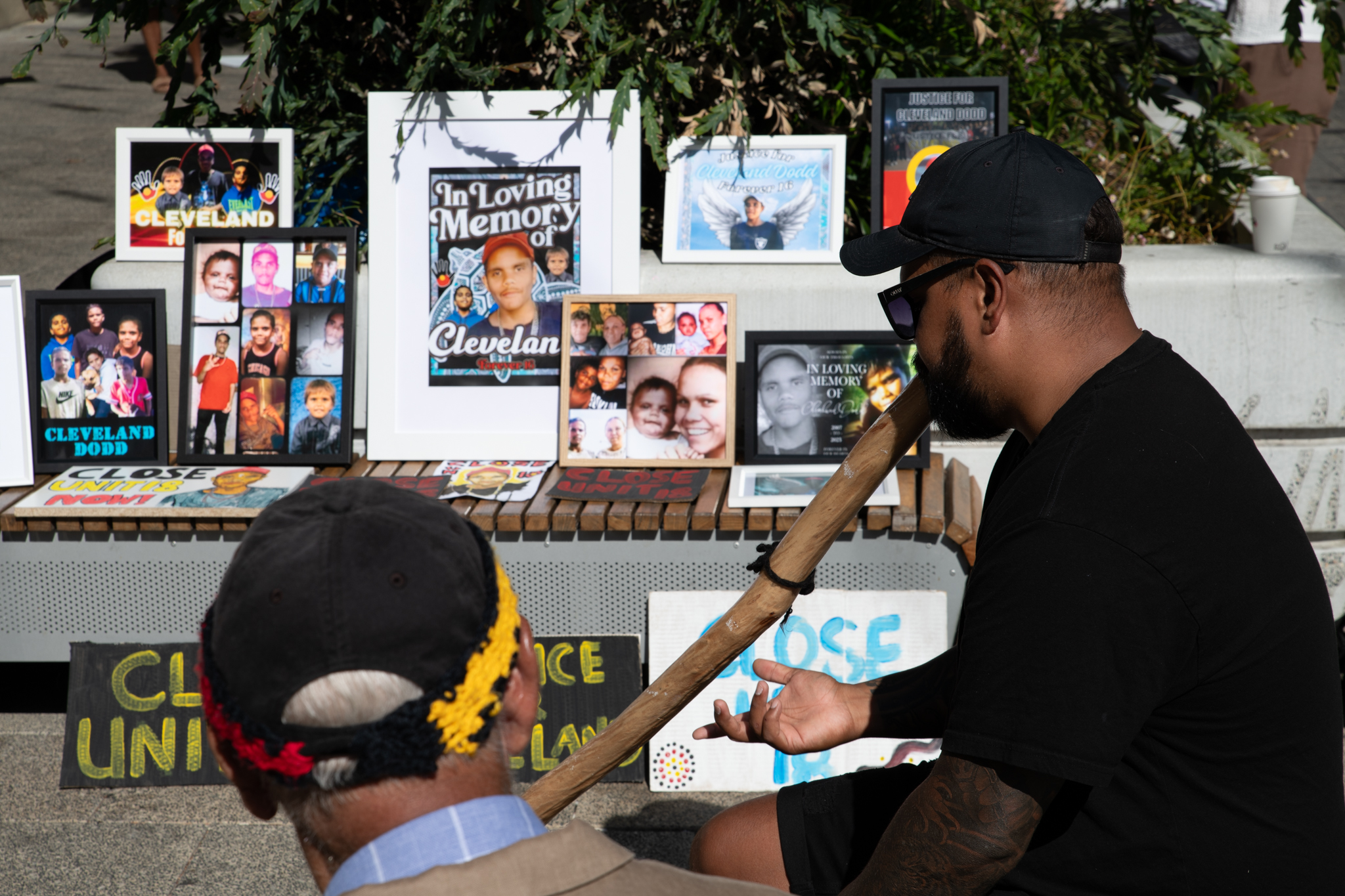
The Coronial inquest into the death of 16-year-old Cleveland Dodd should have been a watershed moment. We should be saying 'never again' but the WA government is refusing to listen to recommendations made by its own coronial process, showing disregard for the legal system and the lives of Aboriginal children.
'All is well now' they tell us, 'We have made changes and Unit 18 will stay in place until the new youth justice facility is built, some years away'.
Cleveland died in Unit 18 - established as a wing in Casuarina prison, an adult men's maximum-security prison, in violation of the UN Convention on the Rights of the Child.
In the months before his death in 2023, he was kept in solitary confinement, which is known to be dangerous and even a direct cause of suicide. On the night he died he called out repeatedly for a glass of water and was denied even that. The coroner examining his death has described it as "inhumane" and "reminiscent of 19th century jails".
Western Australia has a long history incarcerating Aboriginal children in violation of international human rights law. I've been a youth justice advocate since the 1980s and saw the introduction of mandatory detention laws known as 'three strikes' which denied judges any discretion other than a detention sentence for children convicted of three property crimes. These laws have directly contributed to the very high rate of incarceration of Aboriginal youth in WA, double that of the national average.
It's also well known that Aboriginal children living in poverty have consistently been targeted by police, subjected to racial profiling and charged and convicted under these laws.
Mandatory detention laws violate UN Conventions including the Convention on the Rights of the Child and have also been condemned by the UN Committee on the Elimination of Race Discrimination. We are the only state that continues to incarcerate children under these laws, and from the age of just 10 years.
The coroners' key recommendations included Unit 18's immediate closure and a special inquiry into how the unit came into existence. Additionally, he called for a forum of government and non-government stakeholders to consider whether youth justice should remain within correction.
These are obviously, urgently necessary responses yet were immediately rejected by the Corrections Minister Paul Papalia - who should have been stood down from the portfolio following the death of Cleveland and another child at Unit 18.
When children are dying in incarceration in a foreseeable and preventable manner there should be a consequence for the minister responsible. The failure of Premier Roger Cook to demand accountability in this respect is damming.
It was disappointing the coroner neglected to acknowledge that the conduct of the state leading up to Cleveland's death breached UN human rights laws, which are binding on Australia and should be respected in all laws and policies.
In WA it has been estimated that Aboriginal children are 50 times more likely to be incarcerated than non-Aboriginal children. That and Cleveland's death should have been a wake-up call of a system out of control and needing urgent reform.
Unfortunately, government prefers to scapegoat Aboriginal children - ignoring experts, people like Professor Fiona Stanley and Associate Professor Jocelyn Jones, who know what is being done is damaging children, many who have disability and need health and social interventions long before incarceration.
It makes no sense at all, other than cruel racism, as to why we'd continue down this dangerous path.
As Professor Stanley said: "Many of these children are challenging but, Minister Papalia, they are not the problem. They are not giving you permission to lock them up for 22 out of 24 hours a day, in inadequate cells and to deprive them of the basics of living. Treating such vulnerable children in this way exacerbates their fragile developmental state. And understandably they respond with anger, or with severe depression and self-harm."
The government points to its new youth detention facility and appointment of a Youth Justice Commissioner but these responses are not enough, especially when there is a continued lack of regard to Aboriginal children's human rights.
What's urgently needed are culturally appropriate prevention and diversion responses, as well as treatment, developed with Aboriginal communities, and consistent with the right to Aboriginal self-determination. It's not too much to ask.
The courts can also take some responsibility here, and begin discussions about an Aboriginal youth justice court, which is well overdue. Our people and Elders especially should be heard and listened to. We do not want any more children dying in custody or losing their future as criminalised children. According to the Australian Human Rights Commission 18 children have now died in detention facilities across Australia.
Isn't it time we all say enough is enough? Aboriginal children deserve to have their lives respected, yet this state persists in demonising children who have suffered and lived on the margins.
The hypocrisy of an ALP government that supports reconciliation and truth-telling on one hand while subjecting Aboriginal children to abusive treatment on the other must be addressed. No political party that engages in systemic racial discrimination targeting Aboriginal children deserves our continued support.
Dr Hannah McGlade is a Kurin Minang human rights expert, law academic and member of the United Nations Permanent Forum on Indigenous Issues.



