


Good day everyone and welcome to Man-gala, (as Djugun Yawuru people of the Broome area know the period from December to March). I'm sitting on my front deck at last getting to enjoy a really wet day in what's been a very dry monsoon season for the West Kimberley.
We humans are not the only ones who've been waiting, the green trees frogs were deafening in last evening's celebrations, garden plants bolted overnight, seeds have broken ground and I reckon the birds are singing louder, and sweeter. It's a joyous thing when there's rain in the air, especially when it gives relief from the oppressive humidity we've been experiencing.
I took advantage of yesterday's cool weather to take an evening stroll. On my journey I bumped into an old friend who was madly planting some native seedlings into the newly damp ground. We got chatting and she invited me around the back to look at her pride and joy, a beautiful specimen of Grewia breviflora. She reminded me I'd given it to her a few years back as a young plant. It was looking a treat and the delicate, new, yellow flowers on display indicated it was also appreciative of the long awaited rain.
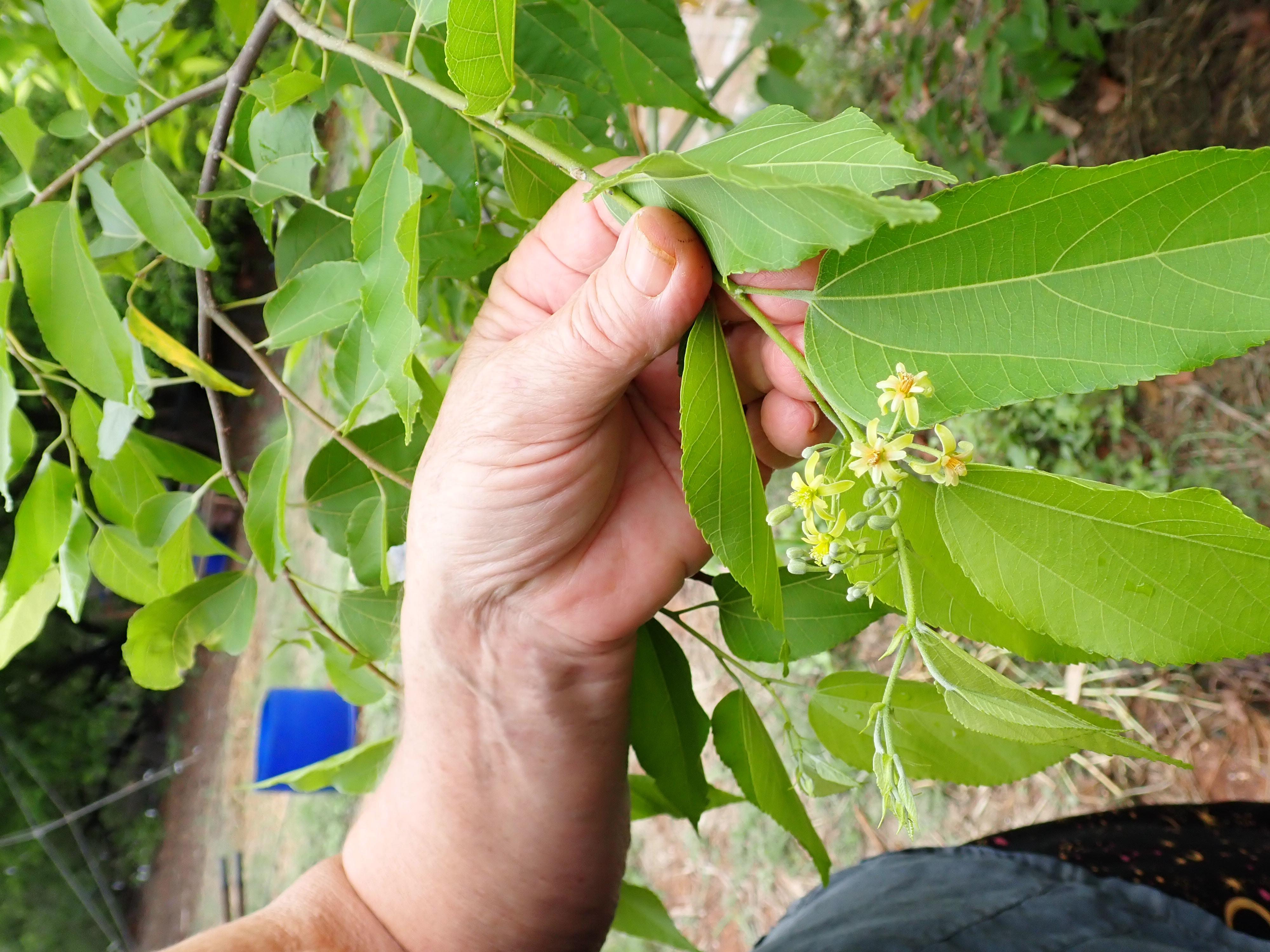
Grewia breviflora is one of two edible grewias that grow in our local area. Grewia pindanica a shrub to about a metre and a half tall, grows in open savanna woodland. It has small reddish-brown fruit, similar in shape to a certain part of a dog's anatomy, from whence it gets it common name, dogs' balls.
For a bush snack you suck the thin flesh surrounding the hard seed, which is reminiscent of toffee. It has delicate five-petalled white flowers with buttery yellow stamens. Nyul Nyul people of the Dampier Peninsula referred to it as wombanyilinyli
Grewia breviflora, goolm or goolmi, (depending whether you are in Bardi or Nyul Nyul country), on the other hand is found in vine thickets, located behind coastal sand dunes. It also has edible fruit that darkens from brown to purplish black when ripe. It has a similar taste to a currant. As stated previously, it is an attractive small tree, perfect for a smaller garden. It's weeping habit, soft serrated, velvety leaves and bird attractant properties make it a welcome addition to any garden.
My friend Glennie will vouch for that. It is found throughout the tropical north of Australia, from Broome to Townsville. Propagate from fresh seed, preferably after you've eaten them!
Gardener and lovers of nature, I find, are a generous caring lot. So why not join or start a local volunteer group that find pleasure in gardening? Not only will you meet new friends, but you'll also find they love to share their passion, their produce and they are community minded. And if you are lucky like me, down the track you'll get to admire a plant that you grew and gave to someone!
*Please don't get the above species confused with Grewia asiatic, which is an invasive non-native species from Asia with purplish yellow fruit that is attractive to birds and mammals.



