



This report includes the name and image of a person who has died.
A motion of condolence for the loss of Kumanjayi Little Baby has seen an outpouring of grief and also calls for action in the Senate.
The motion was moved by Senator Malarndirri McCarthy, Minister for Indigenous Australians, on Tuesday.
The discussion ultimately saw the defeat of an amendment moved by Senator Jacinta Nampijinpa Price, which called for "immediate, concrete action" from the federal and Territory governments.
The Warlpiri senator, who represents the Northern Territory, moved in her amendment that the Senate "mourns the tragic death of Kumanjayi Little Baby; extends its deepest sympathies to her family, her communities in Mparntwe/Alice Springs, the Warlpiri and Gurindji families of Kalkarindji, and all Australians who grieve her loss", and commends "the volunteers, community members, police and emergency service workers who searched tirelessly for Kumanjayi Little Baby, especially the NT Police".
Where it diverted from the original motion, Senator Price's amendment called for the Senate to recognise that the young girl's death is "not an isolated tragedy but a consequence of ongoing community dysfunction that governments have failed to address honestly or effectively" and called on the federal and Territory governments to "take immediate, concrete action to address the conditions including family violence, inadequate policing resources, and child protection failures that put children at risk in remote communities".
It also demanded governments "be held accountable for delivering measurable outcomes, and that community safety in remote Australia be treated with the same urgency afforded to any other Australian community".
Senator Price wept as she spoke on the death of the five-year-old girl, a member of her extended family.
The amendment was defeated. Prior to the vote on the amendment Senator McCarthy said the Labor government, "with the deepest of respect to Senator Nampijinpa Price" would not support the amendment, noting the original condolence motion was "put forward ... with the families, both the Warlpiri families with Mr Granites and family, and the Gurindji families ... in partnership with them".
The original motion was then passed unanimously.
Earlier, Senator Lidia Thorpe, a Djab Wurrung, Gunnai and Gunditjmara independent representing Victoria, noted during the discussion of the condolence motion that last Thursday "across the Nation by candlelight and wearing pink people stood in strength and love with a family of Kumanjayi Little Baby, who we honour again today".
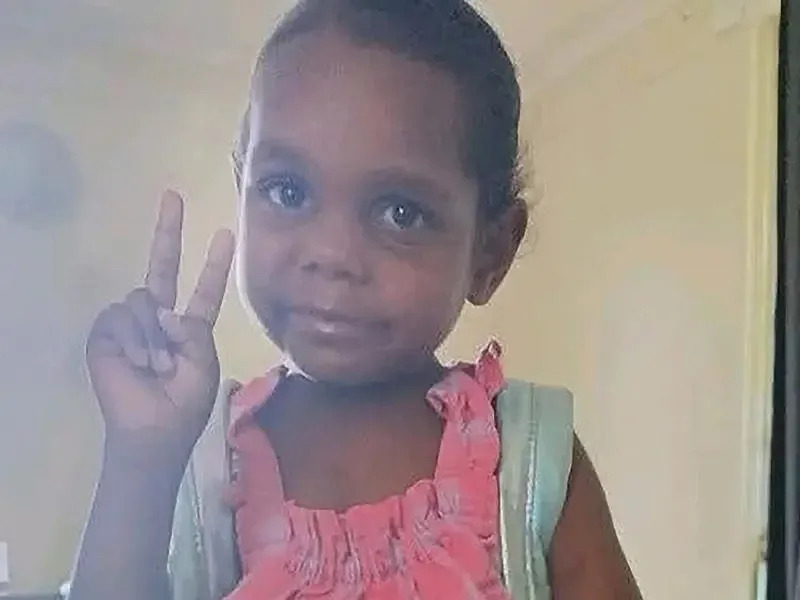
"Her mother said she loved cuddling puppies, watching Bluey, listening to Bruno Mars, and playing Minecraft with her big brother. The simple joys of childhood so many families would recognise. Her mother asked for her to be remembered as a beautiful little girl in pink, deeply loved by her family," Senator Thorpe said.
"Over the past few weeks, we have seen the best of this country as thousands of us come together, setting differences aside to stand with this family in shared humanity and healing. As we work through the need for change, we must hold on to that.
"The family asks for their child not to be made a political football. Not everyone has respected those wishes. We have seen damaging commentary and calls for reforms that would further harm our people. I will address those debates directly at another time, believe me. Because this is a time of deep grief and sorry business for our people. We must respect the family as any of us would expect for our own families."
Senator Thorpe noted Sunday was Mother's Day.
"As Aboriginal mothers we hold in common a deep love for our children; an understanding that they are sacred... Our children carry our old people and our future. They carry the promise that despite everything done to our people, we will continue on. But, as Black mothers, we also share a common fear; a fear that our children will be taken, targeted or imprisoned by the state or lost to violence. This fear is passed from grandmother to mother to daughter. Because so many before us have lost children. So, when a mother loses a child together, we feel it. Deeply and we grieve together," she said.
"We know this moment, the loss of this beautiful child will be a turning point. But many of us fear, it will mean more harm against our families. We must not let that happen. We do need a national conversation that addresses the systemic failings that contributed to this tragedy and so many others like it, but this must be led by our people. We must not return to the assimilationist approaches of the past based on false assumptions about us. We must reject the idea that safety means severing children from their culture, kin and Country. Our children's identity must be central... culture, language and country - knowing where you come from - is the absolute foundation of a strong person."
Senator Thorpe said the "real issue is that our community space deep poverty and a lack of basic services, and incarceration and child, removals are doing enormous harm to our families", calling for systems that facilitate the authority and resources for "our communities ... to drive our own solutions".
"For thousands of years, our people have understood that a village raises a child, mothers aunties, uncles, grandparents, cousins and Elders together," she said.
"Our babies are held by kinship, language and Country. This foundation must be upheld. Our culture is our strength, and our mothers and grandmothers, hold the solutions.
"And so, we honour come Kumanjayi Little Baby; the pretty girl in pink, deeply deeply loved by her family. In our grief, we must choose healing over harm and ensure every child in this nation is held and loved safe in kin and safe on Country."
Senator Kerrynne Liddle, an Arrernte woman who represents South Australia, spoke on the conditions in town camps she had witnessed and members of her family has experienced.
"It was devastating to watch this play out," she said.
"People should be able to protect their children. There is a consequence, a tragic consequence when somebody dies from violence. As a person who has lost sibling to that kind of violence, that pain stays with you forever; it doesn't disappear," she said.
"What is harder is when people know they are at risk, and they spend their lives trying to work out how to keep people safe. There is a trauma attached to that. There is a trauma in seeking help, worrying whether just the simple act of seeking help is going to draw attention to you, whether that help is going to come, and wondering whether you will have to do it all again tomorrow.
"We need to intervene to make sure our people don't have to keep calling, they don't have keep looking, they don't have to keep searching. And we need to be courageous about doing that. Nothing about doing this condolence motion today ... will make it better for anyone unless we are courageous in here - we are legislators ... it is our job in this place to actually say 'we are going to put the things in place that will actually make a difference', and follow that right to the very end."
"In a town camp, you walk into it, it's like a gated community but the gate's open... There is a single provider of services for that community; I call that a monopoly, I don't like that.
"Doors without handles on them, let alone a lock... Some of those houses have walls, but inside those walls there's no sink, there's no stove, there's no working toilet. We have to get real, building more houses, more walls to hide that is not the answer.
"Making sure children are going to school, making sure people are going to work, that people are doing things they aspire to, like any other Australian, that they get the opportunity to do that. That's what's important, that's what facilitates change.
"We have to be courageous enough to intervene. Whether it's a five-year-old little girl or little boy, or a 50-year-old person who is dealing with the consequences of violence every day, we have to be brave enough in here to intervene. We have to demand greater accountability, and there is nothing political about that; that is our job."
Senator Jana Stewart, a Mutthi Mutthi and Wamba Wamba woman representing Victoria, said "We must hold space for this grief together, acknowledging the preciousness of the life lost and a heartache that remains".
"This cannot be another moment we grieve and forget. To her family community, this chamber holds you and your loss is witnessed here."
Senator Dorinda Cox, a Yamatji Noongar senator representing Western Australia, wept while expressing her grief for the loss of Kumanjayi Little Baby.



