


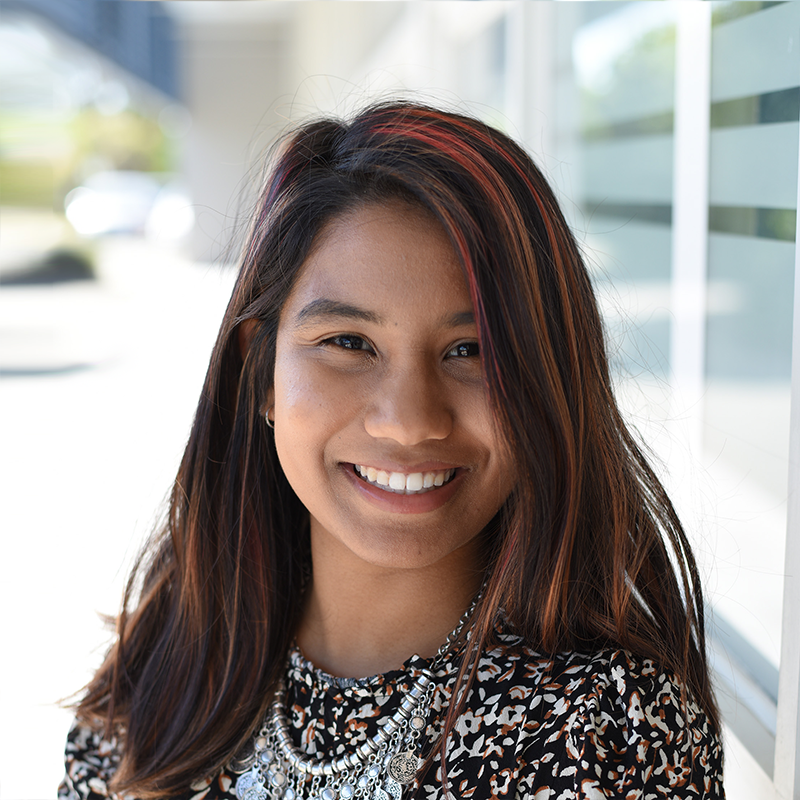

Jane Jones has spent over two decades of her career working in healthcare.
A finalist for Elder of the Year, she's got two decades working with Aboriginal Community Controlled Health Organisation, Derbarl Yerrigan, in Boorloo (Perth) under her belt.
Inspired by her mum, her daughter Tamara Jones followed in her footsteps and became a midwife.
On International Nurses Day, the duo acknowledges the need for more skilled Aboriginal and Torres Strait Islander healthcare workers in many communities.
According to the Australian Health Practitioner Regulation Agency, only 1.4 per cent of registered nurses and midwives in Australia identify as Aboriginal and Torres Strait Islander.
However, the number of Aboriginal and Torres Strait Islander nurses and midwives has increased in the last 10 years with 3,216 First Nations nurses registered in 2019 compared to 1,721 in 2010.
As a Whadjuk, Ballardong and Willman midwife, Tamara knows her patients having culturally appropriate care, is one of the most important parts of her job.
Working as a midwife at Wirraka Maya Health Service, an AMS of the National Aboriginal Community Controlled Health Organisation, she runs into points of cultural difference all the time.
"The biggest problem with not having an understanding of our culture is that you don't know how people are living," Tamara said.
"For instance in hospitals but they're just seeing them for 15 minute, they're just doing the investigations they need to do and they're not doing that yarning.
"In the long run, women are going through sorry business, there are family or domestic violence situations or for some reason they've stopped going to see their health provider because they don't think they're being heard."
Through her role, Tamara will sometimes act as the go-between patient and doctor.
"This is where I'm like a conduit between the hospital and the community," Tamara said.
"Sometimes they'll call me and say hey do you know why this one's not turning up for their obstetric appointments?
"And this is where our door is always open. We've got health workers that know the community better than we do and they've got their ears on the ground and they let us know things."
NACCHO chief executive Pat Turner said they are facing a primary healthcare workforce crisis.
"As a sector, we are facing severe workforce challenges that are impacting access to health care, and which risk unraveling the hard-earned life expectancy gains our sector has made for our people," she said.
"The problem of recruiting and retaining a skilled healthcare workforce means some of Australia's sickest people are denied access to primary health care in many of our communities.
"We are aware of some clinics having to close temporarily to prioritise services in other areas...urgent action and real solutions are needed."
Indigenous nurses and midwives are more likely to work in roles that involve caring for Aboriginal and Torres Strait Islander patients, with 80.7 per cent of First Nations nurses and midwives have reported that they work in roles involving First Nations patients.
For Tamara, being a trusted figure in the Aboriginal community she works in is why she does what she does.
"If we don't have enough Aboriginal and Torres Strait Islander nurses and midwives how can we be serious about closing the gap?" she said.
"There's lots that needs to be done to build the workforce capacity up to make it more culturally appropriate."
Despite the challenges within the healthcare sector, Tamara still looks to her mum for inspiration and hope.
"My mum has been a nurse for 50 years, she's amazing," she said.
"(She's spent) 20 years at an ACCHO this year, and she's got an amazing story like she's my role model.
"Without these pioneer nurses and midwives going through and paving the way for us, there would be no way for us."
Jane Jones is nominated for Elder of the Year in this year's NAIDOC Awards.



