



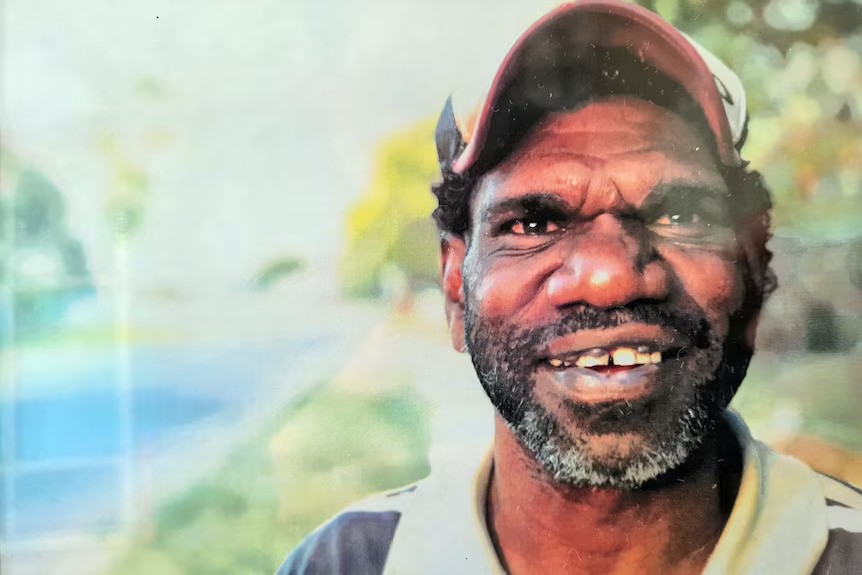
Gwynette George has spoken out on the long, challenging months without answers after her younger brother's death in a Cape York police station cell.
Known culturally as Mr George, the helpful and community-oriented man met an untimely end in November 2022.
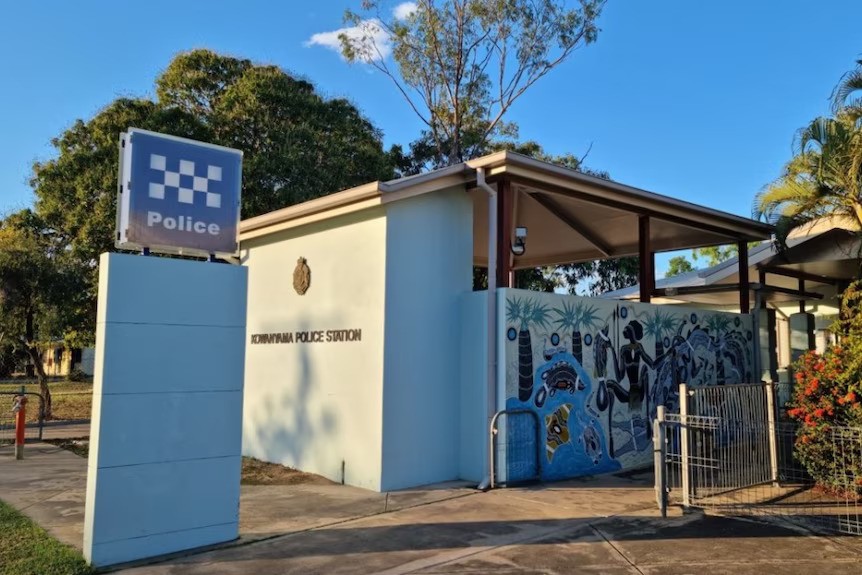
Mr George, 52, succumbed to self-harm while alone in his cell at a Kowanyama watch house.
"[He] was a very good person. He was very helpful in our community. He used to help a lot of our families," Ms George told the ABC.
Queensland Coroner Terry Ryan has scrutinised the events surrounding Mr George's death, delving into aspects such as police policy, procedures, and the medical care provided to him.
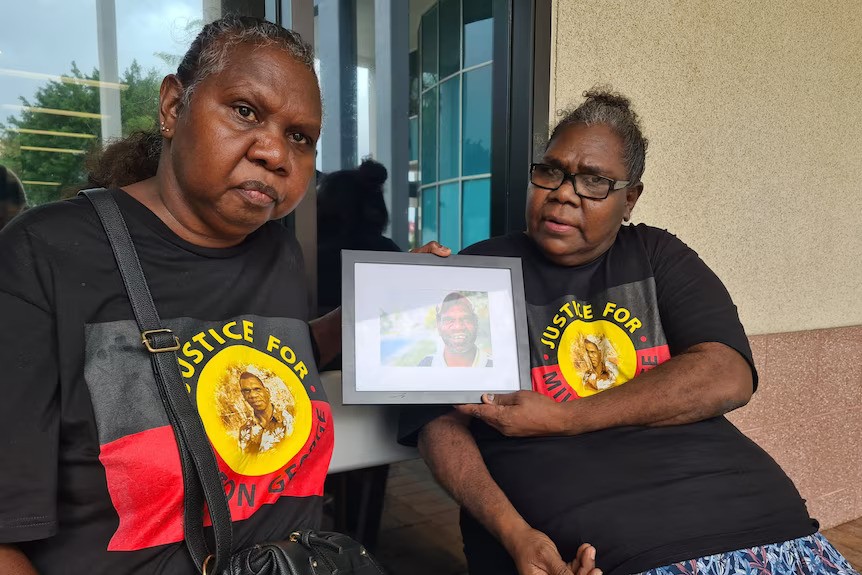
At the Cairns coronial inquest this week, Ms George asserted that her brother had been let down.
"That's the duty of care. That's their responsibility," she told the ABC.
"I hope it doesn't happen again in our community … it shouldn't happen in any community."
Described in court as typically talkative, articulate, and relaxed, Mr George had actively sought help for his mental health and alcohol issues in the months leading up to his death.
On June 11, 2022, police picked him up following family reports of self-harm threats.
Constables Lincoln Pullar and Stefan Taylor informed the court that they utilised an Emergency Examination Authority (EEA), transporting Mr. George to the local health clinic.
They also registered the EEA in the police system.
However, the inquest revealed that the pair opted not to flag the incident, leading to Mr George's history of self-harm threats not being accessible when he was apprehended and taken to the watch house five months later.
Subsequently, the system has been revised to mandate flagging in such cases.
On the morning of his 9 November incident, Mr George was observed visibly intoxicated outside the Kowanyama shop.
Christine Boll, a counsellor with the Royal Flying Doctor Service (RFDS) in Kowanyama at that time, attested to witnessing Mr George in that state.
The ABC reports that the court learned that his blood alcohol level was 0.203 per cent upon his arrest.
Body-worn camera footage displayed during the inquest depicted Mr. George slurring, stumbling, and displaying confusion, needing two reminders to pull his legs into the police vehicle.
Dr Jeremy Hayllar, the clinical director of the Alcohol and Drug Centre in Metro North, noted that the CCTV footage capturing Mr. George entering the cell did not portray him as visibly intoxicated.
During questioning, Constable Matthew Wenberg and the then officer in charge of Kowanyama Police station, Senior Sergeant David McCarthy, faced inquiries regarding their classification of Mr George as a "low-risk" prisoner.
Counsel assisting the Coroner, Melia Benn, presented an orientation booklet to the court, detailing the levels of prisoner risk and the corresponding recommended frequency of checks.
It highlighted that individuals deemed intoxicated should undergo checks every 30 minutes, with an escalation to checks every five minutes when there was a risk of self-harm.
Constable Wenberg admitted to never having been shown the booklet but categorised Mr George as a 'level one.'
As per the Police Operations manual, this level mandated checks every 60 minutes, although more frequent checks were advised if the individual was deemed intoxicated.
Unfortunately, Mr George was left unattended for over an hour, resulting in his tragic suicide during that period.
The court was informed that, during this time, the two constables engaged in paperwork in the 'day room,' with a screen displaying CCTV footage of Mr. George's cell above them.
Senior Sergeant David McCarthy rejected a suggestion that his extensive experience working in Indigenous communities might have influenced him to perceive a blood alcohol reading of 0.203 as low risk.
"I don't think there's bias, I like to think I'm a realist," he said.
Constable Wenberg, when asked why he didn't deem a blood alcohol level of 0.203 as intoxicated, stated that Mr. George's demeanor didn't appear impaired.
"I know from experience that Aboriginal males are able to handle a higher alcohol content and still function reasonable," he said.
Medical staff involved in the attempt to revive Mr George recounted the "distressful" day.
"We arrived and I saw very panicked and pale-looking policemen waving us into the station … we knew something serious was going on," Dr Marcin Skladaniec said.
Dr Skladaniec noted that Mr George's body felt cooler than expected and faced difficulty in clearing the patient's airway.
Subsequently, at the health clinic, Duncan Grant joined the efforts but also had challenges with inserting a breathing tube.
"The peripheries of his hands were also quite cold and that suggested to me that he hadn't had adequate circulation for a good 15 to 30 minutes, possibly up to an hour," Dr Grant said.
Mark Little, an emergency physician and toxicology expert at Cairns Hospital, conducted a review of Mr George's medical case and determined that the resuscitation efforts by both police and medical staff were appropriate and adequate.
He further concluded that there was little they could have done by the time Mr George was discovered.
Mr George's death is among the 559 (at the time of this report) Indigenous people who have lost their lives in custody since the 1991 Royal Commission.
The inquest is set to reconvene later this year.
Outside court, Gwynette George stated that she felt police officers treated Aboriginal people differently but appreciated some acknowledging their responsibility in her brother's death.
"I'm here for justice," she said through tears.
"I would like an apology from them (police) … they should have just done the right thing, and taken care of him."



