




With signatures put to paper on Wednesday, more than 700,000 hectares of the Tiwi Islands have been registered as the newest Indigenous Protected Area after years of consultation, planning and development.
Traditional Owners are now further empowered to lead management of Country, conservation and "help Tiwi protect the cultural values of their islands for future generations", as mapped out by the Tiwi Land Council.
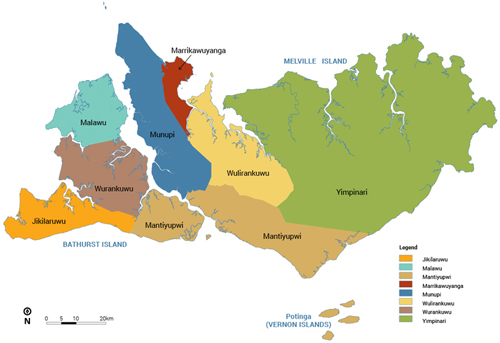
The formal agreement with the federal government recognises more the 718,463 hectares across 11 islands, including the largest - Melville and Bathurst, home to just over 2,300 people.
It's the 13th Indigenous Protected Area formalised since 2022, and 93rd dedicated since 1998.
Recognition of the Tiwi Islands places the area on Australia's National Reserve System and hands voluntary responsibility of caring for Country, with a management plan, to local rangers per commitment from the Land Council, and in accordance with "internationally agreed protected areas standards and guidelines".
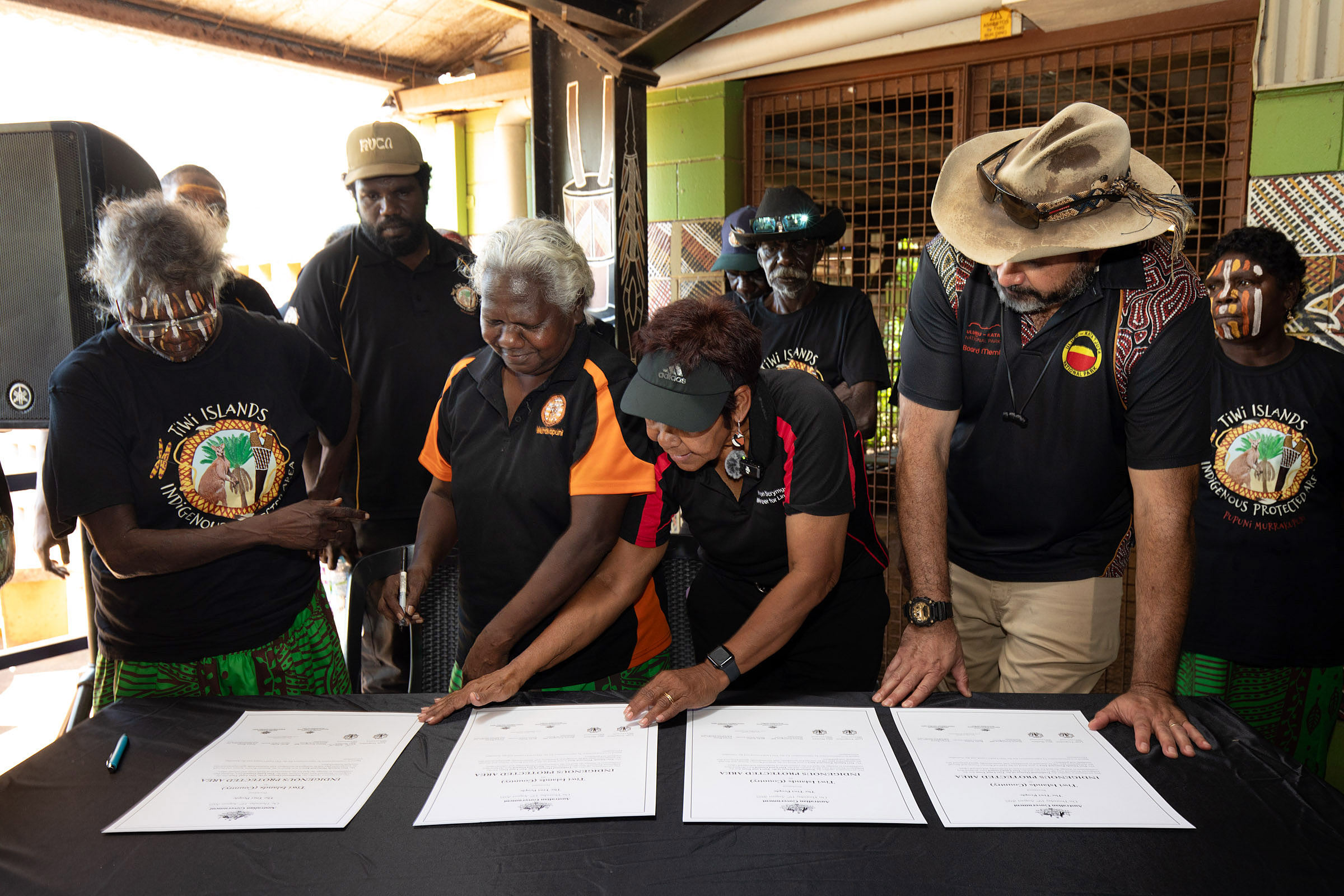
Tiwi Land Council's Leslie Tungatalum and Tiwi Resources' Alice Munkara, NIAA Top End and Tiwi Islands regional manager Terina Barratt, Member for Lingiari Marion Scrymgour and Parks Australia director Ricky Archer signed the document at a celebration at Wurrumiyanga on Bathurst Island.
Early consultations with Traditional Owners were followed by the development of an IPA Plan of Management in 2020.
The plan was due to be reviewed by Traditional Owners in June of this year, per Land Council timelines, with the formal recognition expected by the end of this year.
"Just as Tiwi traditional owners understood and cared for our land when we used it for the traditions in the past, the new generations of Tiwi land managers need to understand and care for it now and into the future," former Tiwi Land Council chair Gibson Farmer Illortaminni had said in the lead up, via the Land Council website.
"To keep our country healthy, our people healthy and our culture strong, we need to bring together our knowledge of the past with new ways of doing things today. A Tiwi IPA will help us to continue to look after our Country and our culture for all the generations to come."
A list of goals linked to values were outlined by the Land Council, including; maintaining and strengthening Tiwi culture, caring for country for Tiwi culture and people; protecting and caring for homelands, sacred sites, spiritual places and hunting and camping areas; respecting Country for hunting, fishing and food gathering places; care for plants and animals; passing on knowledge of Tiwi foods and medicines, commitment of rangers to "keeping land and sea country healthy and culture alive into the future".
The islands are home to 19 threatened plant species and 28 threatened animal species, including the brush-tailed Rabbit-rat and Tiwi hooded robin.
"The dedication of the Tiwi Islands IPA reflects the vision and leadership of Traditional Owners in protecting biodiversity while creating opportunities that deliver social, cultural and economic benefits for generations to come," Minister for Indigenous Australians Malarndirri McCarthy said.
"The Tiwi Islands have faced the full force of nature in recent weeks and this dedication is a powerful reminder of the strength and resilience of Tiwi people."
Local federal MP Marion Scrymgour said the IPA showed a commitment from government to traditional knowledge and practices.
"My family is Tiwi so I'm well aware of the vital role Traditional Owners play in protecting Country on the islands," she said.
National Indigenous Times contacted the Tiwi Land Council for comment.



