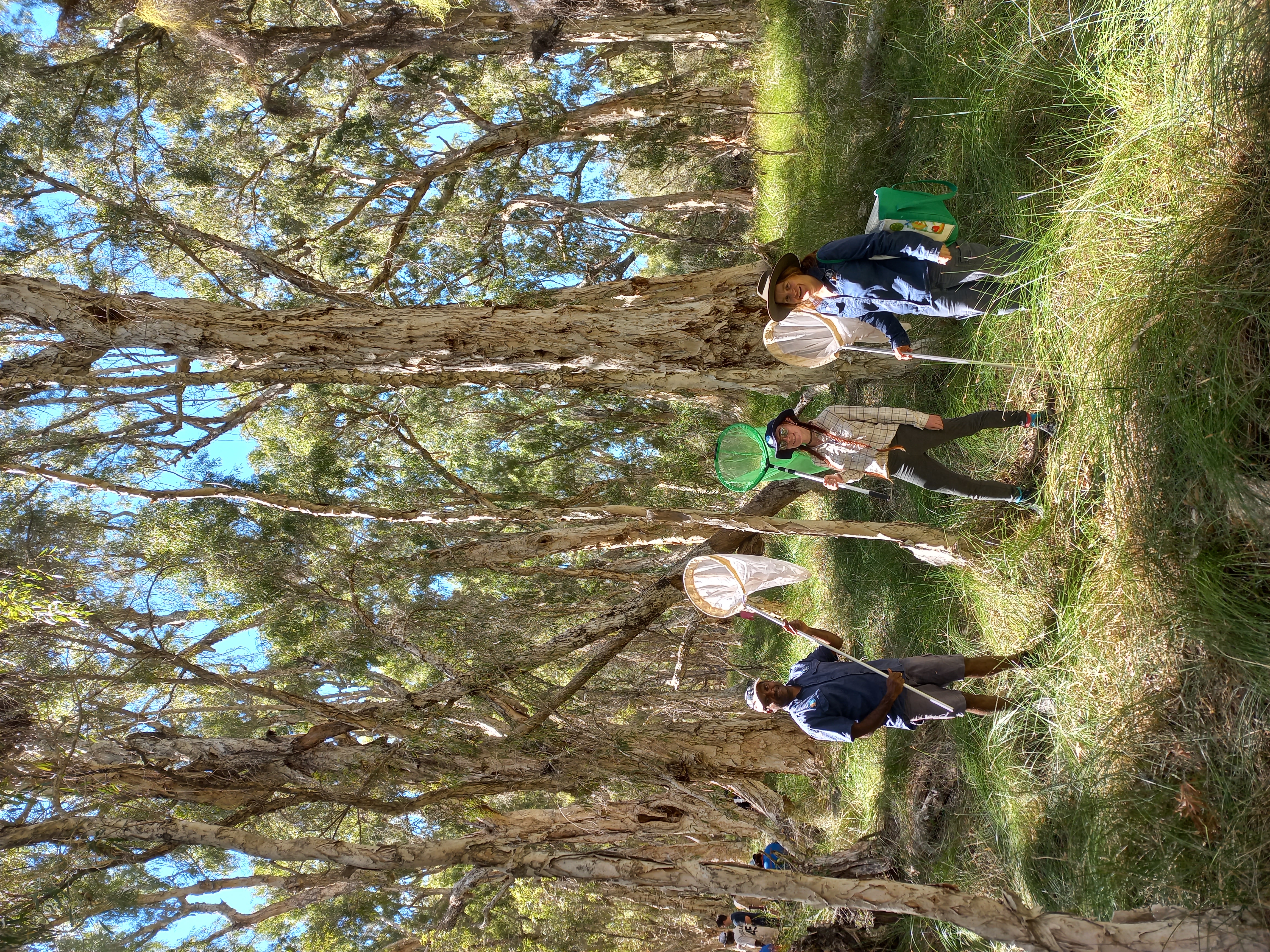
Recently I was fortunate enough to accompany Dr Kit Prendergast and Hayley Riccardo from the DBCA down to Eighty Mile Beach Marine Park and Walyarta Conservation Park - making our base at Pardoo Station.
Kit is the foremost expert on Australian native bees and together with the assistance of the Nyangumarta ranger team, we were on a mission to collect as many species as possible. My plum role was to identify what plants they were collecting nectar and pollen from.
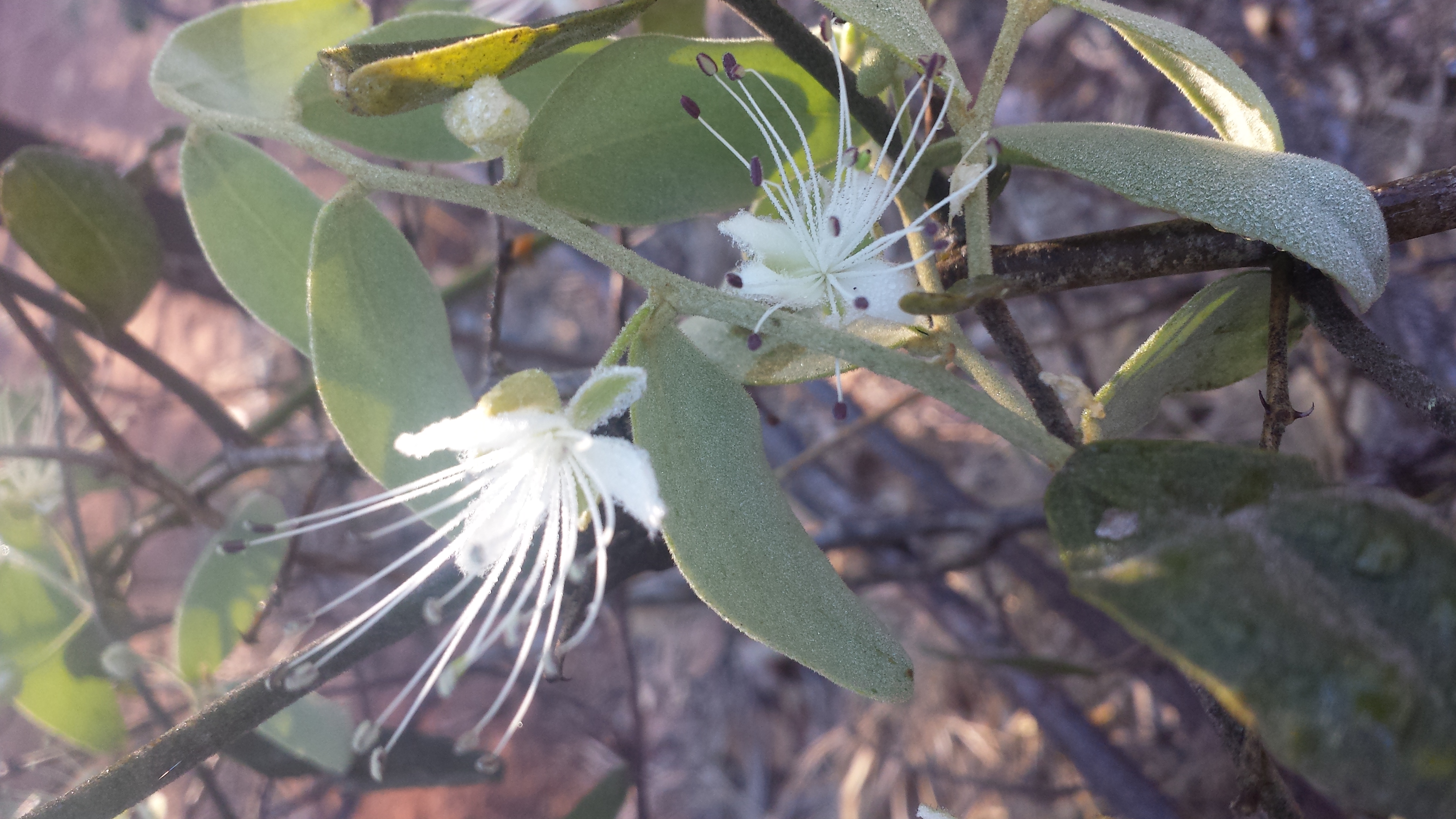
One of the plants the bees were feeding on was Capparis spinosa, a spiny shrub that grows to around two metres, with rounded bright green leaves and beautiful white blossomed flowers. I was interested to see if the chipolata sized and shaped fruit was a source of food as it is in Central Australia. Aboriginal people there wait for the green fruit to ripen to yellow, eating the sweet orange flesh and avoiding the bitter black seeds.
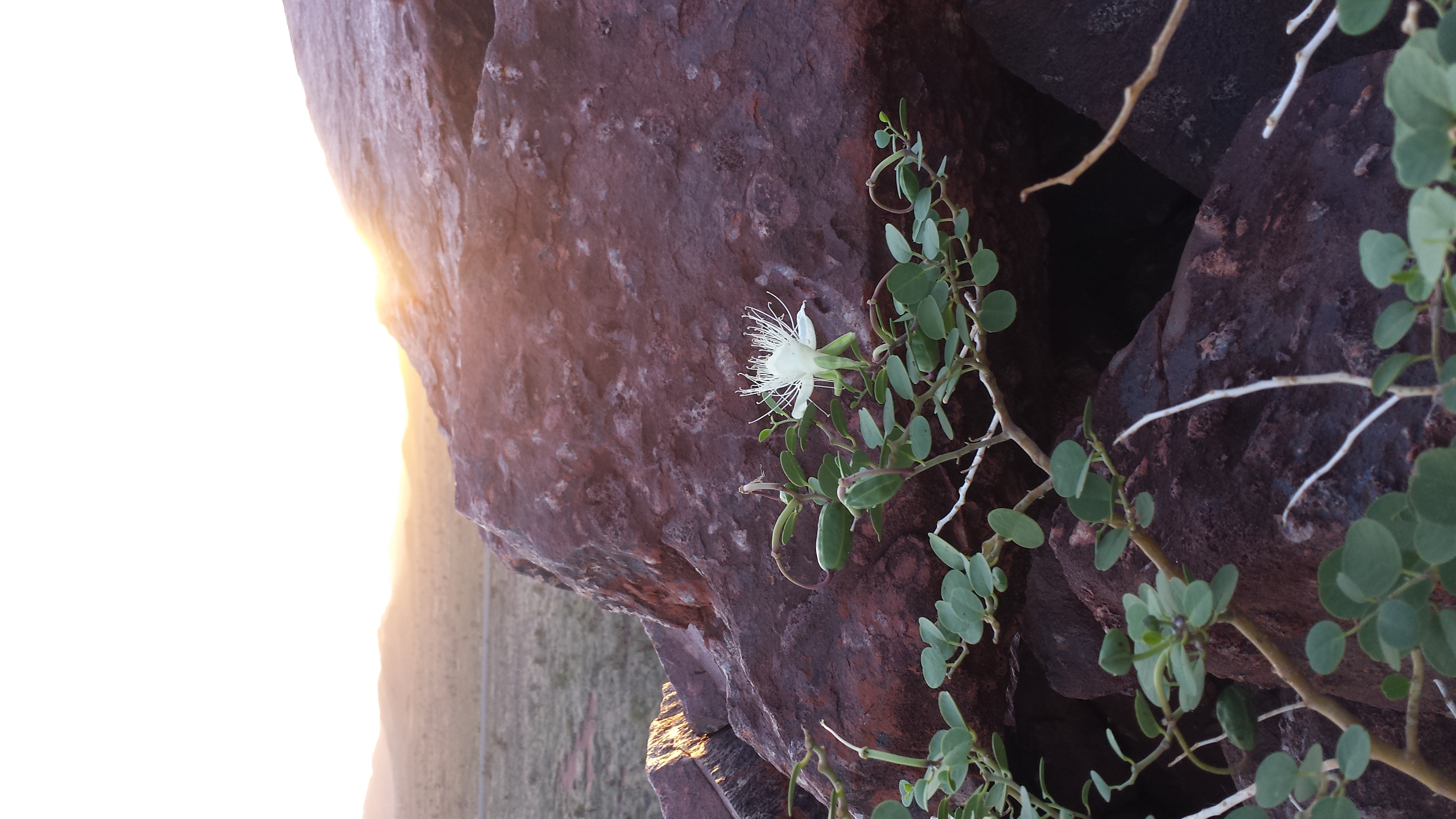
Capparis spinosa, caper bush or bush caper is found throughout the Mediterranean, the drier parts of Southeast Asia, some Pacific Islands and Australia. It is commercially grown and wild harvested to obtain the unopened flower buds known as capers. These are salted and pickled in vinegar and are widely available in supermarkets. I bought a jar of them just recently to add to a fresh salad, mine were imported from Spain but they could very well have been from Italy or Greece.
Archaeobotanical information and ancient literary sources have traced the use of capers (seeds, leaves and roots) for medicinal purposes and cosmetics back to Ancient Greece. Research into its medical properties are ongoing and it has been found to contain flavonoids a compound that promotes anti-inflammatory, anti-allergic and antioxidant activity.
As is the case with many edible native plants they are not always utilised as a bush food in all areas and Nathan, one of the rangers, informed me that this was the case with Capparis spinosa.
However, Nyangumarta and other desert groups do harvest the fruit of Capparis umbonata or wild orange, another member of the caper family. When the golf ball size fruit of this small tree (known in Nyangumarta as partntarlu) become soft they are ready to consume, again, you eat only the flesh. If fruit are still hard, they are buried and ripened in the hot sand.
Capparis make excellent garden specimens and are easily germinated from seed. The challenge starts with getting them big enough to plant out as they don't really like being confined to a pot. If you can get them through the first year in the ground, they'll reward you for years to come with a stunning floral display that attracts insects and birds alike. I particularly love Capparis lasiantha which uses it spines to climb my fence.
Before I sign off, an update on Kit and the team: We ended up collecting about 25 bees at least one unknown to science. It just goes to show how much is out there we don't know about and why it's important we continue to lobby for protection of our natural environment. Catch you all next edition!