If Willie Wonka had a tree in his backyard it would have to be the chocolate pudding tree.
When I read that you could grow chocolate pudding fruit in my part of the world, I took the plunge and planted a tree.
Four years on I was rewarded with my first fruit. They were green and hard and looked nothing like chocolate pudding. By chance I happened upon a story by Jerry Coleby-Williams of Gardening Australia fame who advised "pick the fruit when the calyx starts to lift, store until the fruit softens". So, I did and much to my delight they had a definite chocolate pudding flavour. Not quite the chocolate jaffa cake my daughter cooked me for my 40th but pretty good all the same.
The chocolate pudding tree or black sapote belongs in the Diospyros genus which in turn are members of the Ebenaceae family. The Greek 'dios' means divine or god-like while 'pyros' means wheat, a reference to the fruit of the gods. Another commonly cultivated member of the family the persimmon has reputably been cultivated in China for over 2000 years. Having now sampled both these delectable fruits I believe the genus is aptly named.
Diospyros species (collectively referred to as ebony) are also highly prized for their dense black hardwood. They have been harvested commercially as far back as the 17th century where the wood was used to create exquisite furniture pieces. Today it is a common source of black piano keys and chess pieces and is highly sought after in the woodturning trade.
Unfortunately, exploitation and unsustainable harvest worldwide has depleted some species to levels close to extinction in the wild and countries including Madagascar and Mauritius have now placed restrictions on wild harvest. However, the illegal trade of one of the world's most valuable woods continues with the market centred around China.
In my part of the world on the Kimberley's Dampier Peninsula where we have three species of trees commonly known as ebony, they too were harvested. Historical records vaguely refer to a partnership between Syd Hadley and Harry Hunter who indentured timber cutters at the turn of the last century to harvest sandalwood and ebony around One Arm Point. What quantity they harvested was never recorded.
Diospyros rugosula fruit are considered by the Bardi people to be poisonous, whilst fruit from the less common Diospyros maritima produces a natural orange dye used in other parts of the Kimberley, it too is considered inedible.
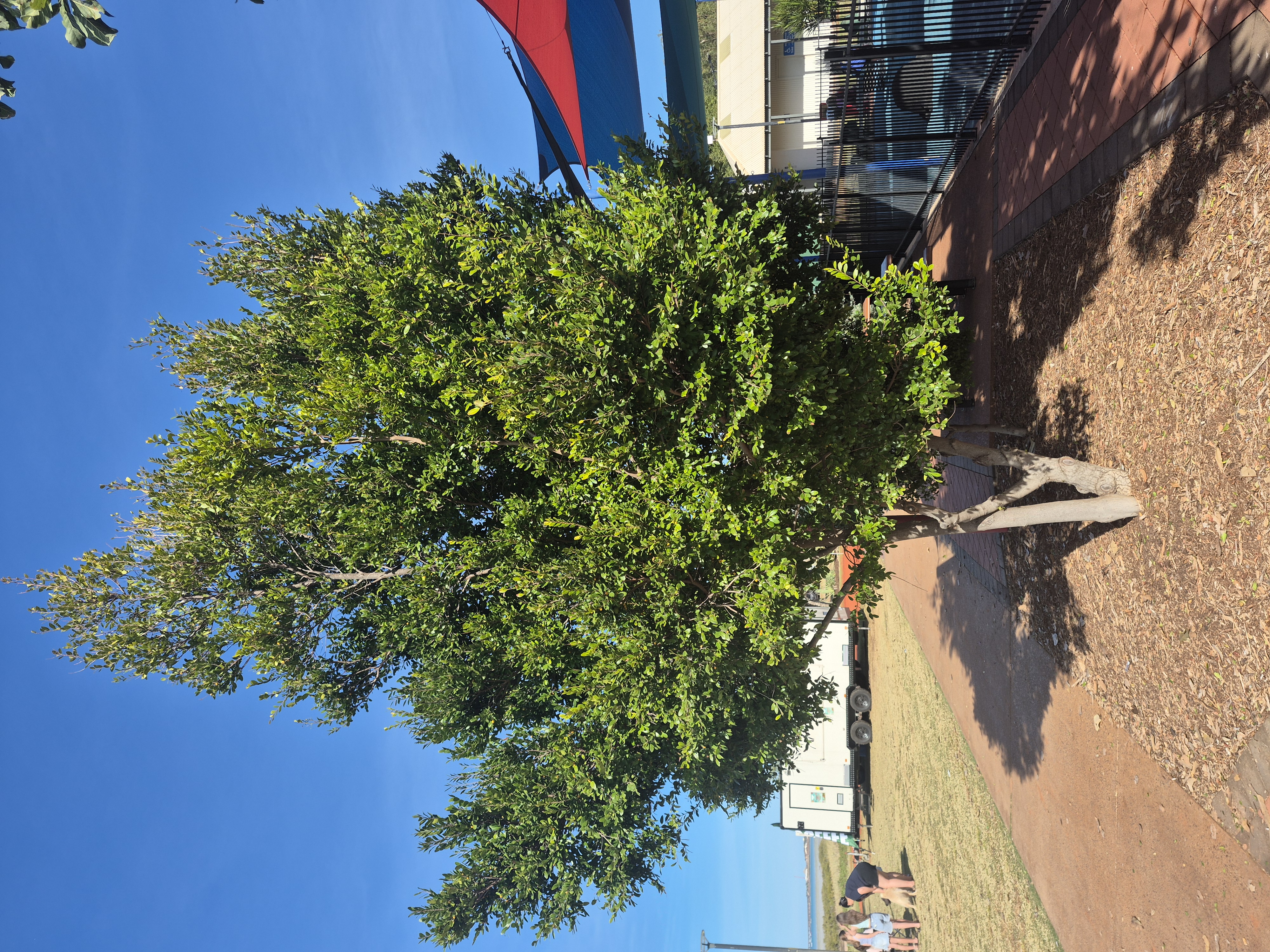
The third species Diospyros humilis is a commonly cultivated small tree with a dense covering of small bright green leaves. It makes a great screen, can be pruned to shape and in the late dry season produces pea sized yellow fruit that turn tangerine orange as the wet arrives. When ripe, the thin flesh around the seeds makes for a sweet snack but I advise to spit out the skin as it is slightly astringent.
All grow in monsoon vine thickets, can be grown easily from fresh seed and tolerate shade. With the weather starting to warm up and daytime and nighttime temperatures getting closer together now is a great time to get seed ready to sow.