


On August 1 the Australian Education Union launched a national campaign on the lawns of Canberra's Parliament House in a bid to secure full funding for public schools.
The campaign, which is aptly titled For Every Child, aims to secure full funding for all public schools by 2028.
For Every Child calls for funding which would allow public schools to reduce class sizes, increase one-on-one support and provide more time and classroom assistance for teachers.
AEU Federal President, Correna Haythorpe, said 98 per cent of public schools are funded below the Schooling Resource Standard (SRS), which is the minimum amount governments agreed a decade ago schools require to meet the needs of all students.
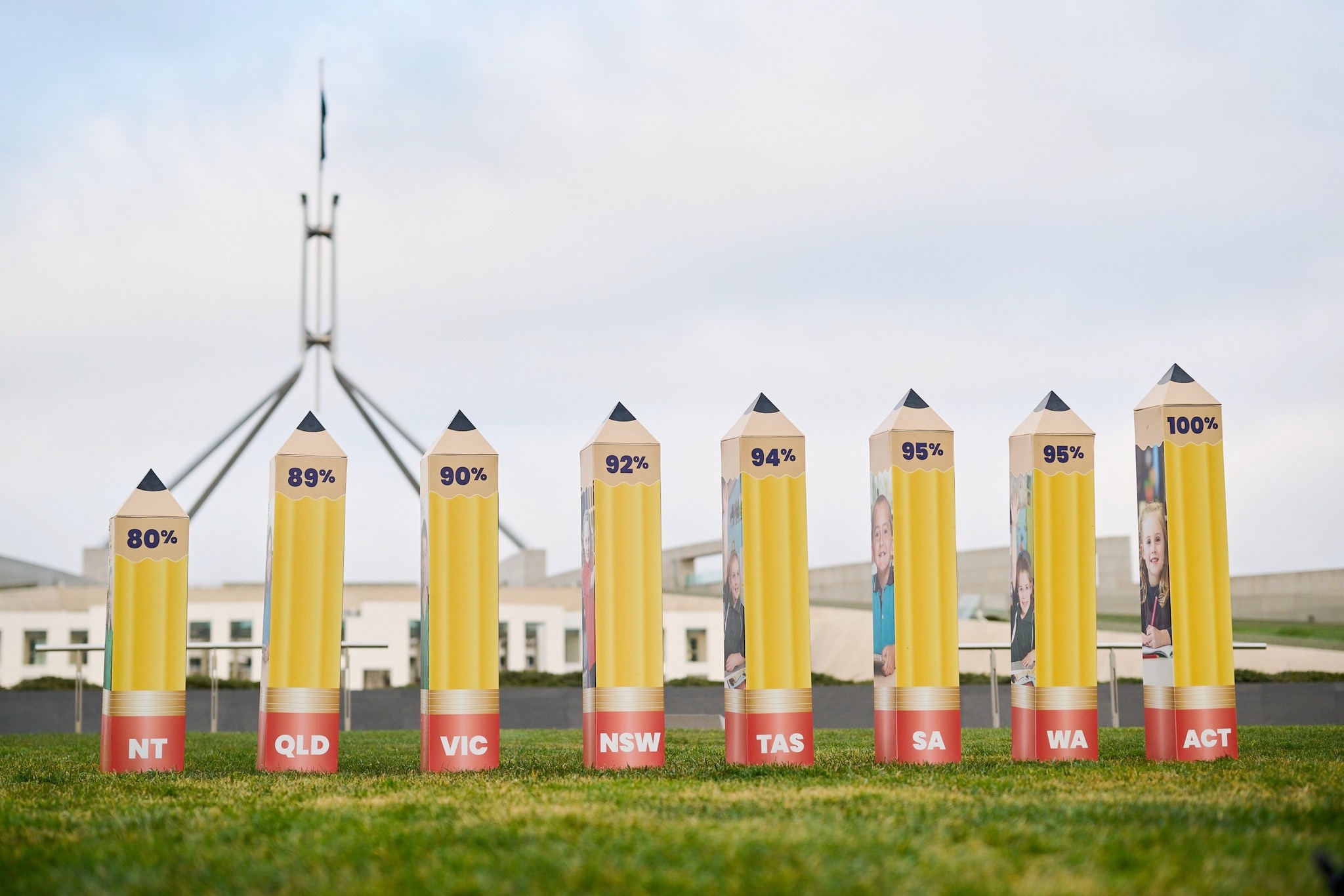
"Funding public schools at 100 per cent of the SRS is the only way to ensure every child gets every opportunity to succeed and we have the teachers we need for the future," Ms Haythorpe said.
"The needs of our children are growing but the funding from governments hasn't kept up. Principal and teacher workloads are unsustainable, and more and more teachers are leaving the profession early.
"Our children and teachers are giving 100%. We need the politicians to do the same."
The For Every Child plan includes results from a national survey of 7,808 teachers, principals and support staff which revealed a number of concerning trends.
They include 90 per cent of principals report teacher shortages in the last year – almost double the number that experienced them three years ago with two thirds of teachers say their workload has increased in the last year and less than 1 in 5 are committed to teach until retirement.
There are also worrying falls in student and teacher wellbeing, with over 70 per cent of principals saying there has been a decline in student wellbeing in the last 12 months.
Almost 90% of principals are taking funding from other areas of their school budget, such as maintenance, due to a lack of funding for students with disability, whose numbers have increased by 29 per cent since 2015.
The survey also found more than 90 per cent of teachers believe there are four key changes that would help them improve student outcomes: additional support for students with a disability or behavioural issues, more time for lesson planning, more classroom assistance and smaller class sizes.
Principals also indicated through the survey they believe children who have fallen behind in literacy or numeracy and those with a disability or learning difficulties are the ones who would benefit the most from full funding of public schools.
"We welcome the commitment of the Albanese Government to full funding of public schools but there needs to be a clear timetable established to achieve that by 2028," Ms Haythorpe said.
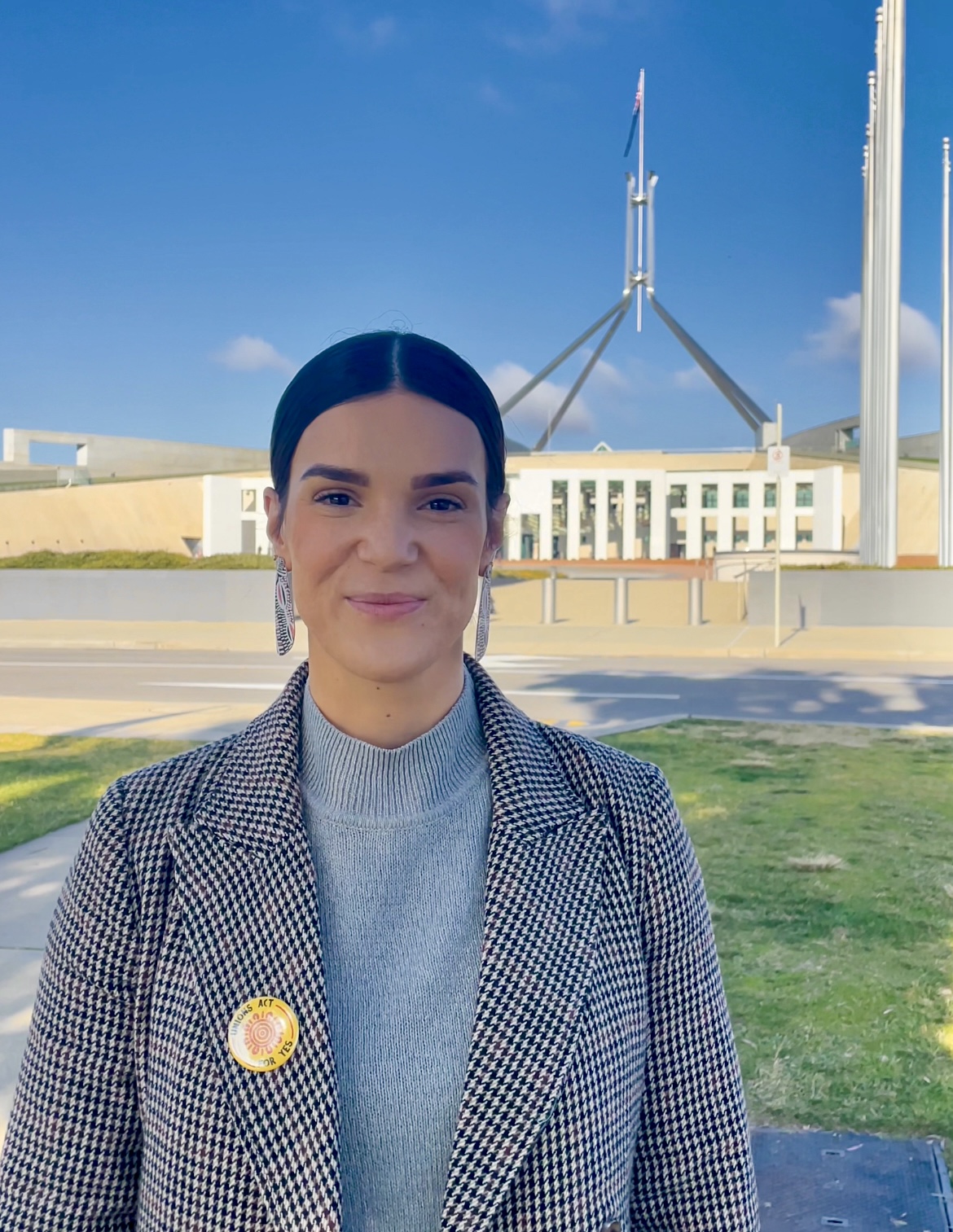
The National Indigenous Times spoke with proud Lardil and Worimi woman Alex Leon, who is the Yes Campaign Coordinator with the Australian Education Union, ACT Branch at last week's Parliament House rally.
"I believe that every child deserves to reach their full potential and that is through 100% full school funding," Ms Leon told National Indigenous Times.
Alex Leon speaking to National Indigenous Times from Canberra's Parliament House. (Video: Jess Whaler/National Indigenous Times)
"Currently across the nation one in ten students are underfunded in public schools and in the Northern Territory that is even worse, where one in five students are underfunded.
"ACT is the only jurisdiction that has 100 per cent funding."
As a former secondary school teacher, Ms Leon is passionate about equality in education and ensuring schools are culturally safe and adept.
"For me personally this is very close to my heart, I come from a long line of activists, my great grandfather Charles Lester Leon a proud Worimi man fought for the rights of our people to be able to go to non-segregated schools for their education," she said.
"My grandmother Roberta Felton who is a proud Lardil woman from Mornington Island was born into the Stolen Generations and went into the missionary on that island.
"Her education stopped at year four, and she was denied the education that we get now and we are so lucky to have because the people before me have fought so hard for that. She believed education was key and I agree."



