




Traditional Owners from across south-east Arnhem Land have used the 2026 Barunga Festival to build support for Indigenous-led water governance, collecting signatures on a petition calling for greater recognition of Aboriginal voices in decisions affecting the Roper River.
Members of the Ropa Woda Governance Council spent the long weekend speaking with festival-goers about the importance of protecting the river system and the aquifer which sustains it, while encouraging support for Traditional Owner-led governance arrangements.
The Council's information stall featured a petition urging the Federal Government to formally support the Ropa Woda Governance Council and recognise the role of Traditional Owners in planning for and protecting the waters that have sustained communities across the region for thousands of generations.
The campaign builds on the Ropa Woda Governance Council Declaration, launched in May 2025, which called for Traditional Owners to be given formal roles in decision-making processes relating to water management across the Roper River catchment.
Representatives attending Barunga Festival included Cecilia Lake from Mangarrayi Country, Melissa Andrews-Wurramarrba from Alawa Country, Rembarranga Elder Miliwanga Wurrben and Karlisha Ponto from Mangarrayi Country.
The Council was established in May 2025 when Traditional Owners representing the 13 clan groups of the Roper River catchment came together to create a unified voice for water governance and to develop the Ropa Woda Governance Council Declaration.
For Council members, the festival provided an opportunity not only to gather support but also to listen directly to community concerns and share their vision for the future of the river system.
Melissa Andrews-Wurramarrba said many people attending the festival were eager to learn more about the work being undertaken by Traditional Owners.
"We're giving people more information and understanding about why we're here, why we're protecting the water, why it's important to us," she said.
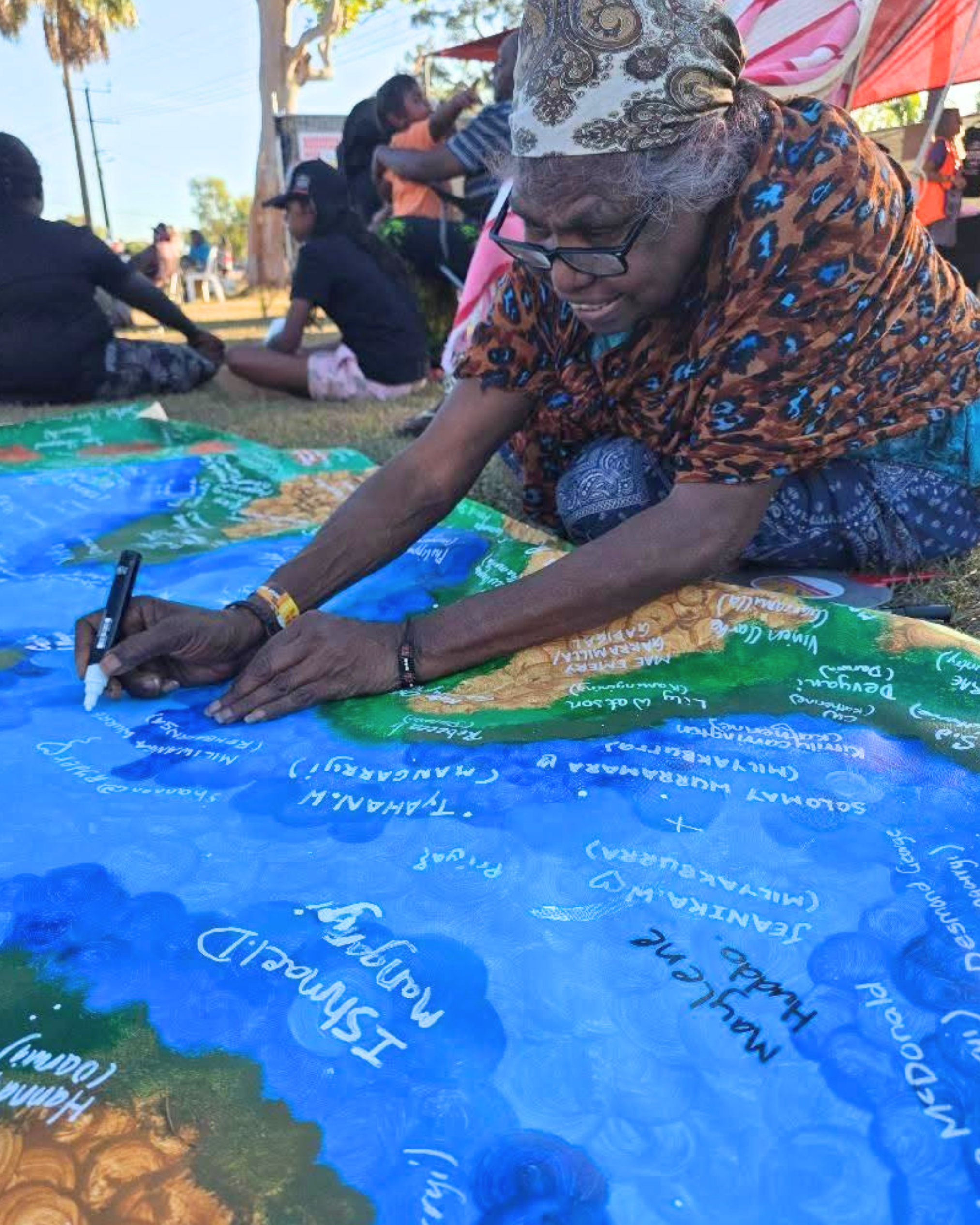
The response from festival-goers was overwhelmingly positive, with both Aboriginal and non-Indigenous Territorians adding their names to the petition.
"There's been a lot of Traditional Owners signing the petition and a lot of munanga mob [non-Indigenous people] too. The support has been really great so far," Ms Andrews-Wurramarrba said.
A key focus of the campaign is raising awareness about the environmental challenges facing the river system and the importance of safeguarding the aquifer that feeds the Roper River.
"A lot of people living in the Northern Territory don't know what's happening with the aquifer that feeds the river. This is why we're here to inform people about the issues impacting the Roper River," Ms Andrews-Wurramarrba said.
The Roper River is one of northern Australia's most significant river systems, supporting communities, cultural practices, biodiversity and economic activity across a vast area of south-east Arnhem Land. For Traditional Owners, water is intrinsically linked to culture, identity, knowledge systems and responsibility to Country.
Council members say ensuring Traditional Owners have a meaningful role in water governance is essential to protecting both cultural values and environmental sustainability for future generations.
The campaign also highlights the importance of passing knowledge to younger generations and ensuring they can see Traditional Owners actively leading efforts to care for Country.
"It's also important to show young people that we are working together to protect the river as this is part of sharing Indigenous knowledge, protecting our traditional lands and waters," Ms Andrews-Wurramarrba said.
With support continuing to grow, the Council is already looking beyond Barunga Festival and considering how the petition can be used to elevate the issue nationally.
"We're thinking of taking the petition down to Canberra later in the year," Ms Andrews-Wurramarrba said.
As pressure on water resources across northern Australia continues, the Ropa Woda Governance Council is calling on governments to move beyond consultation and recognise Traditional Owners as decision-makers in the future of the Roper River.
The signatures gathered at Barunga are about more than a petition. They represent a growing movement of Traditional Owners demanding a seat at the decision-making table on matters that directly affect their lands, waters and futures.
Through the petition, Council members are inviting Territorians and Australians alike to stand alongside the 13 clan groups of the catchment and support a governance model grounded in cultural authority, intergenerational knowledge and responsibility to Country. As the Council prepares to take its message to Canberra later this year, members hope governments will listen to the people who have cared for the Roper River for millennia.
For the Council, protecting the Roper River is not simply about water management. It is about safeguarding culture, communities and future generations. The message from Barunga is clear: the time for Traditional Owner-led water governance is now. Nothing about our waters, without us.



