


The respect Glenn James once earned from players born of a different era across Australia's Indigenous game when racism continued to thrive on the football oval was the same level of respect the umpire observed from the game's first Indigenous figure.
But footballer turned pastor Sir Doug Nicholls – the name behind the AFL Indigenous Round – was more than a faded memory or a footnote consigned to history for James.
The Yorta Yorta men's lives crossed paths on Country amid a test of their faith.
"He was a minister of the church, and he used to come to Mooroopna to preach the word to Indigenous people," James once recalled to the Herald Sun of their 1950s life.
"I was eight or nine, and Mum and Dad would pay for a cab to take us (to see him) on Sunday night.
"They had little money, but they thought it was so important to hear him speak.
"Before that he lived on the river at a mission at Barmah and he would row his boat about eight miles (around 13 kilometres) and someone would pick him up on a bend to take him to play footy for Tongala."
James admired his playing nous in one of Victoria's bush leagues nearly 20 years since his last appearance for Fitzroy in 1937, almost as much as his ability to unite the mob towards a growing social movement.
As one football career wound down while another one would grow, it has taken seven more decades for James' name to be uttered in the same breath as his childhood hero.
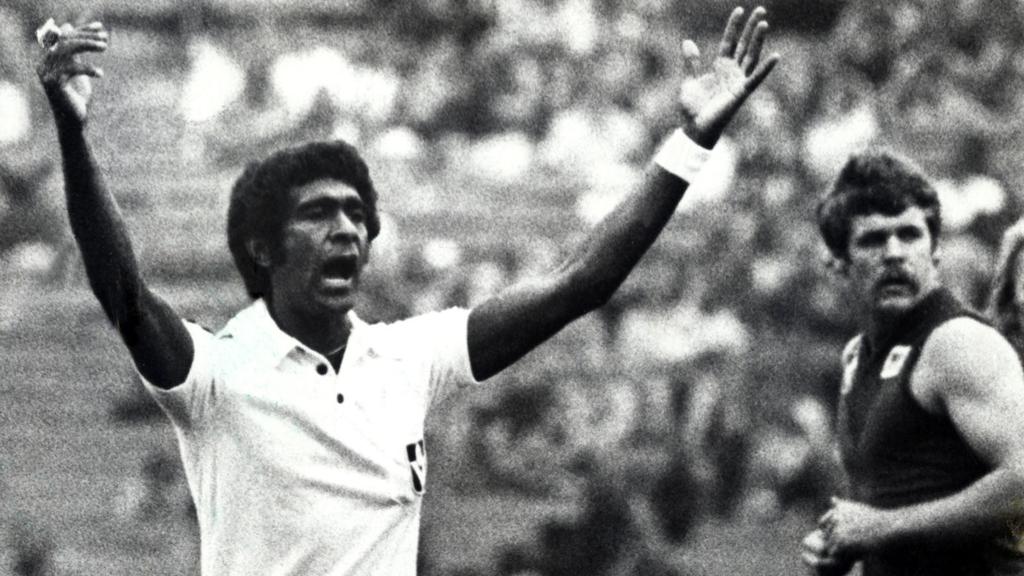
The first – and so far, the only – Aboriginal whistleblower of the VFL/AFL era has been named the Sir Doug Nicholls honouree for this year's Indigenous Round, the National Indigenous Times can reveal.
"(Sir Doug) was a great advocate for Aboriginal people," James previously said years before the honour.
"It's so appropriate to have his name associated with (Indigenous round) because he was our warrior for his whole life."
James' recognition that follows nationwide Aboriginal greats comes after his Order of Australia Medal for services to the game in 1987.
The honouree comes for the 75-year-old, who never kicked a Sherrin from 1977 to 1985 but rather held the ball aloft to the sounds of the siren and cries of VFL crowds.
James, who umpired the 1982 and 1984 VFL grand finals, walked away from playing years earlier after an assailant broke his jaw in the rough and tumbles of bush footy.
But somehow, he rose above that incident and the abuse that was commonplace in his day to possess a sharp wit and a thicker skin while officiating to slowly win over the predominant white players in the big league that were under his control.
"That was basically it – I don't know exactly where my temperament came from," he said.
"I think it was from my grandfather because he was such a placid man.
"I did cop it a lot, but it was in my life from the time I walked down the street.
"I loved umpiring in the country in my younger days.
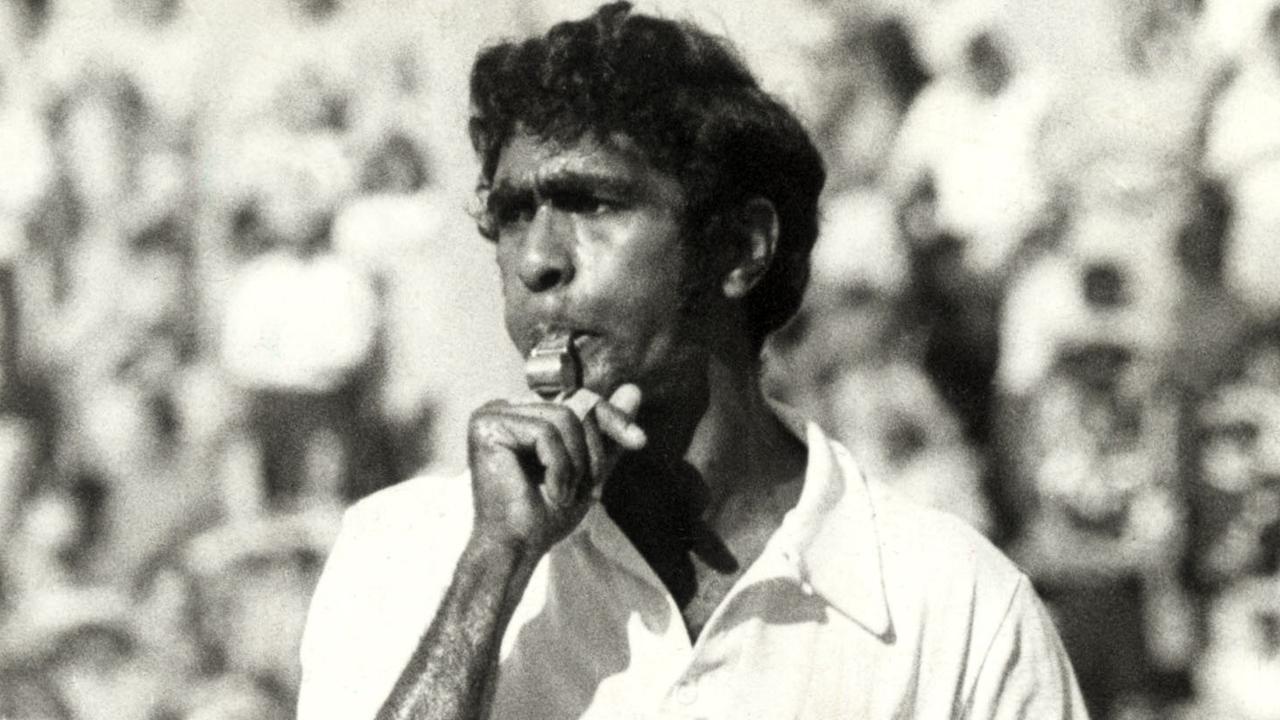
"It was fantastic and the people were just great."
James grew up in humble circumstances, one of 13 siblings, beginning life in a shanty on a riverbank near Shepparton.
As a 22-year-old Aboriginal man, he was conscripted to the Vietnam War and in 1968 faced combat immediately – just a year after legally becoming an Australian citizen.
The experience, James once said, left him out place as one of just two Aboriginal men in Puckapunyal training.
"We got shuffled around like bags of sand," he said.
"It seemed not quite right for us to be in the army – some of the guys took a while to get used to have an Aboriginal guy around them.
"But the camaraderie when you are out in the bush when people are shooting at you changed everything – and then we stuck together."
He returned a different man – completing a Bachelor of Education towards a teaching diploma – and after retiring from umpiring, the well-regarded educator also carried immense credibility on his standing across Indigenous social issues.
That has evolved to consulting for the Koori Court over troubled Indigenous youth.
"I think it's the mistreatment they get – just being black," James said.
"They think they will get the same stuff on the footy field, so there is a barrier and that's a pity."



