


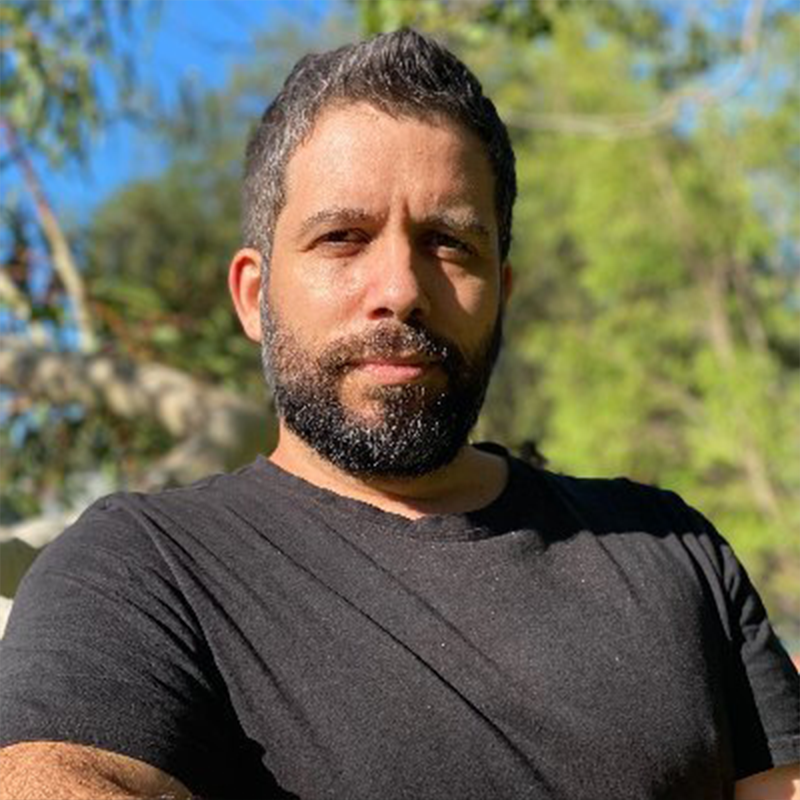

First Nations community leaders have joined calls for a formal investigation into allegations made by the former head of the ACT Office of Aboriginal and Torres Strait Islander Affairs, Brendan Moyle, that senior officials within the ACT Public Service intentionally blocked work on the government's commitments to First Nations people, and ignored serious concerns about the psychosocial impact this had on Aboriginal and Torres Strait Islander public servants.
Mr Moyle's allegations surfaced after a freedom of information request lodged by independent MLA Thomas Emerson released a trove of briefs and correspondence showing Mr Moyle had raised significant concerns internally for more than two years prior to his resignation in November 2025.
'What has been described is unfortunately not surprising'
Local First Nations community leader, Joe Hedger, said on Tuesday that trust could not be rebuilt without a proper investigation and real accountability.
"The issues raised in the recent reporting about the treatment of First Nations staff within the ACT Public Service should concern anyone who is serious about improving outcomes for our community," Mr Hedger said.
"For many of us who have worked closely with government, what has been described is unfortunately not surprising. First Nations public servants are often asked to provide cultural advice and community insight, yet too often that advice is questioned, diluted or ignored by senior decision-makers.
"The Minister for Aboriginal and Torres Strait Islander Affairs has said the government takes these matters seriously. But there is a clear difference between saying something is taken seriously and demonstrating that through action."
Mr Hedger said if these issues were being addressed seriously, experienced First Nations leaders like Mr Moyle would not "feel they have no option but to walk away".
"Situations like this expose a deeper problem — a lack of trust in the expertise and advice of First Nations professionals. When culturally informed advice is sidelined, it undermines the very policies government claims it wants to deliver," Mr Hedger said.
"It also helps explain why progress against Closing the Gap has been so limited. You cannot expect better outcomes for First Nations people if the voices of First Nations professionals inside government continue to be ignored.
"If government is serious about rebuilding trust and delivering real change, it must start by listening to First Nations voices and acting on the advice it receives. Otherwise, statements about commitment risk becoming little more than hollow words."
'Many moments of frustration and despair'
Former ACT Aboriginal and Torres Strait Islander Elected Body (ATSIEB) Chair, Tanya Keed, said she had felt voiceless when engaging with the ACT Government despite being a democratically elected representative for First Nations residents of the Territory.
"As previous ATSIEB Chairperson, there were many moments of frustration and despair," Ms Keed said on Tuesday.
"There has to be a hand-on-heart willingness to progress the Closing the Gap commitments. All those targets matter.
"I felt like my voice and contributions were fading to where it was extremely isolating and meaningless."
Ms Keed noted that the Minister responsible for Indigenous policy in the ACT "is only as productive as the information that's provided to them".
"When people think of racism they think of the colour of skin, but racism also lies deep within policies and practices," she said.
"Canberra was the only place that voted 'Yes' to the Voice. The ACT Government needs to show up for us and the many who felt our voice is important in the ACT."
'We can no longer just be advising; we have to be the decision-makers'
Former ATSIEB Deputy Chair, Paula McGrady, said Mr Moyle's allegations reflected challenges she faced in getting traction on government commitments under signed agreements during her time on the Elected Body.
"The most frustrating part of the local and national agreements on Closing the Gap is the time lost and the time left, with the last phase of the ACT Agreement ending in 2028," Ms McGrady said.
"The agreements articulate, word for word, how to address the disadvantage we experience as First Nations people.
"We are the experts on our lives and we want to close the gap more than anyone. We can no longer just be advising; we have to be the decision-makers."
Ms McGrady asked why - "in such a small jurisdiction as the ACT, with a democratically elected voice for our community" - Indigenous people are "still experiencing racism at such harmful levels, both overtly and institutionally".
"We need to see improvements in life outcomes that give us hope for the next generation. There has to be accountability for those standing in the way of progress for our people," she said.
A call for immediate action
Mr Emerson has called for the Chief Minister to launch a formal investigation with public findings and appropriate consequences for those responsible.
He said the matter could be referred to oversight authorities including the Integrity Commission, the ACT Ombudsman and the Public Sector Standards Commissioner.
"The Chief Minister signed the ACT Aboriginal and Torres Strait Islander Agreement in 2019," Mr Emerson said.
"Faced with allegations that senior public servants have operated in ways that are 'completely contrary to' the terms of that agreement, I'm struggling to understand why the Chief Minister hasn't already asked the Integrity Commission or ACT Ombudsman to investigate this matter."
In December, the ACT became the first state or territory to legislate its commitments under the National Agreement on Closing the Gap by embedding the provisions of the agreement in the laws that govern the responsibilities and reporting obligations of the public sector, with the passage of Emerson's Public Sector (Closing the Gap) Legislation Amendment Bill 2025.



