




Ira Hamilton Hayes, a young Akimel O'odham war hero, has been immortalised in one of history's most famous photographs, honoured by an imposing memorial statue in Arlington, depicted in major Hollywood films, and celebrated in a folk song made famous by Johnny Cash – but he died at the young age of 32 of alcohol poisoning and exposure to the cold.
The Akimel O'odham nation, also known as Pima, are a group of Native Americans living in an area consisting of what is now central and southern Arizona, USA, as well as northwestern Mexico in the states of Sonora and Chihuahua.
Mr Hayes, from the Gila River Reservation in Arizona, enlisted in the Marine Corps Reserve in 1942. He landed at the Japanese island of Iwo Jima on D-day in February 1945 and fought there until the end of March.
It was on Iwo Jima that Private 1st Class Hayes, part of the 28th Marine Regiment of the 5th Division, raised the United States flag alongside Sgt Michael Strank, Corporal Harlon Block, Private 1st Class Franklin Sousley, Private 1st Class Rene Gagnon and Pharmacist Mate 2nd Class Jack Bradley.
Associated Press photographer Joe Rosenthal was present to photograph the men and create an image that has become iconic, with the young Native American soldier on the far left of the group raising the flag.
Sgt Strank, Cpl Block and Pvt Sousley died in battle just three days later. Sgt Strank, 25, was the eldest in the group.
Mr Hayes, just 22, saw some of the most horrific and brutal fighting in history. He received the Asiatic-Pacific Campaign Medal with four stars, American Campaign Medal, and the World War II Victory Medal.
The three surviving young men were thrust into the spotlight by the photograph and travelled around the United States campaigning to sell bonds to raise funds for the war effort.
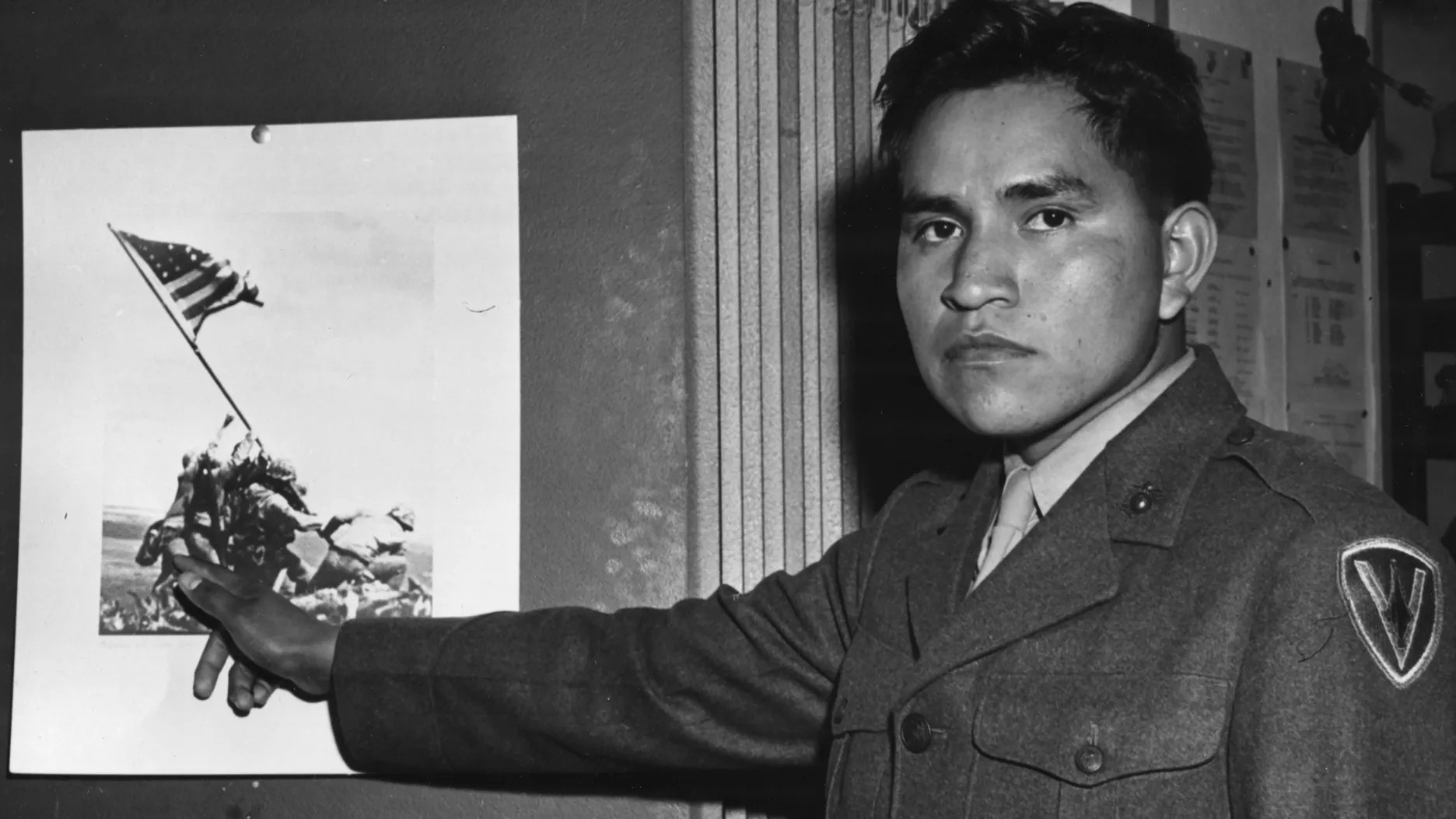
Pvt Hayes was promoted to Corporal and ultimately met presidents Harry Truman and Dwight Eisenhower who thanked him for his service, but after the war bond tour he returned to the reservation and worked jobs including picking cotton.
The trauma of the war and the guilt of surviving when so many of his comrades had died weighed heavily on him.
In May 14, 1945, the Boston Daily Globe quoted Mr Hayes saying: "How can I feel like a hero when I hit the beach with two hundred and fifty buddies and only twenty-seven of us walked off alive?"
The young Akimel O'odham man appears to have suffered from Post Traumatic Stress Disorder and received no mental health care and no dedicated support for veterans.
On 10 November 1954, Mr Hayes attended the dedication ceremony of the Marine Corps War Memorial in Arlington, Virginia, modelled on Joe Rosenthal's photo.
Less than three months later, on 24 January, 1955, he was found dead from alcohol poisoning and exposure to the harsh winter cold.
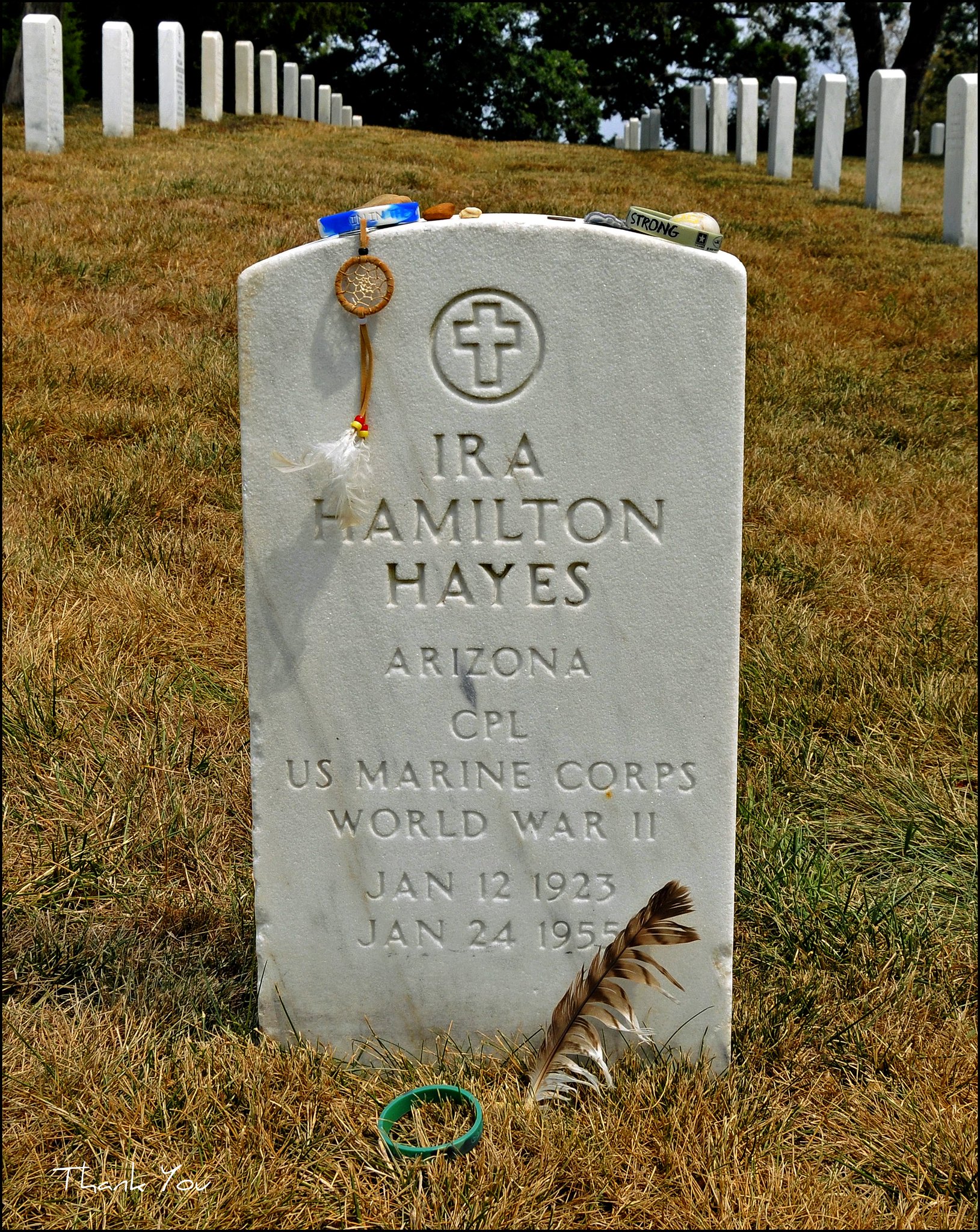
Native Americans volunteered to fight in the Second World War in extraordinary numbers and were significantly overrepresented in the US forces that confronted the greatest threat humanity had ever faced.
American Indian Code Talkers played a vital role in the war, and were among some 25,000 Native Americans who served in the conflict.
Mr Hayes' tragic end resonates on the other side of the Pacific. For decades those Aboriginal and Torres Strait Islander servicemen who served in Australia's armed forces and returned home did so to a country which still did not recognise their humanity, their rights or their culture. Indigenous servicemen were excluded from RSL clubs and events, and even denied proper military graves.
One Royal Australian Naval hero had his daughters removed from his family while he served in the Second World War and was never told where they were. Another, George Bennett, fought in Europe in the First World War and received no recognition, later being arrested for disorderly conduct and dying in jail after two days in custody.
Native American advocates, like Aboriginal and Torres Strait Islander families and community leaders in Australia, are working to ensure their veterans are properly remembered, respected and cared for.
The author travelled to the United States with the support of the US Government.



