




Shanita Yunupingu is a name which carries strength, purpose and deep cultural responsibility.
A proud Yolŋu leader from North-East Arnhem Land, Ms Yunupingu is shaping the future of land and sea management through her work with the Dhimurru Aboriginal Corporation, where she leads the Miyalk Rangers with quiet determination and powerful impact.
Now, her work is being recognised on a broader stage, named a finalist in the Regional and Rural Initiative Award at the NT Young Achiever Awards, a reflection of the impact she is making across community, culture and conservation.
As team leader, Ms Yunupingu stands at the intersection of culture, conservation and leadership. Her work is not just about protecting Country, it is about honouring it.
From overseeing marine turtle conservation to leading compliance patrols, she ensures that Yolŋu knowledge and practices remain at the centre of how land and sea are cared for. Her leadership has strengthened both environmental outcomes and cultural continuity, reinforcing the importance of Indigenous-led solutions.
For her, this work is deeply personal.
.jpg)
"Protecting Country is about responsibility, identity, and deep connection," she said. "It's caring for land, sea, and songlines so they stay strong for our future generations, just like our old people taught us. It means listening to cultural authority and walking in the knowledge passed down to us."
"As a Yolŋu woman Ranger, this guides how I lead. I make sure our work is grounded in culture first, so our Rangers understand the meaning behind what we do, not just the task.
"Dhimurru was built by our old people, and as a fourth-generation Ranger, it's my responsibility to carry that legacy forward. I lead by example, knowing my ancestors walk with me and guide the way."
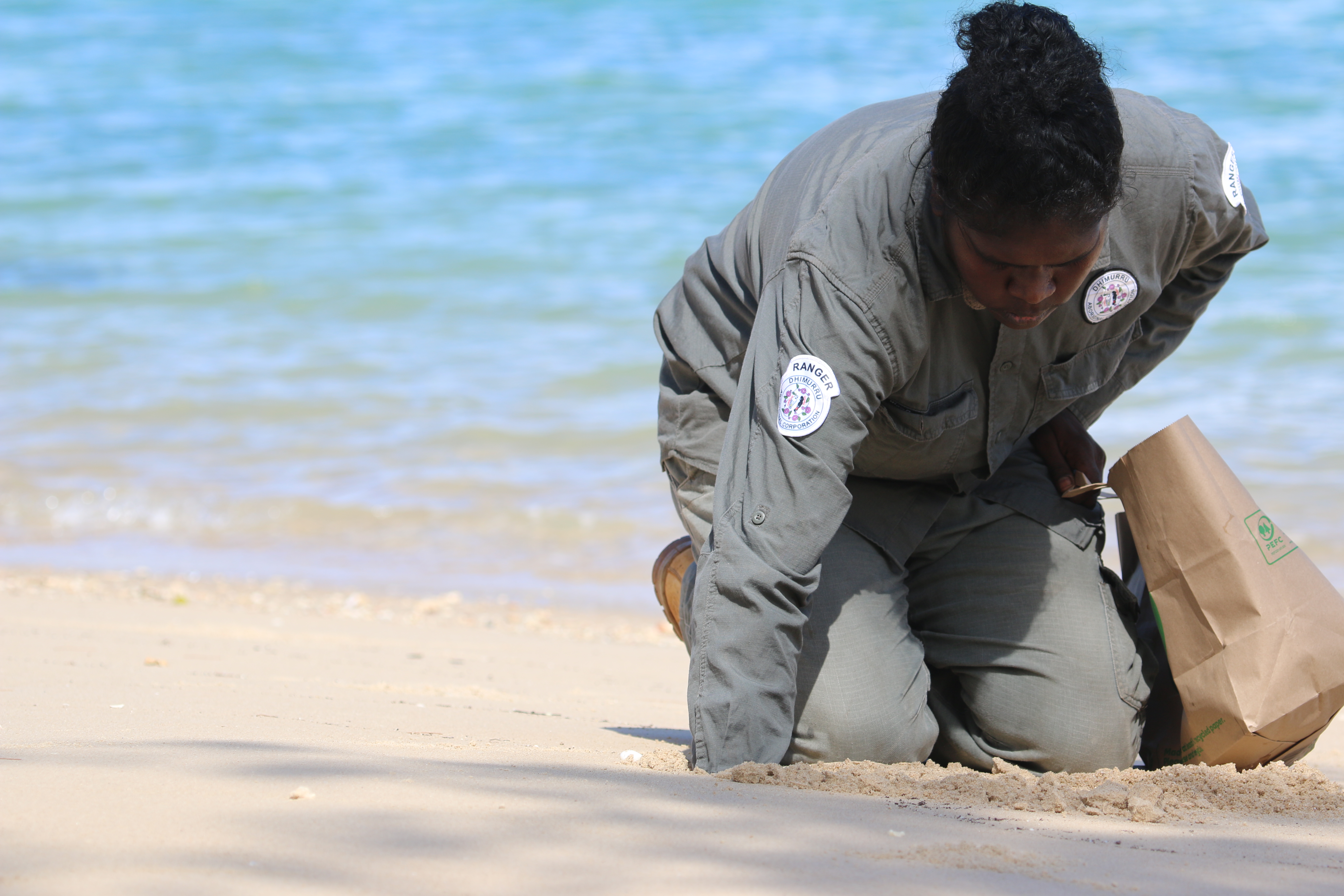
One of Ms Yunupingu's most innovative contributions has been her work in turtle conservation. Recognising the growing threat of plastic pollution and ghost nets, she pioneered the use of recovered waste materials to create protective nest shelters.
"The idea came from seeing two problems on Country at the same time, ghost nets washing up on our beaches and the need to better protect turtle nests from predators including my own people," she said. "Instead of just removing the nets, we thought about how we could reuse them in a way that benefits Country."
"Using ghost nets for nest protection has been practical and culturally meaningful, turning harmful waste into something that supports life. On the ground, we've seen improved nest protection and stronger engagement from Rangers, because they can see the direct impact of their work."
Beyond conservation, Ms Yunupingu is deeply committed to building the next generation of female leaders.
"As a Yolŋu woman leading other women Rangers, creating pathways is about lifting each other up and strengthening our communities," she said. "When women are supported into these roles, they find their voice and step into leadership in a strong, cultural way."
"I've seen it firsthand in myself, and in our team; women who were once quiet are now leading on Country, speaking with confidence, and guiding others. That growth flows into our families and community."
Ms Yunupingu's advocacy extends far beyond Arnhem Land. Representing her community on national and international stages, including the Global Plastics Treaty negotiations in Geneva, she continues to speak with clarity and purpose.
"When I represented my community, including in Geneva, I carried a strong message, that our Yolŋu knowledge systems are not just cultural, they are powerful and essential in caring for Country today," she said. "We are not just part of the conversation, we are leaders in this space."
"What I brought back was perspective and connection. Meeting Rangers from other countries showed me we face the same challenges just different places, but similar struggles and shared responsibility."
Ms Yunupingu's journey has not always been easy, but it is one grounded in growth and courage.
"My advice to young First Nations women is to believe in yourself and take that first step, even if it feels uncomfortable," she said. "You don't have to be loud to lead, just be grounded in who you are, stay connected to culture, and keep learning."
"One thing that stayed with me is the 'rock and sand' lesson. The rocks are your family and your work, the things that matter most. The sand is everything else. If you fill your life with too much sand, there's no room left for your rocks."
Shanita Yunupingu is more than a Ranger. She is a protector of Country, a mentor of women, and a powerful voice for her people.
Through her leadership, she is not only caring for the land and sea, she is securing a stronger future for those who will walk it next.



