




Policies focusing on improving the lives of Indigenous people across the country have been largely missing from Coalition campaigning 12 days into the election campaign.
Since the election was announced last Saturday, a quiet first week has given way to the Coalition backtracking on plans to force public servants back into the office—blaming a Labor scare campaign—and mirroring many of the policies announced by the government.
Senator Jacinta Nampijinpa Price, the opposition spokesperson for Indigenous Australians, was the face of the No campaign during the Voice referendum.
However, despite several high-profile figures on the right calling for the NT Senator to have a greater role in this campaign, she has largely focused on her home jurisdiction, talking to many people across the communities she grew up in.
Nevertheless, she told Sky News this week she will "absolutely" be getting around to other parts of Australia when she gets the time.
The senator is scheduled to visit the WA town of Bunbury on Friday.
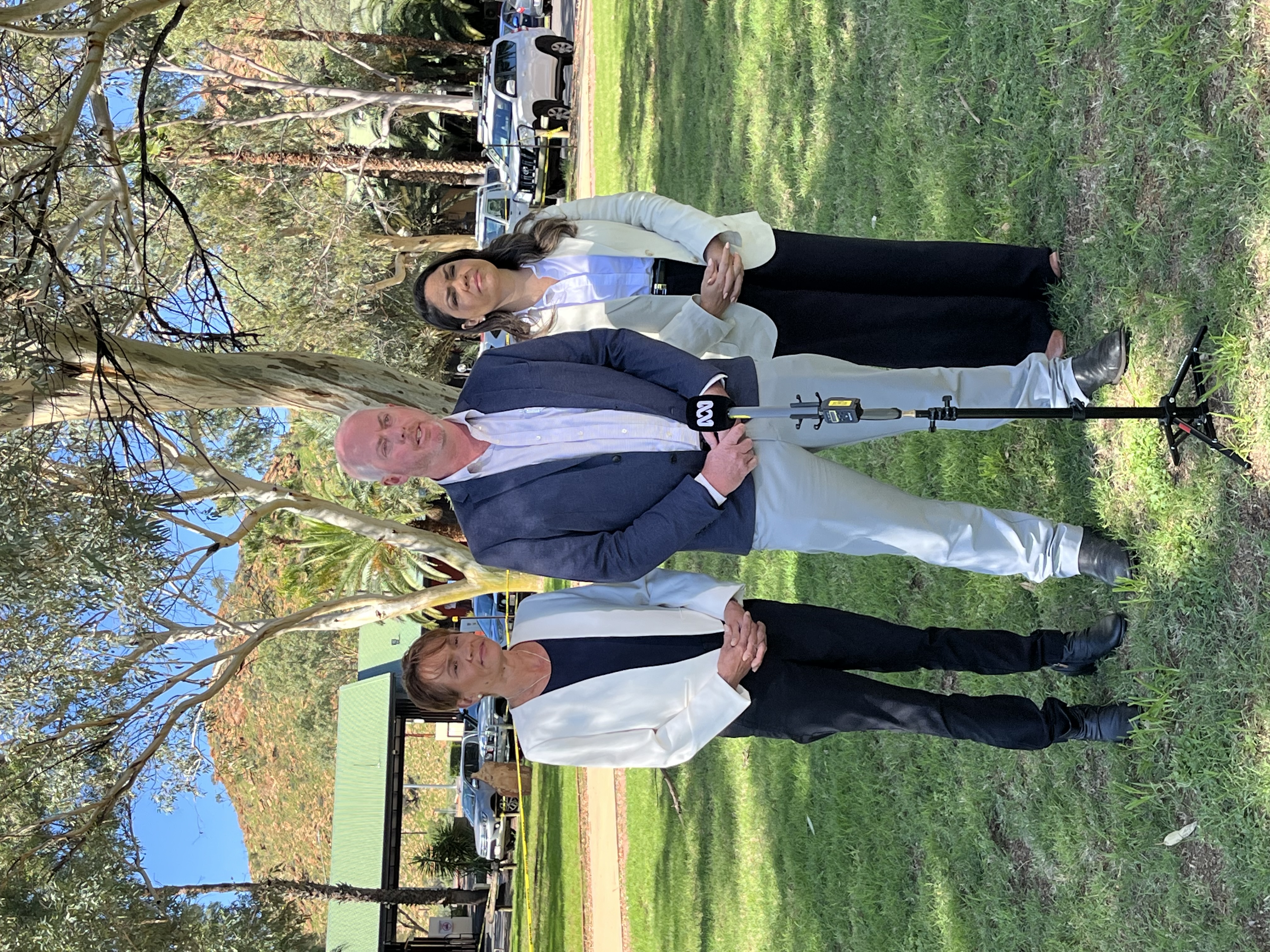
Given a "government efficiency" portfolio in January as a solution to help crack down on "wasteful spending", Senator Price has routinely said a Coalition government would implement an audit on Indigenous organisations to ascertain if money is being spent effectively and efficiently for First Peoples, as well as an audit into sexual abuse in remote communities.
Despite this, concrete policies have remained largely absent. A $10 million commitment to support CareFlight in acquiring an additional King Air B250 aircraft to service the Top End better mirrored a Labor announcement a day earlier, as did health commitments after the budget for Medicare and the PBS.
Speaking in Alice Springs on Tuesday, Senator Price argued funding announcements by the government for Central Australia were not effective—labelling it government welfare—and comparing parts of the region to a "third-world country".
"They [Labor] can talk a big talk, but we haven't seen the action; we haven't seen it play out on the ground," she said.
"What we see is welfare dependency. We see socialist enclaves in remote communities. Why should we have this double standard across this country, such as Australia?"
On the Coalition's position to help Indigenous people, she added: "We're about reform, we're about change, we're about improving the lives of all Australians, but particularly those most marginalised in remote Australia."
Senator Price has also said the Coalition routinely promotes "practical solutions" that would encourage "economic independence for Indigenous Australians, especially through the private sector, away from dependence on government".
"We are committed to providing real jobs and training for Indigenous Australians and to ensuring that mutual obligations exist, as Australians would expect to see in any kind of jobseeker program," she told The Saturday Paper.
However, not everyone agrees.
Whilst her statement on abuse in communities has been met with widespread criticism from Indigenous groups, others have said the lack of ideas from the Coalition is noticeable.
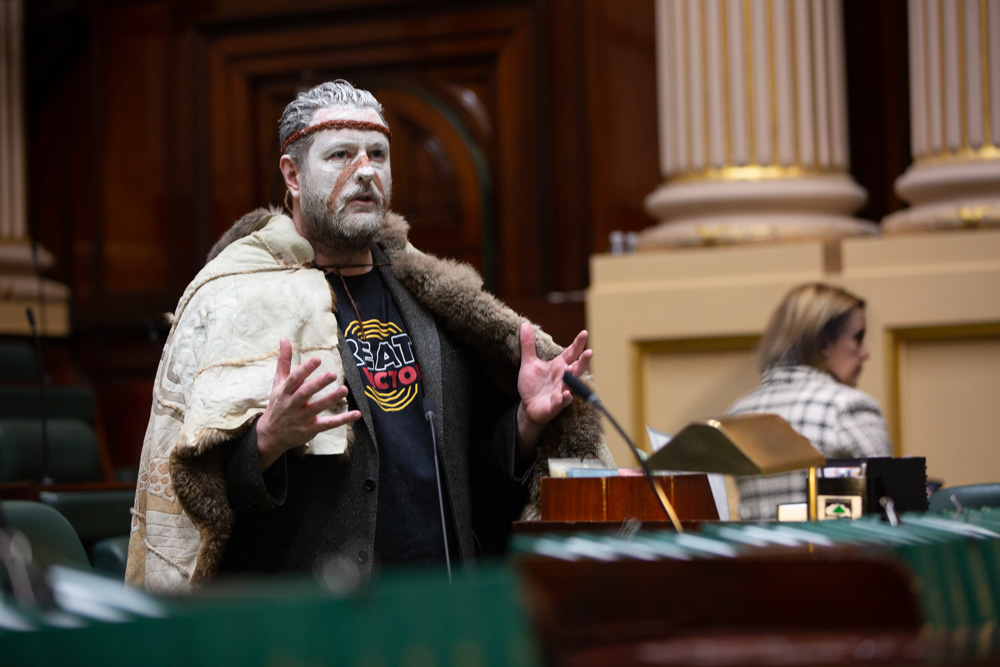
Senior leader and former co-chair of First Peoples' Assembly, Marcus Stewart, said Senator Price and the Coalition had been absent from First Nations policies, preferring to focus on cuts and audits rather than tangible policies.
"The Coalition's policies are about as absent as Senator Price has been in this election campaign so far," the Nira illim bulluk man of the Taungurung Nation told National Indigenous Times.
"She doesn't want to be the Minister for Indigenous Australians. She wants to be the minister for audits and reviews."
Other people who have spoken to National Indigenous Times in previous months have expressed their fear at the rhetoric that was used in the referendum, and what changes could come under a Coalition government in terms of cuts on the ground.
For Mr Stewart, he said the Coalition's "punch down politics" from the referendum was wearing thin on the electorate, especially towards the end of a long, drawn-out election campaign.
"We know the deficits that our community face. We know the sort of rhetoric and vitriol our community faced during that vote 18 months ago," he said.
"We've been in election mode since January. And what's the best [Senator] Price can deliver? Audits and reviews?"
Whilst most Indigenous-led organisations on the ground believe self-determination and Indigenous-led responses are the way to Close the Gap, Senator Price has been vocal in her disagreement.
Last year she rejected calls from a Productivity Commission report which suggested decisions impacting Indigenous peoples should be put in the hands of First Nations people, gaining support from conservative voices on Sky News.
The Senator has also been involved in a longstanding feud with land councils since she was elevated to the role of shadow minister, including a regular war of words with the Central Land Council (CLC).
She is currently embroiled in a defamation court case brought by CLC chief executive Lesley Turner, and it remains unclear if that will be a conflict of interest for the Senator in a senior portfolio if the Coalition wins the election.
Speaking on NITV Radio, the Warlpiri/Celtic woman said the Coalition would have more "policies to announce, and certainly with some of my shadow cabinet colleagues across education and health" before the election.
National Indigenous Times posed several questions to the Senator, including what "practical solutions" the Coalition would implement, the efficacy of mutual obligations and the evidence that has guided calls for them, and what other policies for First Nations people the Coalition would announce before the May 3 election.
This publication also asked if the Coalition would guarantee more jobs for First Nations people—especially in remote communities—under any new policy.
Senator Price did not respond.
The long-term, ideological paradigm shift between the two parties has been evident in Indigenous affairs, with Labor arguing their "jobs, jobs, jobs" mantra is the way to achieve economic independence. It has come with criticism from some on the ground, as well as the Coalition.
But without policies from the opposition to offer an alternative, it remains to be seen what changes to help close the ever-expanding gap for First Nations people in remote and regional communities can be achieved.



