



AFL champion Eddie Betts was at his spectacular best during a cameo appearance for Ovens and Murray club Wangaratta Rovers at the weekend.
Betts suited up for the club during the league's Indigenous Round celebrations, producing a starring performance in the Rovers' 74-point win over Wodonga Raiders.
The ex-Carlton and Adelaide superstar booted five goals from 17 disposals and ten marks to be named his team's best player in the 18.20 (128) to 8.6 (54) win at WJ Findlay Oval in Wangaratta.
Betts told 7NEWS Border prior to the match that he had strong family connections to the town of Wangaratta.
"My family are from Wangaratta, all my kids – they are with their grandparents at the moment who have lived here their whole life," Betts said.
"This is like a second home to me, so it's really exciting."
Betts – who played 350 AFL games and kicked 640 goals – is considered one of the greatest small forwards of all time and he is known for his spectacular finishes from deep in the pockets.
Among his five goals was a brilliant banana kick from a tough angle after side-stepping a Raiders opponent, which is something Betts foreshadowed pre-match.
"My brother-in-law Paul Scullie is a premiership player here – he was the captain of the reserves side – and he said that he owned all of these pockets that we have (at WJ Findlay Oval)," Betts said.
"He told me 'you'll never ever take one', so my mission is to take a pocket off him – I don't care which one, as long as I try get one in the pocket."
The Wirangu, Kokatha and Guburn man said that he was proud to represent the Rovers during the competition's Indigenous Round.
"I stand up to speak about racism, I want to stamp racism out, I want my kids just to be kids," he said.
"For communities to celebrate Indigenous Round it's just another stepping stone to continue to grow and learn and educate ourselves."
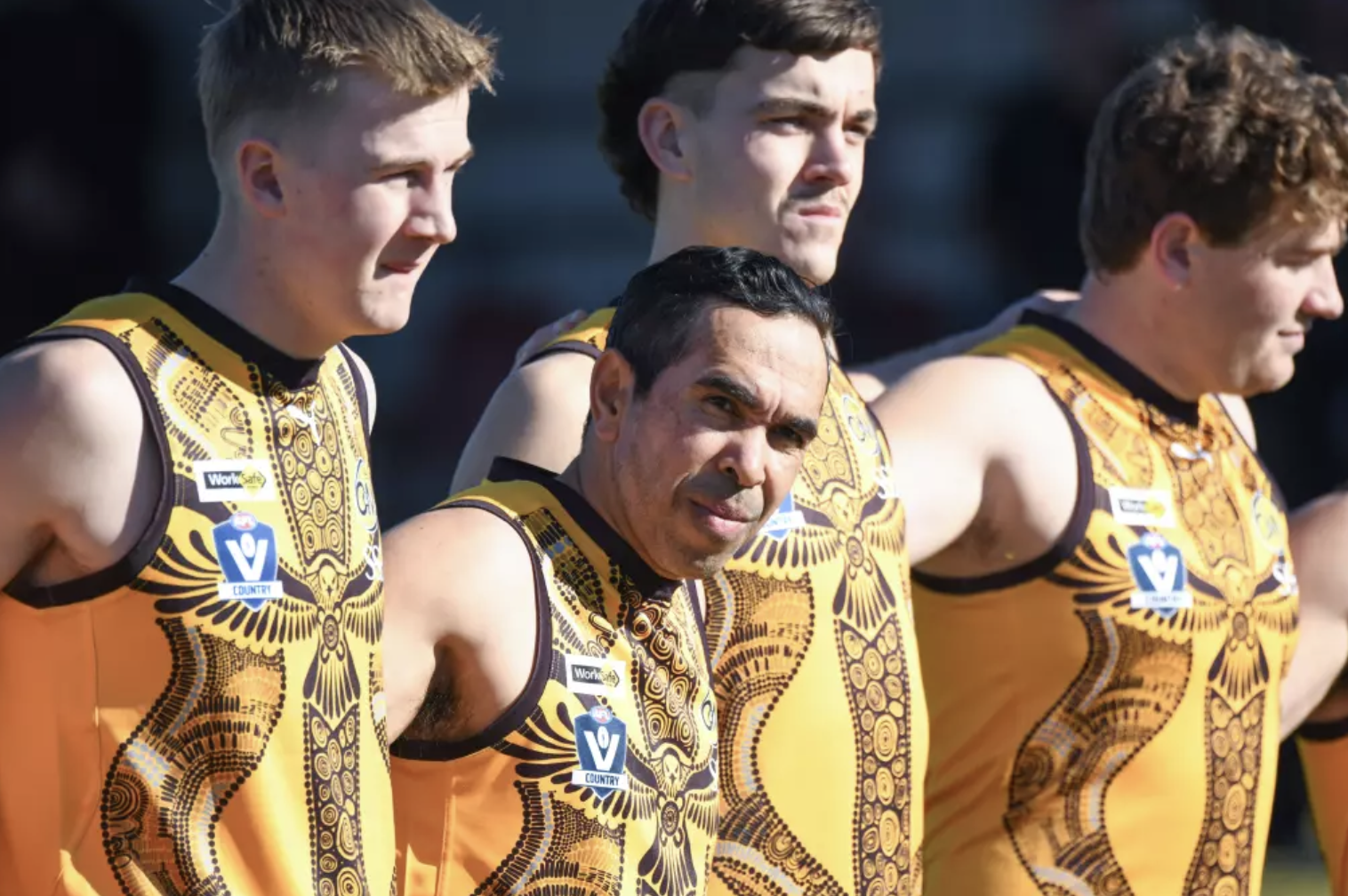
To mark the occasion, the Wangaratta Rovers Football Club donned special Indigenous jumpers, with the design explained on their Facebook page.
"This design depicts the significance of the Country within and surrounding Wangaratta," the post read.
"More specifically, the two outer stripes represent both the Ovens and King Rivers which intersect at the bottom, referencing the town's geography.
"This concept is further portrayed by the 'meeting place' symbol within the focal hawk, highlighting the key role that the Club plays in bringing the community together.
"The centred stripe tributes these individuals, including Club members, players and supporters.
"Additionally, to further celebrate First Nations cultures and the special role they play in our great game, the names of the Club's three First Nations players, as well as their Mobs are also credited."



