




May 1 is a day of great significance to working people and workers' movements around the world.
In Western Australia's Pilbara region, it has particular significance as the anniversary of a major Aboriginal pastoral workers' strike which marked a turning point in the long struggle for justice.
The Pilbara Strike began on May 1, 1946. Around 800 Aboriginal pastoral workers walked off cattle and sheep stations across the Pilbara region, launching what would become the longest industrial strike in Australian history.
Ngarluma Yindjibarndi Foundation said this week that the strike, lasting more than three years, until August 1949, was "a powerful stand against exploitation", demanding fair wages, better working conditions, and social recognition.
"Recognised as the first industrial action by Aboriginal people since colonisation, the Pilbara Strike was a turning point in the struggle for Aboriginal human rights, cultural rights, and, later, Native title. It was not just about wages—it was about dignity, justice, and self-determination," the Foundation said.
In 1942, at 'Skull Springs'—site of a previous massacre—more than 200 senior Aboriginal representatives from 23 language groups gathered for a six-week Aboriginal law meeting to discuss coordinated action. Sixteen interpreters were needed to facilitate the discussions.
From this meeting emerged a clear and determined plan to walk off the stations. Leadership came from within the Aboriginal community. Lawmen Dooley Bin Bin and Clancy McKenna played a central role in leading and coordinating the strike under Aboriginal law, alongside Peter Coppin (Kangushot), a respected spokespersons for the strike.
Daisy Bindi, a Nyangumarta woman, led 96 workers in a walk-off from Roy Hill Station, and other men and women across the region mobilised their families and communities to support the cause.
Don McLeod, a non-Indigenous ally, worked closely with the Aboriginal leaders, providing logistical and political support while remaining guided by the authority of the Aboriginal leadership.
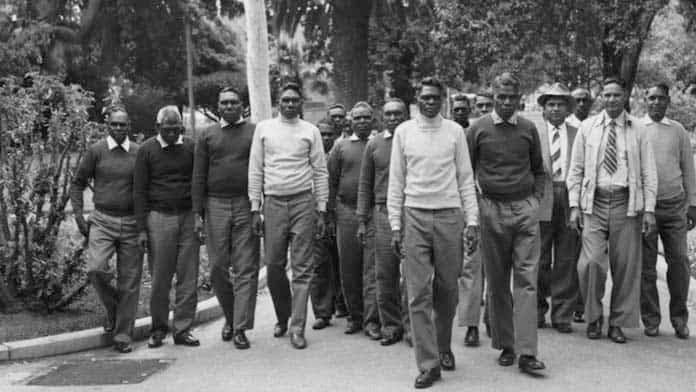
The settler state – the WA government - reacted with force. Many Aboriginal strikers were arrested, some reportedly chained and held at gunpoint.
Mr McLeod was jailed in Port Hedland for "inciting Aborigines to leave their place of lawful employment," but strikers responded by marching on the jail, occupying it, and freeing him.
Ngarluma Yindjibarndi Foundation said the strikers sustained themselves by living off the land, hunting kangaroos and goats, using bush knowledge and selling skins for income.
"Their persistence eventually led to improved wages and working conditions at Mount Edgar and Limestone Stations. These victories became the new standard—no station would receive Aboriginal labour unless it matched or bettered these terms," the Foundation said.
After the strike officially ended in 1949, many Aboriginal people refused to return to work under the old conditions.
"The Pilbara Strike remains a defining moment in Australian history: a bold, coordinated act of Aboriginal resistance that reshaped labour rights and contributed to the broader movement for Indigenous justice," the Ngarluma Yindjibarndi Foundation said.
"Today, we honour our Old People who were part of the strike. May we all take courage from them. And to all our allies, the actions of Don McLeod show the importance of allies in civil rights in Australia."



