


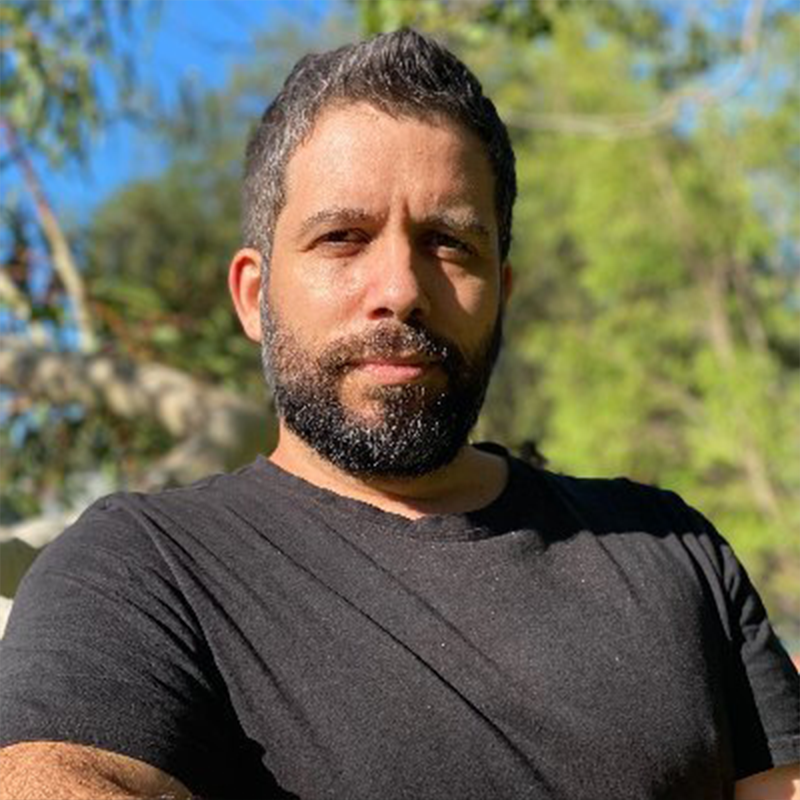

This report contains the name and image of a person who has died.
Noongar man Darryl Patrick Riley died in custody, aged 52, on 30 July - two weeks after being diagnosed with cancer.
His family are asking why his condition was detected so late, and why he was kept in shackles even when on his deathbed in Albany Health Campus, having been transferred there from Albany Regional Prison.
Mr Riley's aunt, Jennifer Riley, told National Indigenous Times he called her on July 15 to tell her about the diagnosis he'd just received.
"He rang me in the hospital and he told me that he was pretty sick. I asked him what was wrong and he told me they had told him he had cancer," she said.
"We tried to arrange a visit for him… We went down to see him but we couldn't get in until that Tuesday."
His cousin Cheryl Riley told National Indigenous Times she drove more than 270km to Albany with Jennifer and another aunt.
"Jenny rang us up and told us what was happening, Darryl said they diagnosed him with cancer, so I said it'll be better for us to go and see him in person, face to face… We had to ring the prison to book the visits, every visit we had to go through the prison system," she said.
"We drove hours to get there, just for an hour visit on the first visit, and we were shocked when we got to see him… He wasn't in good health at all."
Jennifer Riley said Darryl was distressed about being in restraints: "He was complaining about it all the time. They had them on his legs as well, and he asked if they can take them off – but they said no, it was up to the prison system."
"They said we could not take it off him because he was still walking a bit, to the toilet and back. They had to have the shackles still on him," Cheryl said.
"The only time they would take them off him was when he couldn't move off that bed; more or less unconscious."
Cheryl Riley said their last visit with Darryl when he was conscious was on July 28, during "the last few days of his life".
"We went there from 10 to 12. We had a couple hours with him. He was sitting up with us yarning and laughing. Then in the afternoon we went back at 6pm, that night, he was down. He was not responding at all. And they still had him cuffed to the bed, until we got a phone call, around 9.30, 10 o'clock, we got a phone call to say 'remove the cuffs'."
Mr Riley's relatives visited him again the following day, from 7am to about 10am, and he was still unresponsive. He was then put into hospice care and he passed away in the early hours of July 30.
Questions raised over duty of care in WA prisons
"The main thing now is the duty of care of the prison. How come they didn't pick this up?" Cheryl Riley asked.
"Don't they have tests in jail for these sorts of things, or for anything medical? The duty of care was lacking. The inmates reported his health condition was changing, they had seen his stomach was getting bigger," she said.
"He went down pretty fast. His condition was bad, they wanted to send him to Perth to specialists there, we tried to get him moved to Perth, but they said even if he went to Perth… there was nothing they could do for him. It was too far gone, the cancer.
"We wanted to also bring him home to Narrogin and let him pass away up here in palliative care, but they said no – Narrogin Police couldn't facilitate it."
As of August 6, Mr Riley's body had not been released to his family, who said there needs to be reforms to the way healthcare is provided in WA's prisons.
"A lot of things (need to change)," Cheryl Riley said.
"The duty of care in the prisons. They should be more alert about people when they're sick - not just ignoring it, and having the inmates find out and see changes in him. They must have seen the changes when he went there.
"He came down from Casuarina (prison) to Albany, and his younger brother Nathan said he'd seen changes in Darryl while he was in Casuarina.
"It is happening too many times, deaths in custody… If this had been detected in the early stages, he might be still alive."
Mr Riley's family said they wanted him to be remembered as a person, not a statistic.
"He was brought up in our family when he was a little boy," Cheryl said of her cousin.
Jennifer Riley said her nephew was "a kind person".
"He had his ways, everybody has got their ways, but he was loving and kind," she said.
"He took life as it comes. He was happy go lucky," Cheryl said.
"It was not a good thing to see (him gravely ill), but we sat there, we spent that precious time with him the last time that we had with him, you know - right at the end.
"He was a loving person, from a little fella up to being a man. He got on with people and he loved his family."
The WA Department of Justice said Mr Riley suffered a medical episode on July 20 and was taken to the hospital, where he died on July 30.
A spokesperson told National Indigenous Times the Department does not comment on circumstances surrounding a matter that is subject to a Coronial inquest.
"More generally, the Department is committed to the health and wellbeing of the individuals in its care and provides all prisoners with access to health services. Any use of restraints is subject to risk-based assessments and oversight, in accordance with policy and legislation," they said.



