




The Northern Territory's Child Commissioner has criticised the treatment of an Aboriginal teenager in custody, who was denied food and access to services while being kept alone in a cell for more than 80 hours.
In a report tabled in NT Parliament on Thursday, the Office of the Children's Commissioner (OCC) detailed how the child — referred to as VC1 — was locked in a cell at Don Dale Youth Detention Centre (Don Dale) for 84 hours, in breach of section 155A of the Youth Justice Act (YJA).
The OCC noted VC1 had a "well-documented history of traumatic childhood experiences," including self-harm while in detention, and said staff acted unlawfully in ways that were "incredibly harmful" to children.
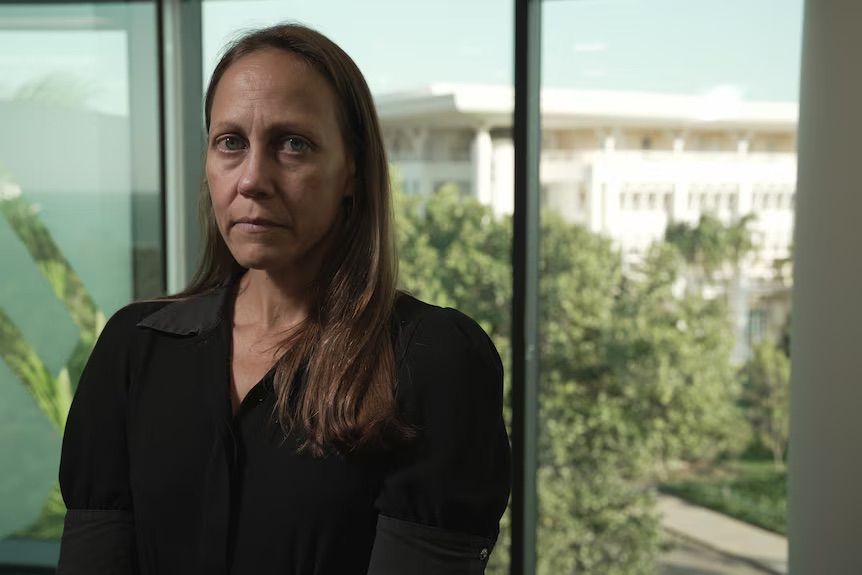
Children's Commissioner Shahleena Musk said communities expect children in detention to be treated with "respect and dignity" that supports their rehabilitation.
For VC1, she said, this did not happen.
"It is imperative that staff are supported to understand the legislative requirements that exist, the importance behind these and what they need to do to meet their duty of care requirements to children," Commissioner Musk said.
"It is equally important that they have adequate resources and support to do so. Staff safety and detainee safety should not be viewed as in conflict with each other; they are mutually achievable."
Denied medication and food
The treatment of the child followed major protests inside Don Dale, during which detainees damaged parts of the facility with fire, prompting rolling lockdowns. VC1 refused to leave H Block, and journals show they were then locked in their cell for 84 hours.
Complaints from the North Australian Aboriginal Justice Agency (NAAJA) argued the child was also likely denied prescribed medication for depression and ADHD.
Whilst there was insufficient evidence to properly assert this — due to "inadequate" record keeping — the OCC noted it was clear from interviews withholding medication was being used as a strategy to coerce VC1 to move blocks, something also prohibited by the YJA.
"When agencies or individuals are given power over young and vulnerable people, they must demonstrate that they are accountable and have systems in place to ensure they use their powers in accordance with the laws and rules they operate under," a NAAJA spokesperson said.
On the first day of isolation, the child was denied food — in breach of the UN's Mandela Rules. Guards told them, "the bosses said we cannot give you food until you move." VC1 was eventually fed on the second day but reported feeling weak.
During the isolation period, VC1 saw no other detainees and had no access to service providers, including the OCC or a lawyer. Their cell contained only a bed.
Under the YJA, detainees separated for more than three hours must be allowed 15 minutes of outdoor exercise every three hours between 8 am and 6 pm, along with meaningful staff contact, education, and access to health and legal services. The maximum separation time permitted is 72 hours.
"Whatever the youth detention centres put on their website about what kids get access to, the time they are let out of their rooms, it's not true," VC1 said in a statement through NAAJA.
"There's usually heaps of lockdowns, kids don't get out a lot of the time. They don't feel safe, especially the younger ones.
"It really messed with my head. I started stressing more. I was growing up and becoming more mature [on the outside], when I was inside, I started getting angry, it affected me and I couldn't think straight because of what happened. It made my anxiety worse. It changed me."
The Superintendent later told interviewers: "If you want to say its separation, that's fine, I'll take it. We should have done the separation journal and notified the people that we needed to. And I would've happily kept [VC1] in there for the 72 hours that's within the Commissioner's power, based on the fact that [VC1] wouldn't come out."
They added: "[VC1] had just done a whole load of damage and [VC1] was well down my list to be honest. There was lots of other things, like the kids that didn't play up, ensuring they got the services they were entitled to."
Findings and recommendations
The OCC report found the prolonged isolation of children continues at Don Dale despite the 2017 Royal Commission recommending separation be strictly limited.
While acknowledging challenges for staff, the OCC concluded actions taken in VC1's case were harmful and unlawful.
"Children detained in the Northern Territory are among the most vulnerable in our community. The majority present with high rates of childhood trauma, disability, mental illness and disadvantage. Detention should not be a place where that trauma and disadvantage is compounded," the OCC said in a statement.
NAAJA said: "The Royal Commission into the Protection and Detention of Children in the NT identified these same problems in 2017. Eight years later, little has changed.
"This report demonstrates entrenched systemic issues that continue to be driven by staff shortages, repeated lockdowns and detention centres at or near capacity. Aboriginal young people, who make up around 90 per cent of those in detention, continue to bear the brunt of these failures."
Of five recommendations made, only one was fully accepted by the Department of Corrections.
A NAAJA spokesperson said they were "deeply concerned that the NT government has not fully implemented the OCC's recommendations, despite the seriousness of this case".
"Without fixing existing failures and with rising youth detention numbers, we will continue to see cases like this," they said.
"Rehabilitation and healing is only possible when young people in detention are treated with respect, care, and dignity. NAAJA thank the OCC for their investigation and call on the NT Government to fully implement the recommendations of the report."



