




On May 6, King Charles III will officially be crowned monarch of the United Kingdom and the Commonwealth.
The event, code-named Operation Golden Orb, is the first coronation in the United Kingdom since 1953. The procession will make their way from Buckingham Palace to Westminster Abbey where Charles and Queen Consort Camilla will be crowned.
As sovereign, King Charles III presides over the United Kingdom and various Commonwealth countries including Australia.
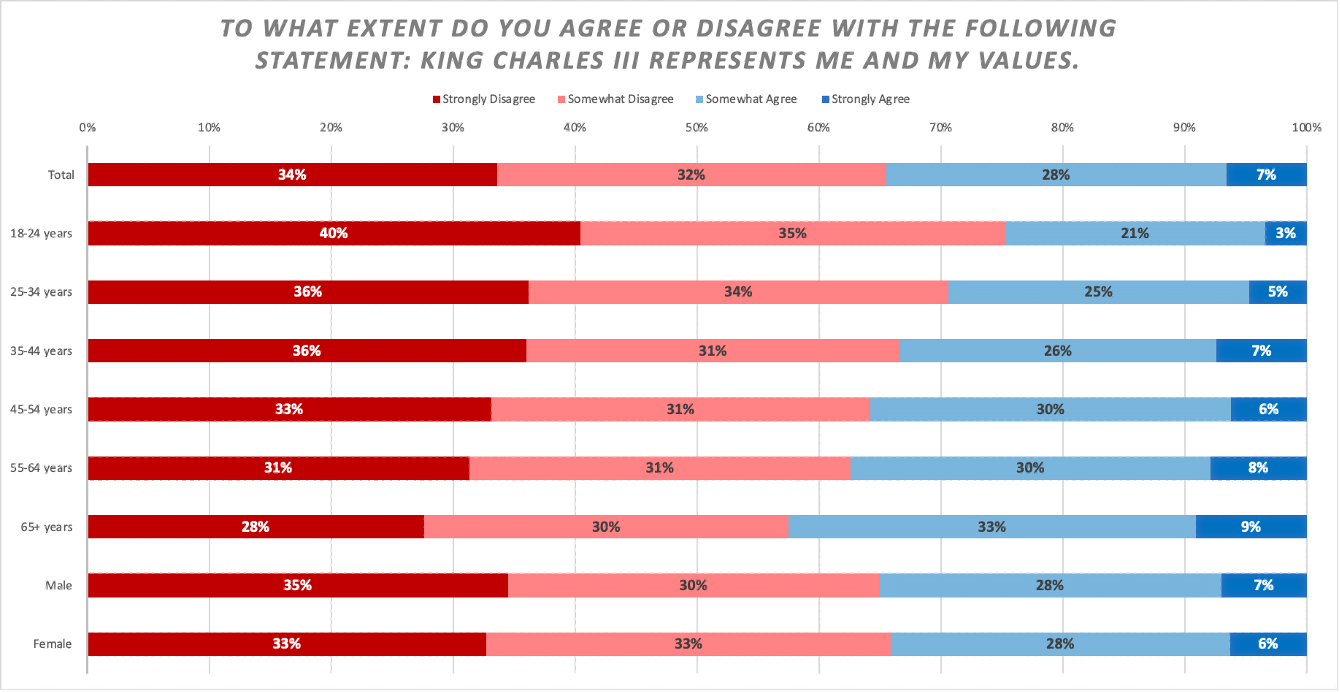
A recent poll conducted by Pure Profile in April found around 66 per cent of respondents said King Charles does not represent their values.
Less than 25 per cent of those aged 18-24 said King Charles did represent their values.
Co-chair of the Australian Republic Movement and First Nations woman Nova Peris said Australians were convinced that neither Charles nor the monarchy as an institution could represent them.
"Australia now has a King that would never be chosen by Australians," she said.
"Australians are overwhelmingly opposed to him and the idea of having a King at all. The concept of Kings and Queens is completely medieval and should be abolished."
First Nations Australians have mixed feelings when it comes to the new king's coronation and the monarchy's place in Australia in general.
Ngarrindjeri and Kaurna Elder Major 'Moogy' Sumner said he respects the royal family but does not understand their place in Australia.
"(The United Kingdom) is his country. As far as being the King of Australia, no I don't agree with it," he said.
"How did you become the king? How did you become the king of this country? He's the King of England fair enough."
---
---
Noongar policy officer at the National Native Title Council, Chelsie Collard, said she thinks Australia no longer needs a coronation.
"It's a sensitive topic generally for First Nations people more so because the monarch for many First Nations people embodies colonialism," she said.
"Especially the ongoing impact colonialism has in First Nations communities.
"And it almost seems like our media outlets are being flooded with the king's coronation, as opposed to real social justice issues happening around Australia."
Ms Collard said she hopes that with the Voice referendum coming up, people will begin to consider their feelings about moving towards a republic too.
"The death of the Queen resurfaced the idea that Australia might become a republic," she said.
"And whilst that didn't quite get over the line in the 1999 referendum, I believe that in the context of Australia's broader commitment to reconciliation, become a republic is just one way that disrupts the impacts of colonialism.
"If the Voice to Parliament is something that Australians are considering, they should probably also think about their views of the monarch and the future of Australia."
Of the respondents surveyed by Pure Profile, 64.1 per cent said they agree the concept of the monarchy is the opposite of Australian values such as equality and a 'fair go'.
Arabana and Mudbura Warlpiri photographer Colleen Raven said she wants her children to grow up knowing this is a Blak Country.
"I don't want my kids to grow up underneath (the monarchy), and I don't want my grandkids to grow up underneath it," she said.
"Because it's so archaic and it also ties back to a system that just breeds trauma still, traumas that are handed down through our grandparents, our parents, and then to our kids.
"It's still all there that doesn't go away just because they're having a beautiful little ceremony to announce the new King.
"And not only that it's a real slap in the face when Australia pushes it up on a pedestal, highlights it, rather than highlighting what's going on in our backyard."
Ahead of the King's coronation, Indigenous leaders and politicians have called for the British monarch to formally apologise for the ongoing effects of colonisation.



