


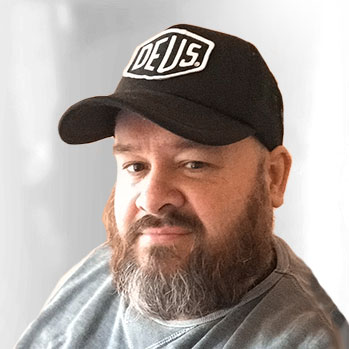

Laurie Daley was one of rugby league's greats of the 1980s, but rarely back then was the Wiradjuri man identified among the great Indigenous players of his era.
The Canberra Raiders playmaker never deliberately hid away from his Aboriginality, but neither did he drape that pride from his maternal roots around his people's flag, either.
It was not until Daley co-authored a book on the 1994 Kangaroos tour of Great Britain with club teammate Bradley Clyde did he publicly reveal for the first time his Aboriginal origins through his grandmother halfway through an illustrious career.
Daley once never understood growing up why he was racially slurred through opposition chants of 'Get the Black kid', and was only subjected in his home of Junee.
Many Indigenous NRL players later on knew Daley was one of them; not so much the elements of the media then, nor the fans.
Daley, the son of a non-Indigenous Australian dad who ran one of the four Junee pubs and drove trains, was only branded on the field a genius from the bush and nothing more.
But truth was Daley never knew much about his culture from Aboriginal woman and his grandmother until his post-football days.
"She died when I was very young," Daley once told NewsCorp three years ago about his Wiradjuri grandmother.
"I knew her, but didn't know a lot about her."
So not long after Daley began coaching the Indigenous All Stars in their annual match in the NRL preseason, proud Aboriginal star Anthony Mundine called his once centre and five-eight rival for an NSW State of Origin and Australian Test spot an 'Uncle Tom'.
Some First Nations people used to refer to servile others as Uncle Toms – an offensive and derogatory name that Indigenous people adopted from an 1850s American book where the character forgo his heritage to be meekly accepted into non-Indigenous society.
Mundine at the time explained in a press conference before his boxing title fight with Aboriginal Tasmanian Daniel Geale that like his opponent, Daley had not proclaimed his Aboriginality "loudly or strongly enough".
Daley did not bite back and rarely did at racial slurs that Indigenous players faced in their careers, both on and off the field far more frequently.
"I was always one for not wanting to get involved or saying anything," Daley added in the interview.
"That was the 'norm' back then – shut up, cop it, accept it and move on."
But Daley now accepts that a lot has changed, even from a decade ago.
While he dodged much of it, the 54-year-old fears the abuse Latrell Mitchell has copped this year alone is only getting worse.
Mitchell, like Daley, coincidentally was in a war of words with Mundine of late when the outspoken South Sydney icon backed Ezra Mam's right to cite a 'monkey' sledge from Polynesian rival Spencer Leniu as a racist slur in their Las Vegas confrontation.
Leniu, who left Penrith for Sydney Roosters in the offseason, was banned for eight weeks following the season-opener verbal.
While Mundine has since apologised to Mitchell, he did initially post a controversial video on social media that claimed that being called a monkey "ain't racism" and that contemporary Indigenous players need to "toughen up" and "take it on the chin".
"This what our people get told to do and continue to get told – 'Be quiet fall in line,'" Mitchell responded to Mundine's advice in an Instagram post.
Daley's attitude over the years throughout his time working in the media has taken an about-face from when he would – be quiet and fall in line – while playing on.
He discussed on the Big Sports Breakfast show on Wednesday that Daley co-hosts that there was a "sinister" vibe at recent South Sydney fixtures that every time Mitchell now touches the ball, the chorus of boos are progressively getting louder.
The Rabbitohs fullback was inexplicably booed while the verbal barrage in the stands intensified from what was heard against his former side, Sydney Roosters, just a week earlier.
That was provoked further after a Mitchell tackle on Josh Addo-Carr left his Indigenous mate unconscious on the sidelines.
The two men were seen resolving any personal issues about the tackle with their arms around each other after the game.
"I understand he polarises people and not everyone is always happy with what Latrell has to say," Daley said on the airwaves.
"But I would think there could be a minority of people who would (boo) because they don't like him.
"They just don't like him and every time he gets the ball they want to (boo)."
Daley fears similarly to the case of Adam Goodes, who retired from the AFL a season earlier than planned after the Sydney Swan superstar was ran out of the sport over his outspoken stance on racism that Mitchell could soon be lost to rugby league.
The Indigenous proponent all but threatened to quit the game late last year after retreating back to his farm outside of Taree to reflect whether what comes with the game is worth it.
But the 26-year-old has not backed down as yet, continuing to challenge against racial inequality while also advocating for the rights of First Nations people.
"I'd like to believe there's no racism in sport, but you know a minority of people, they carry it around with them," Daley continued.
"There's a minority of people that carry that grudge and hate the fact he's a successful Indigenous person that speaks his mind.
"Latrell, given that he is outspoken, about all issues in the game and in particular on racism, I think a lot of people are waiting for him to fail and fall – and will be critical of him."
Mitchell has in the past had a positive relationship with Daley, including back in 2022 when he advocated for his brother, Shaquai Mitchell, for a big forward role in the Indigenous All Stars match of that year through an exchange of text messages.
The Biripi, Wiradjuri, Worimi and Gumbaynggirr man recently escaped a sanction for an expletive-laden radio interview, which he repeatedly swore and said at the close of the post-match chat with Triple M that he refused to apologise for his language.
Those words only angered a number of keyboard warriors online, who believed that the NRL protects Mitchell and gives him more leeway that they don't give other players.
Outspoken rugby league figure Phil Gould later said Mitchell "needs to show respect" following the live radio interview.
Last year Mitchell was described as a "cancer" on the football club by Rod Churchill – the son of South Sydney legendary fullback Clive Churchill – who later back down and apologised.
The NRL continues to promote Mitchell in a positive narrative after the hero to many Indigenous communities showed up to one in Moree on Wednesday with his close Rabbitohs teammate, Cody Walker, to launch the 'Outside the Box' mentorship initiative.
In conjunction with NSW police, Souths' two most identifiable Aboriginal stars were lending their hands to the campaign to curb violent youth crime in regional communities.
The mentoring offers at-risk teens one-on-one mentoring from NRL players, as well as additional clinics and community visits throughout the bush.
"NRL's a religion in Indigenous communities," he told Nine media, standing alongside NRL chief executive Andrew Abdo and ARL chairman Peter V'landys.
"You've got to understand that impact. Peter and Andrew do a great job in working with the police force and getting us out here to be that missing piece.
"For us NRL and NRLW players, it's something we love to do and it's getting out here and showing the kids that there's a light at the end of the tunnel if you work hard enough.
"If you do bad things, there are repercussions.
"If you do good things, you get rewards."



