I thought I'd get on the Christmas bandwagon and bring your attention to some mangarri plants that can be foraged in the lead up to and over the festive season. Your typical suburban block has plenty of space to grow all these plants and maybe over time as they produce fruit you could even start to incorporate them into your Christmas meals.
Syzygium eucalyptoides. An attractive small tree with glossy green leaves and scented white flowers, Illarr (Bardi) or bush apple produces a cumquat-sized tangy fruit early in the wet season. Pick the pinkish white fruit from the tree and peel off the 5-millimetre-thick flesh from around the chunky seed. Growing naturally near the coast in sandy soils it is easily propagated from fresh seed by burying it in good quality potting mix and keeping moist.
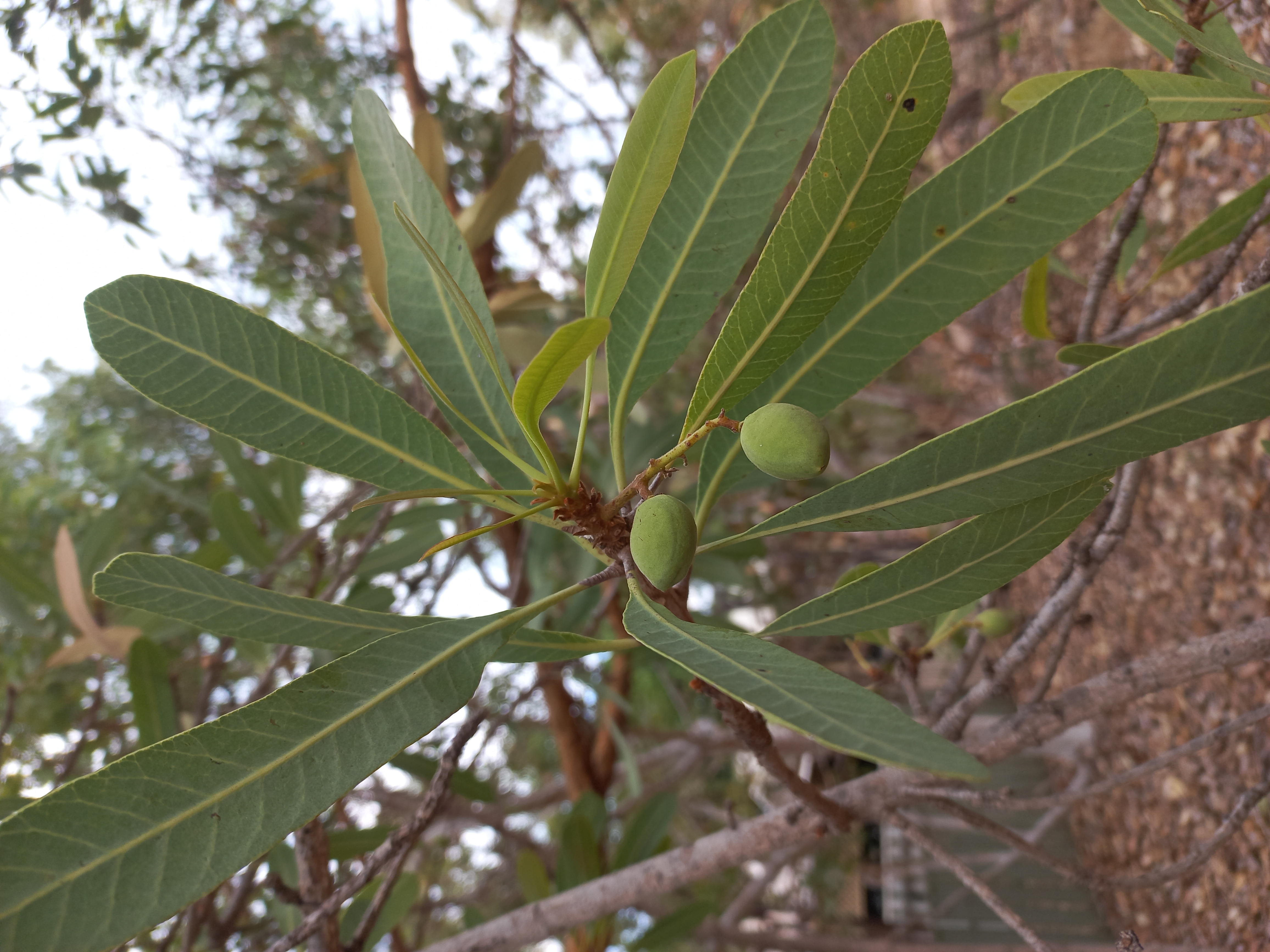
Terminalia kumpaja This hardy small tree naturally occurring in sandy red pindan soils, bears a large nut covered in thin plum-coloured flesh. The fruit can be split open by hitting it carefully with a hammer on an easily identifiable ridge line running along the side of the nut. If you are successful it will split to reveal a delicious almond-sized kernel. Kumpaja (Nyangumarta) seedlings often germinate under established trees during the wet season putting down a long taproot. I favour growing them in a tall tube to mimic this behaviour.
Buchanania obovata Found across the top end in high to medium rainfall areas, wild or green plum is my personal favourite. Its sweet, tasty fruit is available in the early wet season. Currant-sized green drupes are harvested from the ground beneath the tree. Called daalony in Willingin country along the Gibb River Road this small tree thrives in an open sunny position with plentiful water during its growing season. Propagate from fresh seed.
Flueggea virosa Known in the Yawuru language as Goowal this small to medium-sized shrub is common and widespread throughout the northern parts of Australia, Snowball bush as it is collectively known produces a cluster of small sweet white fruit containing numerous seeds throughout the rainy season. A member of the Euphorbia family, it will grow readily from cuttings and seed. It can be pruned hard if it becomes leggy and spindly in the dry season.
Capparis umbonata Growing in lowing lying areas that can become seasonally inundated wild orange is easily distinguishable by the mass of pinkish white stamens arising from between the two large white petals reminiscent of butterflies. The flowers are followed by golf ball size green fruit containing large seeds and a sweet tangy orange flesh. Goordida is a favourite amongst Gooniyandi people, and the women rangers are hoping to grow it so families can plant it in their home gardens. To germinate fresh seed is a must. Plant out as soon as possible as it is not a fan of growing in pots.
Planchonia careya Easily identifiable by the strong perfume and the carpet of white flowers beneath its branches on steamy build up mornings, cocky apple is widespread throughout the dry tropics. Oblong green fruit with still attached protruding stamens can be plucked from the tree. Split them open to reveal the stringy flesh that has been compared to an avocado. A favourite larval food of the fruit fly, it's worth checking for maggots before eating. Bardi people also use goolay bark for medicinal purposes. A beautiful, small, bird attracting tree that looks good all year round.
Many of these plants are available in your local native nursery, if not, search around, there are plenty of native plant enthusiasts out there who may be willing to help. Happy Christmas tree planting!