



A post in the Tin Can Bay community Facebook group recently sparked controversy over a traditional Aboriginal tree scarring ceremony, with one local labelling the act "senseless vandalism" and raising concerns about the tree's survival.
"This tree will be lucky to survive," one comment read.
The post has since been deleted, however it initially drew attention to the cultural practice, which some in the community failed to recognise.
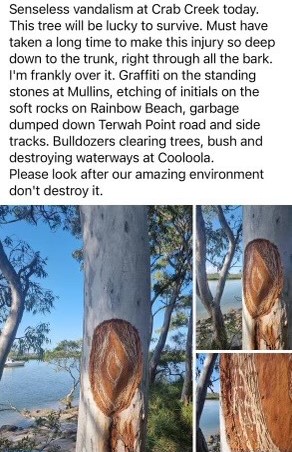
The tree, located at Crab Creek, was specifically chosen for the ceremony by Gammaron (Cultural Leader) Leaf , a Dungadji speaking Dulingbara cultural lore holder.
The scarring was part of a traditional process to create a dju'ma'mun (coolamon), a wooden vessel used in Aboriginal culture, in this instance to support the birth of a birawan (baby).
Gammaron Leaf, reflecting on the Facebook post, said his reaction "was initially a belly laugh".
"I don't have Facebook, so when I was informed, I burst out laughing," he said.
He added the online backlash was upsetting, considering how long it has taken to reclaim the right to practise such sacred traditions on Country.
Tree scarring is a significant and ancient practice for many Aboriginal communities, including Gammaron Leaf's Doombahrah people.
The process involves carefully selecting a tree with a deep cultural connection, then removing a section of bark in a way that allows the tree to continue growing.
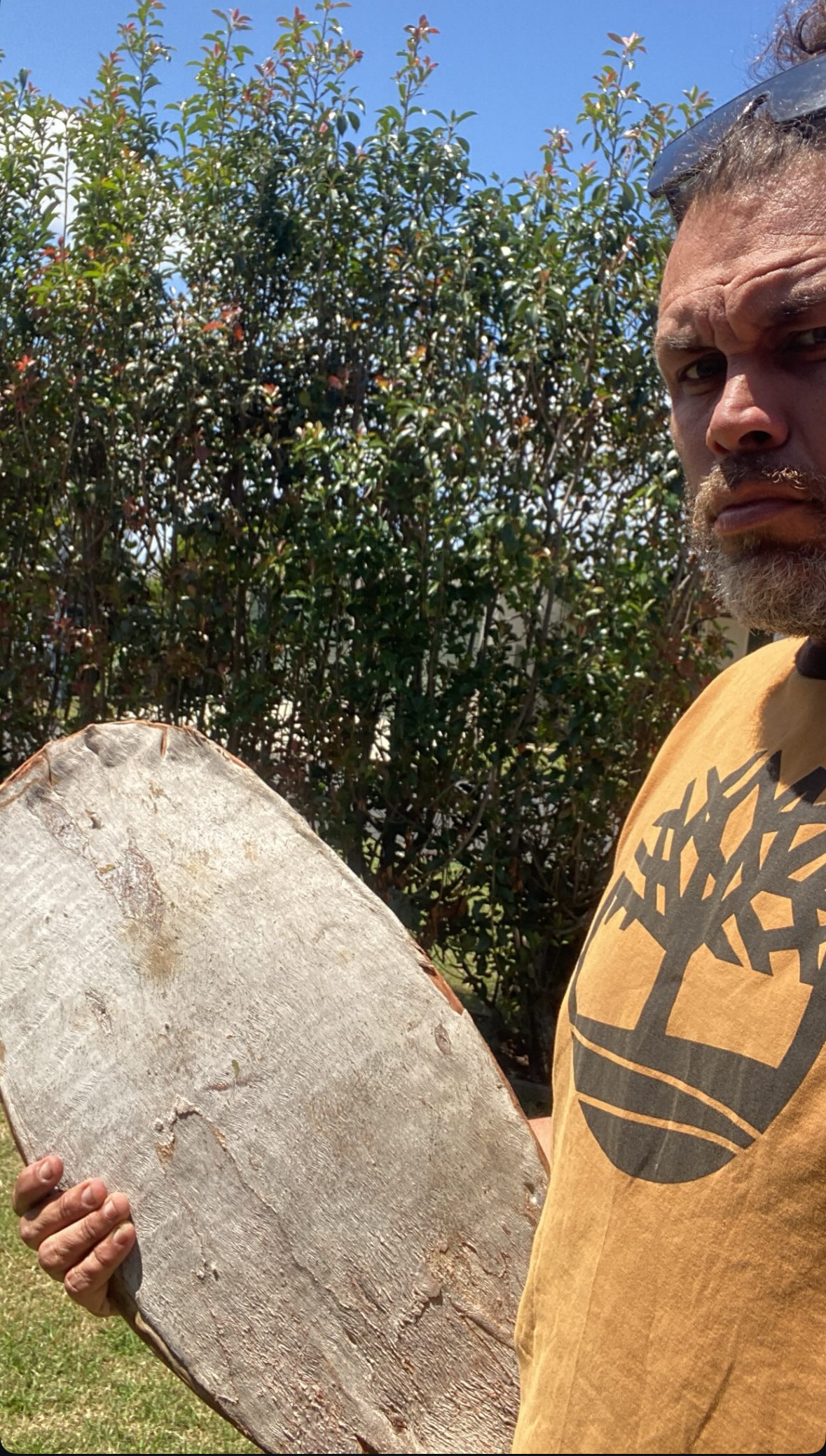
For his mob, the act communicates with their ancestors, connecting past and present through the land.
"It has taken us a long time to be able to practice our deep-seated culture on country," he said.
"Other peoples in the region have sought native title, we have sought cultural connection and maintaining and protecting our ancient customs."
Gammaron Leaf's family has a long history in the Cooloola region, further highlighting the importance of continuing cultural practices like tree scarring.
"My great-grandmother knew exactly whom she was and where she was from…," he said.
"Her mother, my great-great-grandmother, was like so many other mob, taken and forced off country."
Despite this history of displacement, Gammaron Leaf stressed the significance of keeping cultural practices alive.
"It's all very, very important for us to practice proper culture here," he said.
In response to the Facebook post, the local Rainbow Beach community newspaper sought to educate readers on the sacredness and environmental safety of tree scarring, helping the wider public understand its role in preserving Aboriginal cultural heritage.
"The local councillor contacted me and did a story in the local rag as she is all about projecting the local culture to people, so that was good," Gammaron Leaf said.
He said increased awareness can bridge gaps in understanding and respect for Aboriginal customs.
Gammaron Leaf is the lead Songman for Waawidgie warei dance torupe and a director of the family owned business Kulyta, a multifaceted cultural business servicing Dulingbara Dhuabara (Gympie), Cooloola, Tungunbah (Tincan bay), Noo'dhu'ru (Noosa) and Go'ri'wi'ga Gari (Fraser coast) regions.
"We aim to support children's learning from early childhood through to tertiary education," he said.
"Our multigenerational approach to education is key to the preservation of the oldest existing, living and most beautiful culture in the world."



