




Queensland needs a better strategy to help Indigenous serious repeat offenders, a report by the state's auditor general has found.
It comes as data from 2022-23 highlighted First Nations youth made up 69 per cent of the serious repeat young offenders in Queensland despite only representing 9 per cent of 10–17-year-olds.
In Brendan Worrall's last report as auditor general, Reducing Serious Youth Crime, he noted: "Many young offenders have poor health, including mental health issues and behavioural disorders; many are disengaged from education and employment."
"A whole-of-system approach is needed to address this complex problem," he said.
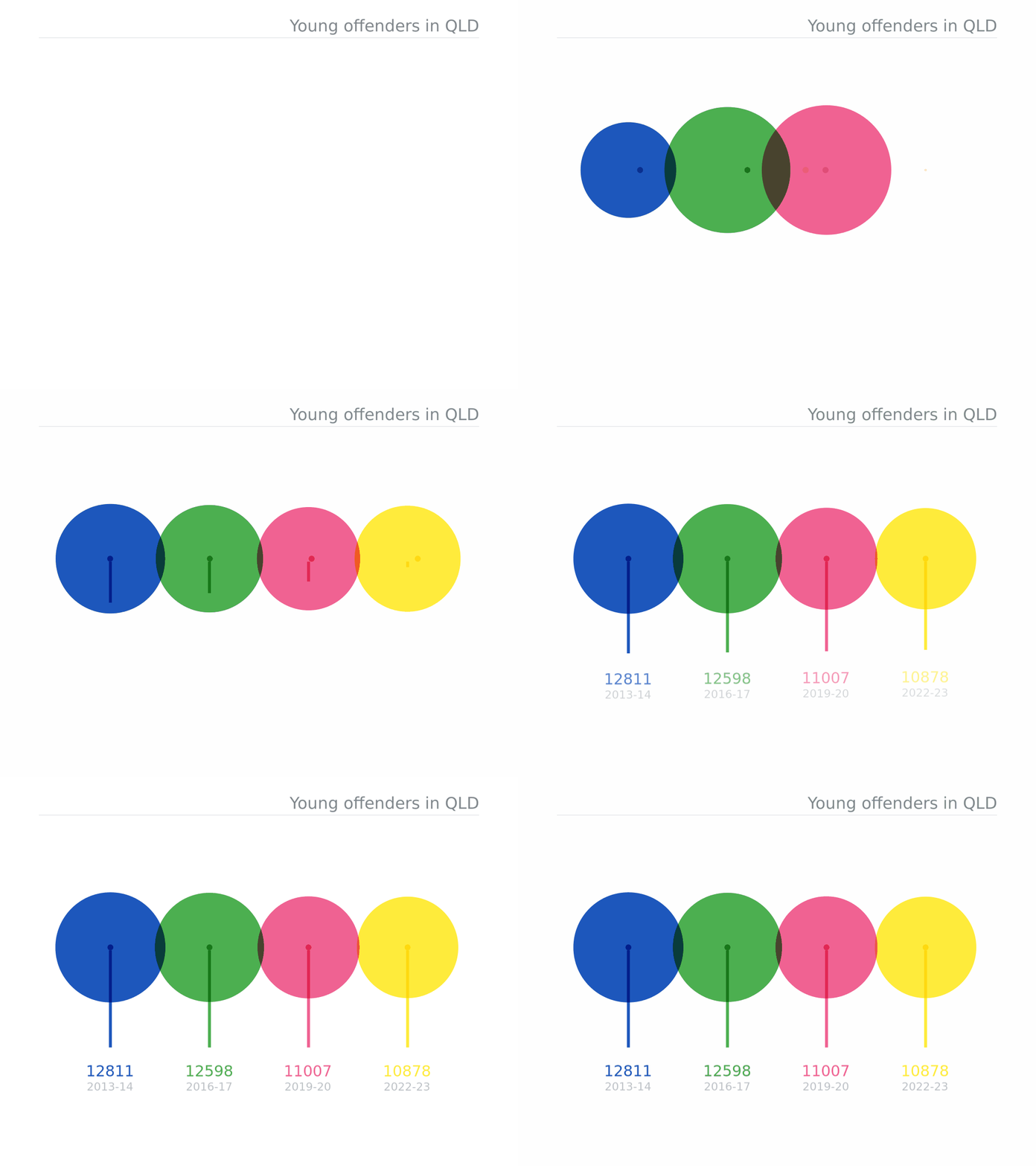
It comes as discussion around youth crime has reached a crescendo in Queensland on the eve of the state election, with both parties attempting to frame themselves as being "tough on crime".
However, little has been done - at least effectively - to mitigate the causes of youth crime, other than increased prison sentences, including removing the "last resort" caveat on jailing children.
Evidence shows people who are exposed to the carceral system at an early age are more likely to return to prison within a short period of time, and while government spending has been implemented to mitigate offending, Mr Worrall argued it "would be strengthened by implementing stronger planning and analysis at both the system and entity levels".
The auditor general was critical of some of the strategies in the Queensland government's Youth Justice Strategy Action Plan 2019–2021 plan to reduce youth crime for First Nations people, arguing they "lacked sufficient detail".
The strategy mentioned 10 actions to support Indigenous youths, including improving cultural capability across government agencies and "increasing investment in First Nations service providers'".
In one action, titled "Aboriginal and Torres Strait Islander Family Led Decision Making Processes to increase cultural authority in the youth justice system," the report found there was "no further detail about the level of increase the government was aiming for".
"Actions to date have done little to curb the growing numbers of First Nations youth who become serious repeat offenders," the report found.
The government has also taken "additional steps" to improve how it supports First Nations young offenders.
These include establishing a First Nations Action Board and having dedicated cultural support officers; increasing investment in First Nations-led organisations; and designing and delivering programs tailored to First Nations young people, such as 'On Country', which aims to better connect Indigenous youth to their culture through activities, mentoring, and camps.
However, the report noted: "More action is required to address this long-standing issue. A whole-of-system approach is needed."
The issue of rehabilitation was specifically highlighted, a key element in getting children - even serious repeat offenders - to not spend their life incarcerated.
The report found a failure to capture data accurately - and adequately - was hindering this.
The Changing Habits and Reaching Targets (CHART) is a mandatory cognitive-behavioural tool used in Australia and internationally, which aims to "help young offenders think about their actions and motivate change".
34 per cent of surveyed serious repeat offenders had no records of CHART being delivered to them.
"In addition, 18 per cent [of those surveyed] had no records of any rehabilitation programs being delivered at all," the report found.
This lack of rehabilitative inputs also came down to a lack of staff at youth detention centres, with many being locked down regularly, requiring children to spend time in isolation.
All three of the state's youth detention centres in 2022-23 were operating over their safe capacity by an average of 23 young offenders each day, the report found. The government attempted to alleviate this pressure last year by suspending the Human Rights Act last year to allow children to be held in adult watch houses.
Mr Worrall also argued that the "QPS [Queensland Police Service] and the department do not have a consistent way of identifying those young offenders with the highest risk of reoffending".
The QPS have been widely condemned for sacking a First Nations advisory body after they were asked to sign contracts effectively stymieing their ability to criticise the police for actions they deemed to be contrary to the interests of First Nations people in the state.
Despite multiple emails and questions by National Indigenous Times, the QPS have refused to answer detailed questions on the transparency of the decision, with one former member labelling the QPS' obfuscation a "classic example of systemic racism".
Among his recommendations, Mr Worrall urged the Department to ensure "there is effective and sustained support to young offenders transitioning from detention into the community".These include providing appropriate support to meet the young offender's social and cultural needs, implementing a more structured process for planning a young offender's release and communicating in a timely way with relevant stakeholders about the young offender's risk, needs, and transition plan.



