




"You can't put a price on ancient artefacts," says Kimberley Aboriginal Law and Culture Centre chief executive Peter Murray, speaking about a recent auction of Indigenous artefacts.
Last month in Boorloo / Perth, McKenzie's Auctioneers and Valuers sold a range of Indigenous artefacts from Indonesia, Papua New Guinea, Fiji, and Western Australia's Kimberley region during its "Tribal Artefacts and Arts Auction".
Items that many consider priceless were assigned a dollar value and auctioned off to the highest bidder.
One such item, listed as 'Lot 51', was described as 'Aboriginal Kimberley glass spear points' and sold for $600.
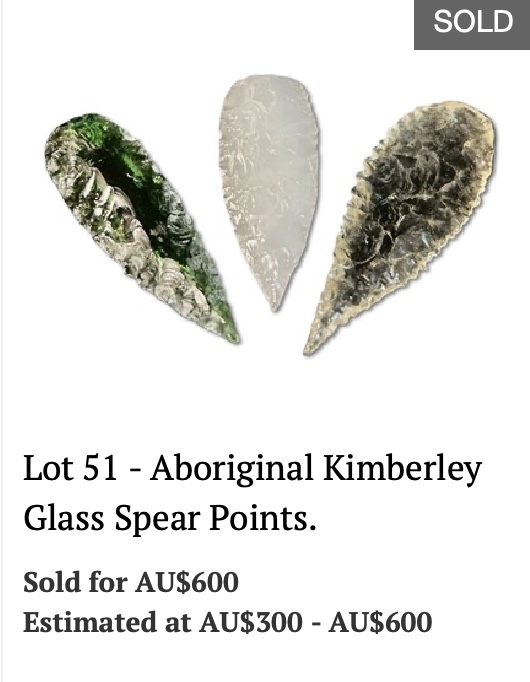
Mr Murray, a Walmajarri man, says the spears are sensitive because they are ancient.
"They were made by the desert mob; however, it's been a very long time since people made those," he explained.
When photos of these ancient Kimberley artefacts appeared for sale on Facebook, Mr Murray described it as confronting and confusing for people from the Kimberley's six cultural blocks.
He stresses the importance of mob understanding: once these sensitive items are given to non-Indigenous people, it can bring trouble to the family, clan, or language group.
Mr Murray believes it would be best if auctioneers like McKenzie returned these items to culturally safe places, such as KALACC, where they could be cared for by their own communities.
But McKenzie's Auctioneers expects Aboriginal Corporations to buy their artefacts back.
The organisation told the National Indigenous Times that "on many occasions, local Aboriginal Corporations and entities have purchased items from our public auctions that they deem culturally significant."
One of those price tags was attached to Lot 23—a hafted Kimberley point spear from Sunday Island, belonging to the Bardi people. It sold for just $170.
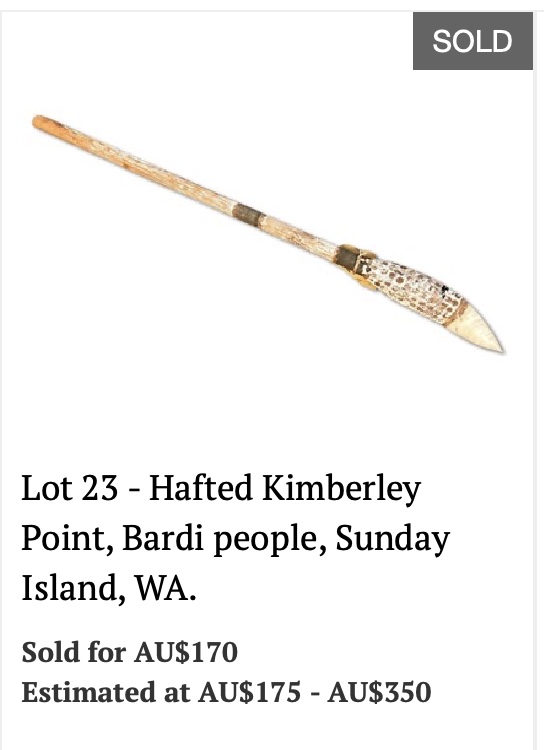
Sunday Island is located off the Kimberley's Dampier Peninsula, near Ardyaloon (One Arm Point), within Bardi Jawi Country.
Bardi Elder and cultural advisor Irene Davey, who also serves as director of the Bardi and Jawi Niimidiman Aboriginal Corporation (PBC), says she is angered by the sale of the artefact, which traditionally belonged to men in Bardi culture.
She is disappointed that McKenzie Auctioneers never tried to contact any Bardi people before selling such sensitive objects.
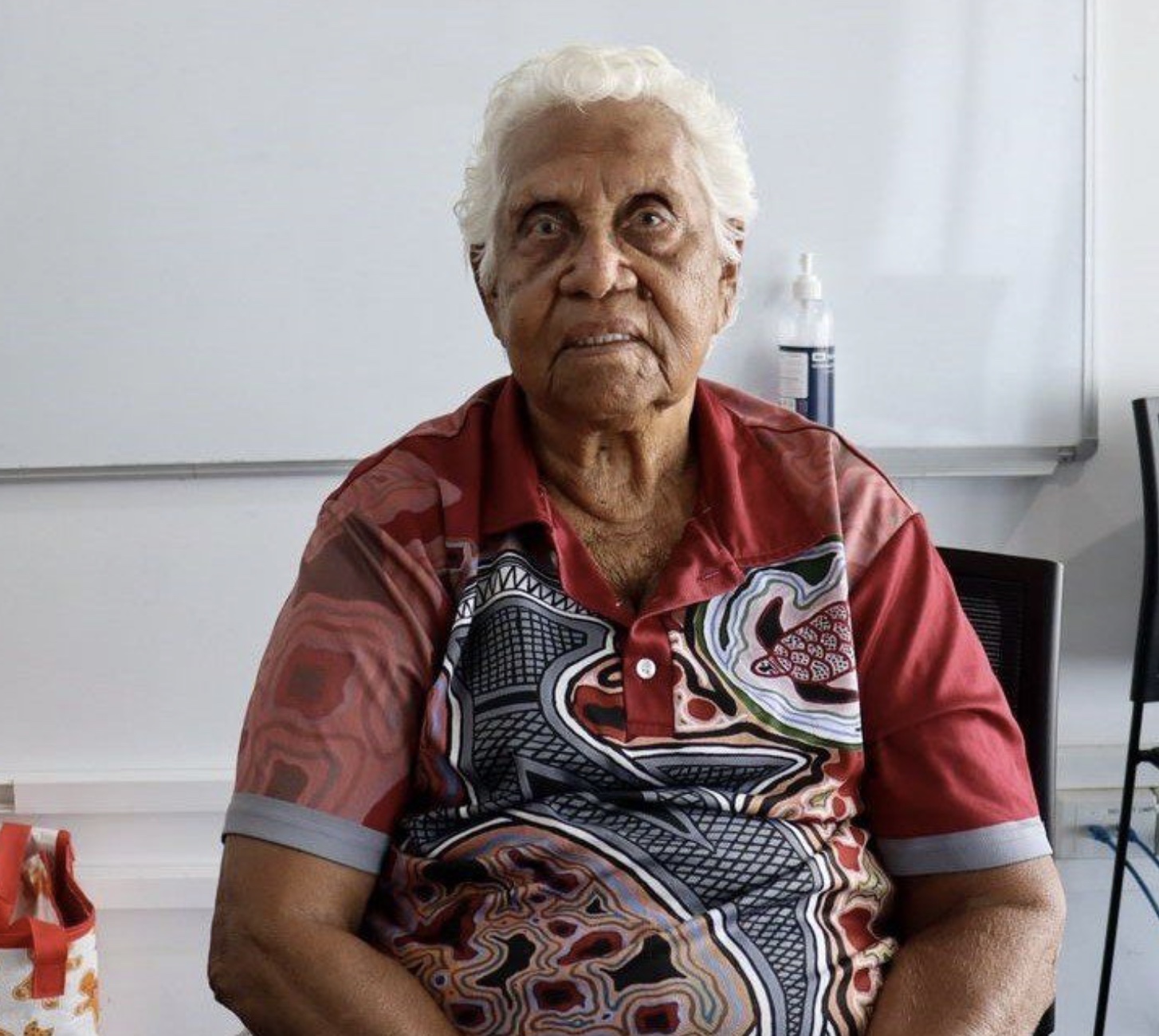
"There are organisations, such as the Bardi Jawi PBC, that people can contact to return cultural artefacts," Ms Davey told the National Indigenous Times.
"We have said many times that if any Bardi artefacts are to be sold, cultural leaders need to be consulted," she said.
McKenzie auctioneers responded saying: "Many treasured items auction houses are asked to sell on behalf of clients have been handed down by generations so do not always come with formal documentation".
But for Ms Davey this is unacceptable; she says the items should be returned to their rightful owners.
"Something that was taken from us, should be given back to us," Ms Davey said.
"It's really sad."



