



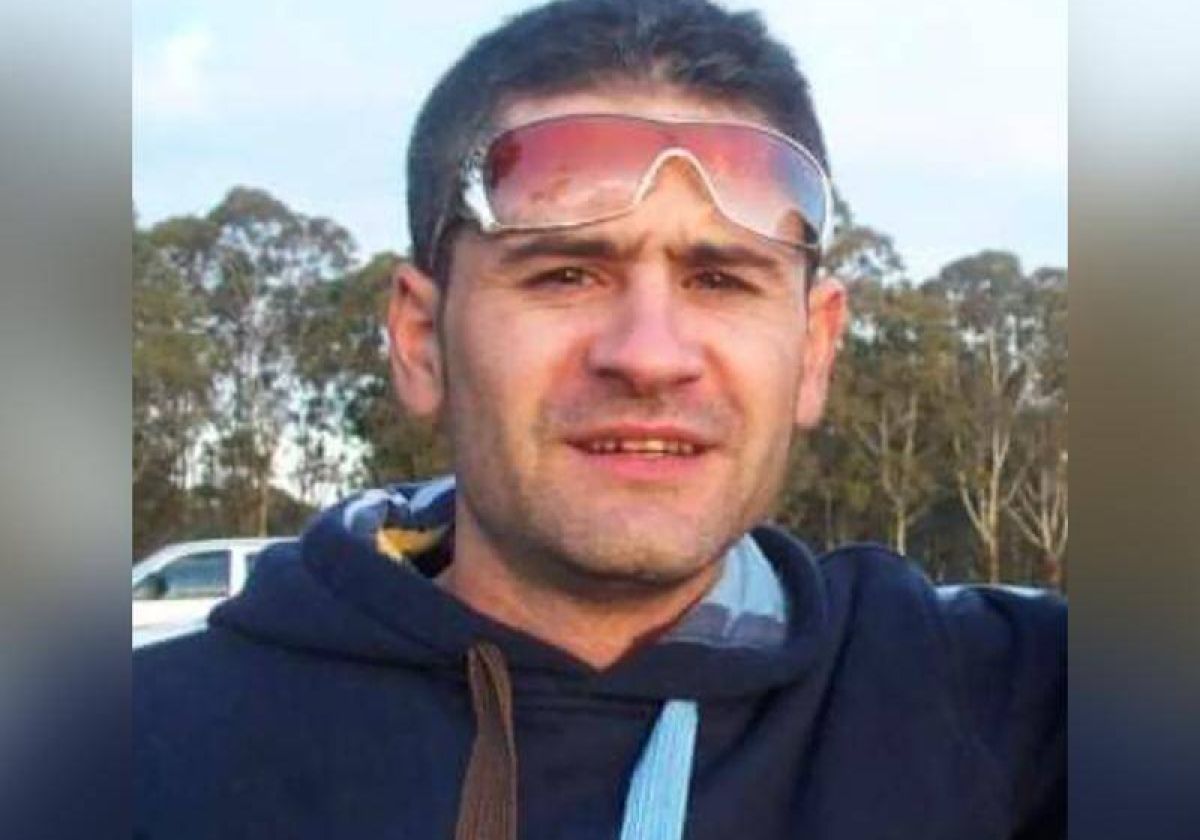
An Indigenous man who died in the aftermath of being misdiagnosed at Dubbo hospital would have had a good chance of living "a normal life" had he been diagnosed correctly, an inquest has heard.
The coronial inquest is investigating the circumstances surrounding the death of Kamilaroi-Dunghutti man Ricky 'Dougie' Hampson Jr, 36, after he presented to the emergency department on August 14, 2021, with a "popping" sensation in his stomach and experiencing "ten out of ten" pain.
Less than 24 hours after being discharged, he died on his friend's couch from two perforated duodenal ulcers.
Emergency doctor Sokol Nushaj diagnosed Mr Hampson Jr with cannabinoid hyperemesis syndrome (CHS) - associated with long-term users of cannabis - despite not displaying the symptoms of nausea and vomiting widely associated with the condition. Dr Nushaj admitted this was a mistake, telling the inquest it was the result of "cognitive bias".
On Monday, Associate Professor Anna Holdgate, a practising emergency physician, criticised the misdiagnosis of CHS, arguing it should only have come after eliminating all other conditions.
Mr Hampson Jr was given medication, including droperidol - an intravenous drug used to reduce vomiting and nausea - along with morphine, but not a CT scan. He was left overnight in the short-stay unit before being discharged the next day.
Asked by counsel assisting the coroner, Simeon Beckett SC, what she made of the treatment of Mr Hampson Jr, Dr Holdgate labelled the misdiagnosis of CHS as "made without any justification," and the administration of droperidol as below the peer professional standard.
The doctor told the inquest a CT scan should have been ordered for Mr Hampson Jr, before "immediately notifying the surgical team, who would recognise it as a surgical emergency."
Asked by Mr Beckett what the outcome of identifying the ulcers at that time through a scan would be, Dr Holdgate said: "You would hope it would be curative."
"If it is recognised early and treated early you would expect him [Mr Hampson Jr] to survive…and live a normal life," she said.
Dr Holdgate was also critical of Mr Hampson Jr being moved to the short stay unit without a "plan".
"There seemed to be no plan," she said. "Was he waiting for a test? A resolution of symptoms? Why was he there? Who was going to check he had reached the criteria to see him discharged?"
"He should have had a medical review."
Deputy State Coroner Erin Kennedy is being asked to consider whether factors such as bias and racism played a role in the medical treatment Mr Hampson Jr received.
The inquest has heard he was "scared" of hospitals in the years prior to presenting to the emergency department. An Indigenous doctor who works at Dubbo previously told the inquest this was entirely consistent with his experience of other Aboriginal people presenting to hospitals.
Professor and chair in race relations at Deakin University, Yin Paradies, told the inquest Indigenous people were less likely to receive an early medical diagnosis compared to non-Indigenous people.
"When Indigenous patients are presenting with some symptoms, say with cancer, on average, those Aboriginal patients are presenting at a later stage of their cancer," the Wakaya man said.
Professor Paradies highlighted data showing Aboriginal and Torres Strait Islander people were two-and-a-half times greater than non-Indigenous people to have "leave events," whereby people leave a medical facility early without being officially discharged.
He said examples leading to this include "a past negative experience [of the] system, a generalised mistrust of western health-care systems, [and] also issues to do with cultural safety and racism... Whether this is past experiences or experiences conveyed by family and friends".
He also discussed the nature of people using phrases such as "I'm not racist, I don't see colour", telling the inquest people sometimes think "it's good" that people don't see someone's Aboriginality, believing this means the treatment is "colourblind".
"The evidence doesn't support that view," he said, agreeing with Mr Beckett that doing so ignores the features unique to Aboriginal patients.



