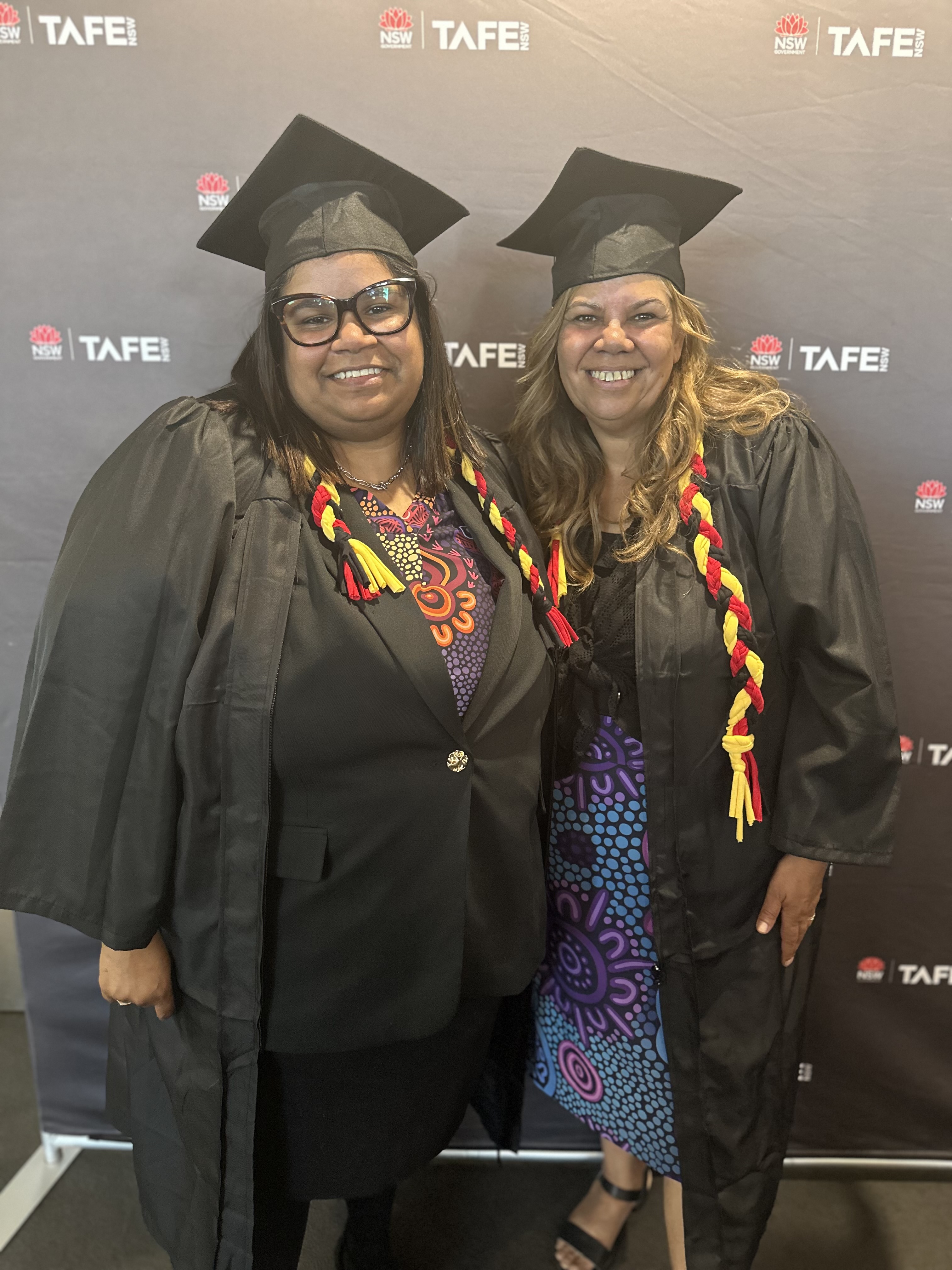
Fourteen students - the first cohort in Wagga Wagga for several years - graduated on Friday from the Certificate IV in Aboriginal and Torres Strait Islander Primary Health Care Practice, boosting the region's culturally appropriate healthcare workforce.
The region's need for culturally safe care is high, with Aboriginal people making up 5.9 per cent of the population and experiencing more than double the disease burden of the non-Indigenous population.
TAFE NSW said the graduates have shown "remarkable resilience" to complete the qualification, juggling study, work, and family commitments while undertaking 500 hours of practical placement across hospitals and community care providers.
"Their achievements reflect both strong personal determination and a deep commitment to improving health outcomes in their communities," TAFE NSW said in a statement.
Among the graduates is 37-year-old Yaltara Penrith, who studied alongside her mother, Candy Kilby, sharing the journey into healthcare together. Ms Penrith said she was inspired to pursue a career in health after witnessing the level of care her 80-year-old grandmother needed.
"Having been closely involved in supporting my grandmother's care, I've experienced how much difference culturally safe healthcare makes in our community," she said.
"Through this course, I've gained the skills and confidence to deliver more holistic and informed care, not just for the patients I'll work with, but for my community as a whole."
The course equips students to provide integrated, culturally informed primary healthcare. This includes everything from conducting physical health assessments and supporting social and emotional wellbeing, to promoting healthy lifestyle changes, implementing healthcare plans, and safely supporting medications as part of a multidisciplinary team.
Classmate Steven 'Shorty' Creighton, 59, enrolled after five years working as a wardsperson at Wagga Wagga Base Hospital, seeing first-hand the impact of quality care. Returning to study after 30 years was a big step, but one he found rewarding.
"It was enjoyable but challenging because there's a lot of content, and I hadn't studied in a long time. The support from our teachers and other students was amazing, if you needed help, someone was always there," he said.
Mr Creighton, who previously worked in hospitality before moving into health, said the qualification will open new doors as he looks towards the next phase of his career.
Several graduates, including Ms Penrith, Ms Kilby, and Mr Creighton, are already working in local health services, demonstrating the immediate impact of this training on community health.