


Zibeon Fielding's boundless zest for life and energy for his people is taken in his stride.
Quite literally, his running stride, which has given one APY Lands community its legs and endurance to battle chronic Aboriginal health issues that plague remote towns.
So influential has the Mimili Aboriginal health practitioner turned runner been on local residents that Fielding was named among the 100 most inspiring Australians.
To celebrate 100 years of flying its planes, Qantas placed the trained pilot 18th on its recent list – the second most prominent Indigenous figure, just seven spots behind tennis legend Ash Barty – and only one behind his running mentor Robert de Castella.
"He's a natural athlete – when he runs, he glides," marathon great de Castella says of Fielding's blissful stride.
"But more than that he has this strength of purpose and drive."
The Anangu/Yankunytjatjara man's weary legs has carried the future of 270 residents through a 62-kilometre ultramarathon in the APY deserts to raise $50,000 for a kidney dialysis clinic that has ensured his community could stay on country for treatment.
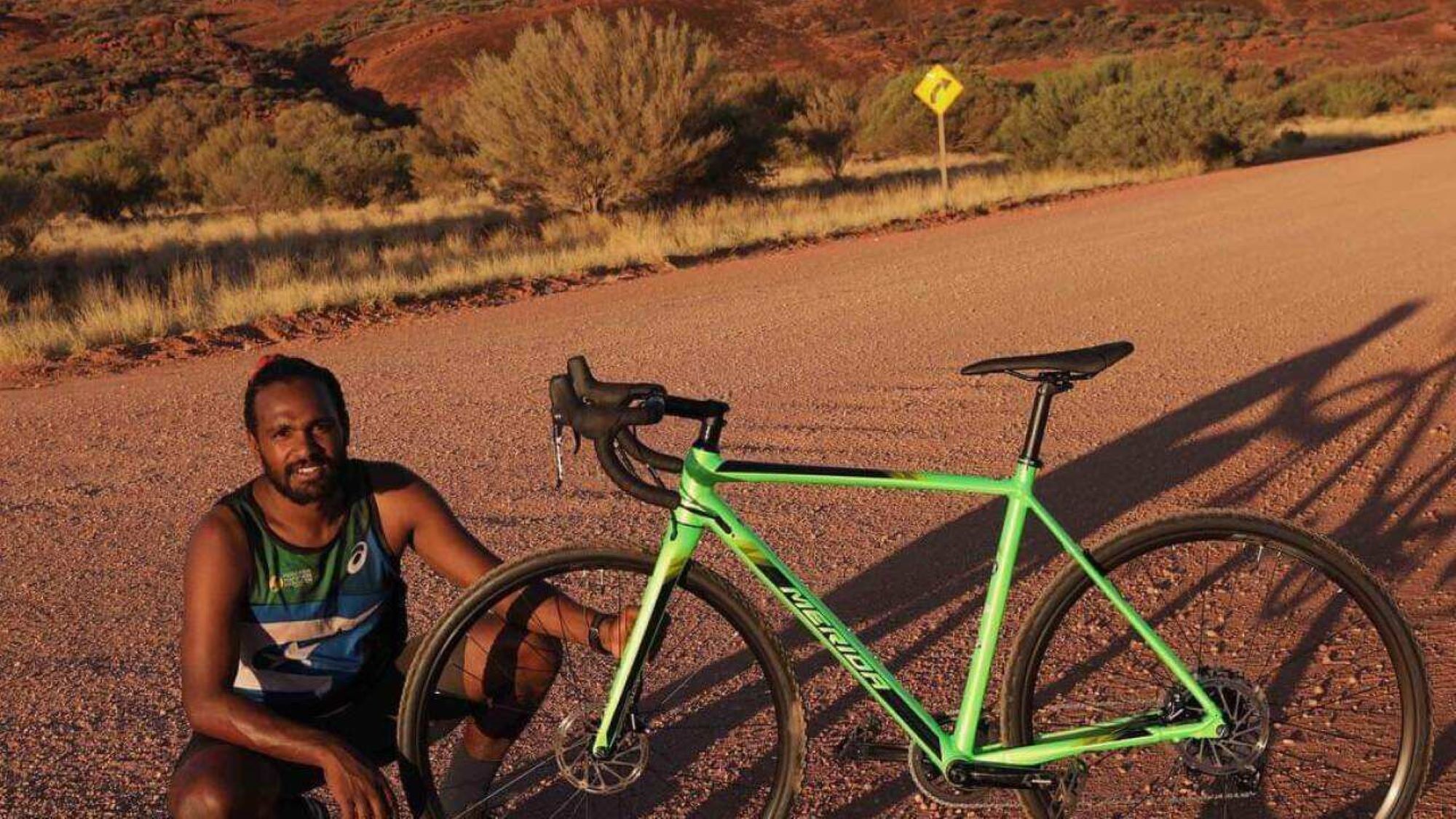
That commitment even transcended to cycling 710 kilometres across the corrugated roads in the extreme heat to raise more than $30,000 to build a gym in Mimili so less patients would ever walk through the doors of the dialysis clinic.
"He does it all with incredible passion and infectious enthusiasm," de Castella adds.
That kind of generosity of spirit would never have been possible without the founder of the Indigenous Marathon Foundation handing out the tools to run his first of many 42.195-kilometre races in New York, before turning to Boston and Tokyo.
Fielding had been knocked back four years in a row before de Castella could not say no again ahead of the 2016 IMF project.
"When he speaks, I tear up," Fielding says.
"He speaks really deeply, and I relate to the things he talks about because they are issues from where I'm from.
"I look up to the bloke like he's my dad."
And to most living in Mimili, the father of one is also a father figure for all young and old.
Not for a moment does Fielding give a second thought to conducting health checks on every child in town, flying in fresh healthy food for a number of community meals between running and bike workshops, and organising basketball and football games.
Little wonder that in 2020 the charismatic man was named South Australian of the Year.
Fielding explains his perseverance comes from "challenges my family have faced, the chronic disease we have at a young age and the dying at a lower life expectancy".
"We don't want to be just numbers; we want to drive and look towards a brighter and healthier future for our mob, so we can enjoy the little things in life," he says, "being with our families and being connected to country, having our culture and having that connection with our people on our land and for a longer time."
The marathon is the perfect metaphor for life in the outback, isolated from the rest of Australia's privileges.
The first 31 or 32 kilometres is smooth enough to the prepared runner before hitting the proverbial wall and struggling to finish.
"That's why I run marathons: to show we're resilient and we are strong, independent peoples to push through that hardship, the real part when you're depleted of energy and that you just want to give up," Fielding said.



